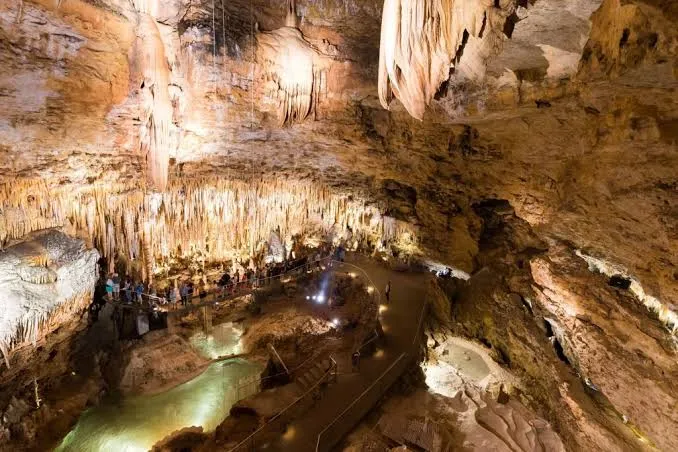
The cave you choose changes what you see, from reconstructed paintings to prehistoric marks on the original rock. The Dordogne caves are among France’s most extraordinary attractions, offering a rare opportunity to discover prehistoric artwork, ancient human history, and incredible underground landscapes.
From the world-famous paintings of Lascaux to the crystal-filled chambers of Proumeyssac, these caves reveal a fascinating world that has existed for thousands of years.
The region’s archaeological importance is internationally recognized. UNESCO reports that the Vézère Valley contains 147 identified Paleolithic sites and 25 decorated caves. Fifteen prehistoric sites make up its UNESCO World Heritage property, making it one of Europe’s most significant destinations for understanding early human civilization.
Whether you’re passionate about archaeology, travelling with children, or simply looking for an unusual experience in France, exploring the Dordogne caves deserves a place on your itinerary.
Why Are the Dordogne Caves So Famous?
The Dordogne caves are special because they bring together two very different natural and historical wonders: prehistoric art created by humans thousands of years ago and spectacular rock formations shaped by water over geological time.
During the Paleolithic period, prehistoric communities occupied the limestone valleys of Dordogne, particularly around what is now Les Eyzies and Montignac. The region offered rivers, wildlife, rock shelters, and useful raw materials, making it an important place for human settlement.
Over time, prehistoric artists decorated certain caves with paintings and engravings of horses, bison, mammoths, deer, and other animals. Many works reveal remarkable artistic skill, including the use of natural rock shapes to create depth and movement.
Dordogne’s caves generally fall into two categories:
- Prehistoric decorated caves: Places such as Lascaux, Font-de-Gaume, Les Combarelles, and Rouffignac preserve paintings or engravings created by early humans.
- Natural limestone caves: Sites including Proumeyssac, Grand Roc, and Maxange are known for stalactites, stalagmites, mineral deposits, and unusual underground chambers.
Some caves, including Villars, combine both types of interest.
The region isn’t simply a collection of tourist attractions. It’s a vast archaeological landscape that helps researchers understand prehistoric life, artistic expression, and the development of human culture.
The Best Dordogne Caves to Visit in 2026
Lascaux IV: A Clear Introduction to Cave Art
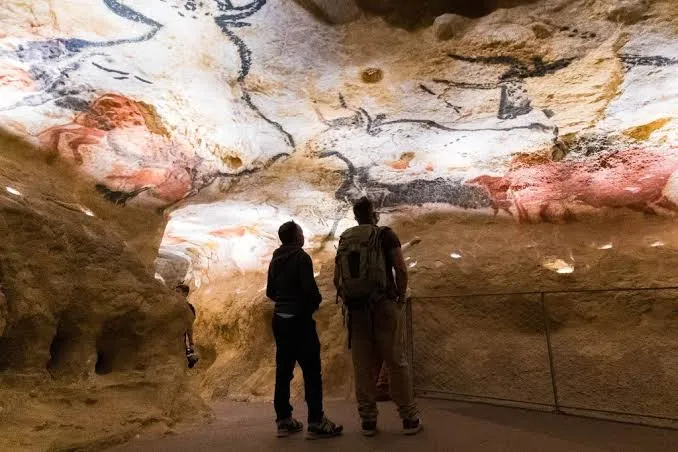
Located in Montignac, Lascaux IV is the Dordogne’s most famous cave attraction and a leading destination for prehistoric art worldwide.
Four teenagers discovered the original Lascaux Cave in September 1940. Its walls contained extraordinary paintings of horses, bulls, deer, and other animals, generally dated to around 21,000 years ago.
Lascaux IV in Montignac suits visitors who want an introduction with interpretive exhibits. The original Lascaux cave has been closed since 1963 for conservation reasons. Your ticket gives access to its reproduction.
According to the official 2026 ticket information:
- Adult admission (ages 13+): €23
- Children aged 5–12: €15
- Children under 5: free with a ticket
- Combined Lascaux IV and Lascaux II adult ticket: €29
From August 22 through November 1, 2026, the published opening hours are 9:00 a.m. to 7:00 p.m. From November 2, hours change to 10:00 a.m. to 6:00 p.m. for the published winter schedule.
Visitors should arrive at least 20 minutes before their reserved visit.
Font-de-Gaume: Original Painted Animals
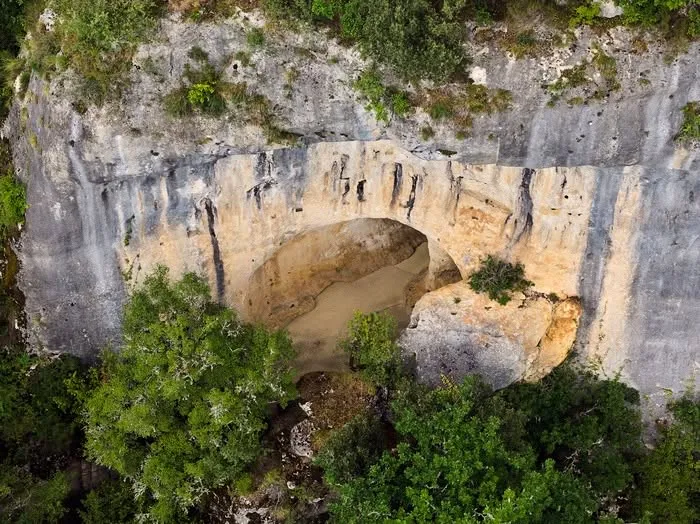
For travellers who want to see genuine prehistoric paintings, not reproductions, Grotte de Font-de-Gaume is one of France’s most remarkable sites.
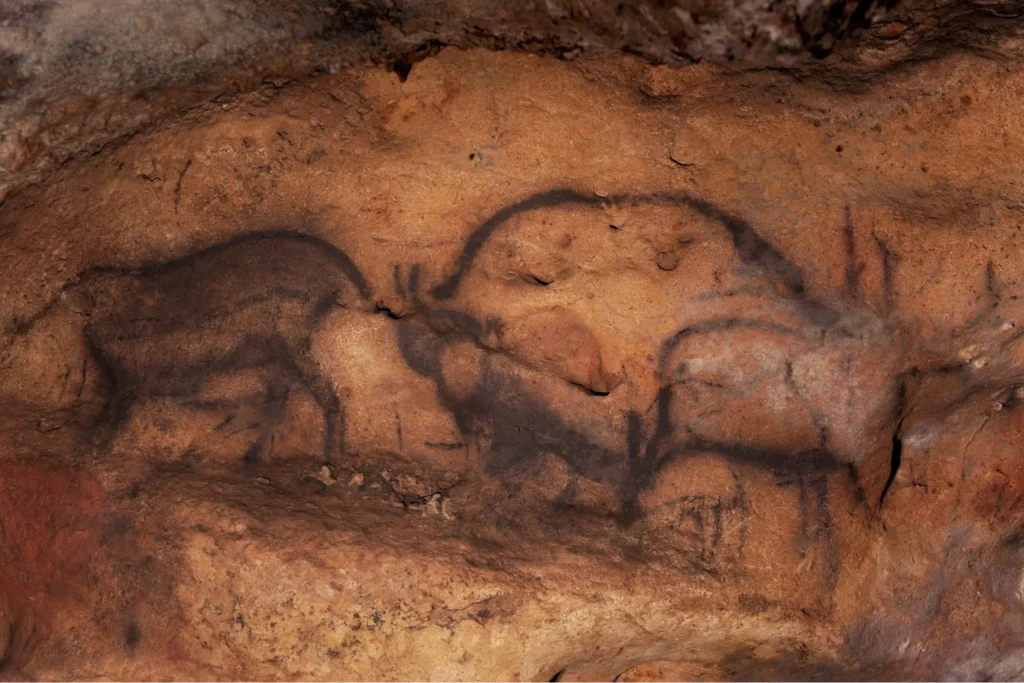
Located near Les Eyzies, this cave preserves original Paleolithic artwork, including beautifully painted bison and other animal figures.
The artists used natural pigments and the cave walls’ contours to make their images appear lifelike. Some figures seem almost three-dimensional when viewed under carefully controlled lighting.
Unlike Lascaux IV, Font-de-Gaume is an authentic decorated cave. This makes conservation particularly important.
Visitor numbers are strictly controlled, and guided tours are compulsory. The official site currently lists standard individual tickets at €13 per person, subject to eligibility for free admission or special rates.
Tours typically take about an hour in total, with approximately 30 minutes spent inside the cave.
Visitors should expect a steep approach path, narrow passages, dim lighting, and an underground temperature of approximately 14°C.
Book online in advance, and tickets are checked before each guided visit.
Les Combarelles: Engraved Figures in Close Detail
Les Combarelles rewards travelers interested in rock carvings. Its animal and human figures differ from the painted compositions at Lascaux. Visitors enter Combarelles I; the other decorated sections remain closed.
The route includes low, narrow passages. Consider how each guest feels about confined spaces before deciding whether to visit. Ask the guide to explain how overlapping figures share the same lines, a characteristic documented by the site.
The official 2026 individual admission price is €13, and advance online booking is mandatory. Inside, temperatures remain around 12°C, so visitors should bring a warm layer.
Rouffignac: Prehistoric Art by Electric Train
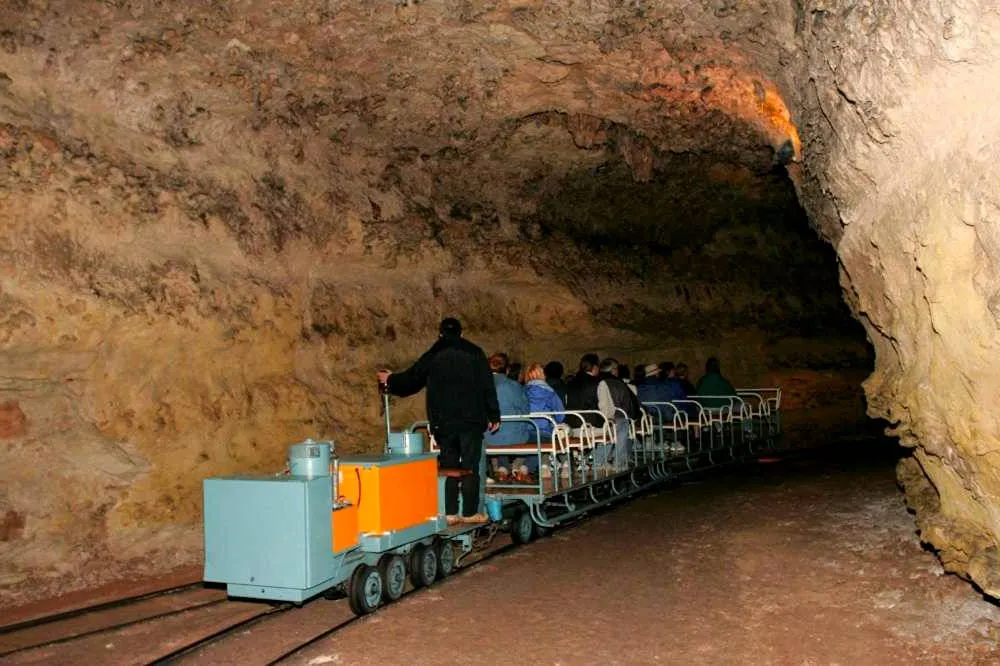
Often called the Cave of a Hundred Mammoths, it is best known for the large number of mammoth images preserved on its walls and ceiling.
The underground system extends roughly eight kilometres and contains about 250 prehistoric drawings and engravings of animals. The official visit information lists a tour duration of about 70 minutes and an adult price of €12 in 2026.
The seated format may suit guests who prefer less walking, but confirm boarding arrangements directly for mobility needs. Our Rouffignac guide covers the train experience in greater detail.
Gouffre de Proumeyssac – The Crystal Cathedral
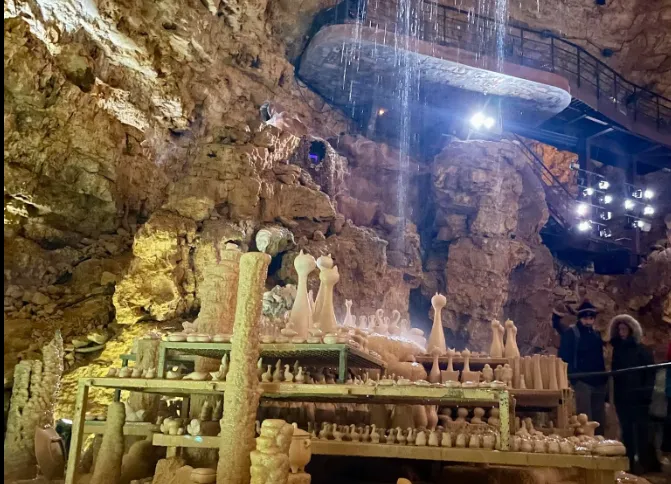
If you’re more interested in spectacular natural formations than prehistoric artwork, Gouffre de Proumeyssac is an excellent choice.
Near Le Bugue, this immense underground chamber is affectionately called the Crystal Cathedral for its glittering mineral formations.
Over countless years, water flowing through limestone has created remarkable stalactites, stalagmites, and other calcite deposits.
Carefully designed sound-and-light presentations, including 360-degree projection mapping, enhance the cave’s size and beauty by highlighting its natural features.
One of its most unusual attractions is an optional descent in a suspended basket. Inspired by early explorers’ methods, this experience lets visitors enter the chamber from above.
Those who prefer a more conventional visit can use the standard visitor access.
The site also offers outdoor family activities and geology-focused educational areas.
For the 2026 season, standard adult admission ranges from €13.60 in the low season to €14.60 in the high season. Adult basket-descent tickets cost €23.70–€24.70.
Grand Roc Cave – A Natural Masterpiece of Limestone
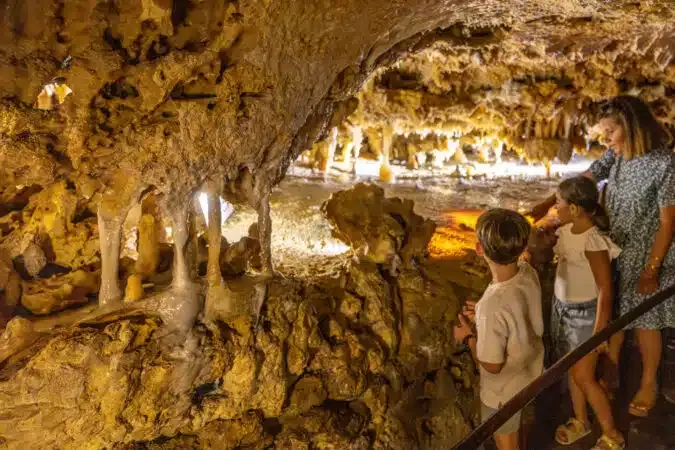
Unlike prehistoric art caves, its main attraction is an extraordinary concentration of delicate mineral formations.
Inside, visitors discover thin stalactites, translucent calcite formations, and unusual helictites that appear to grow sideways or curve in unexpected directions.
The cave is carefully illuminated, allowing visitors to appreciate the shapes, colours, and textures created by natural geological processes.
Grand Roc is also a convenient destination for travellers exploring the wider prehistoric landscape around Les Eyzies.
In 2026, standard admission is €9.50 for adults aged 13 and older and €6.30 for children aged 5–12. Special torchlight visits are offered at a higher rate.
A combined adult ticket covering Grand Roc and the nearby Laugerie-Basse rock shelters costs €15.30. A broader four-site pass, also including Lascaux IV and Parc du Thot, costs €40.50.
Grand Roc’s published 2026 schedule runs through November 1, although its website also displays a closure notice for that date. Check the official ticket calendar or contact the attraction before planning a visit around the end of October or beginning of November.
Villars: Paintings and Geological Formations
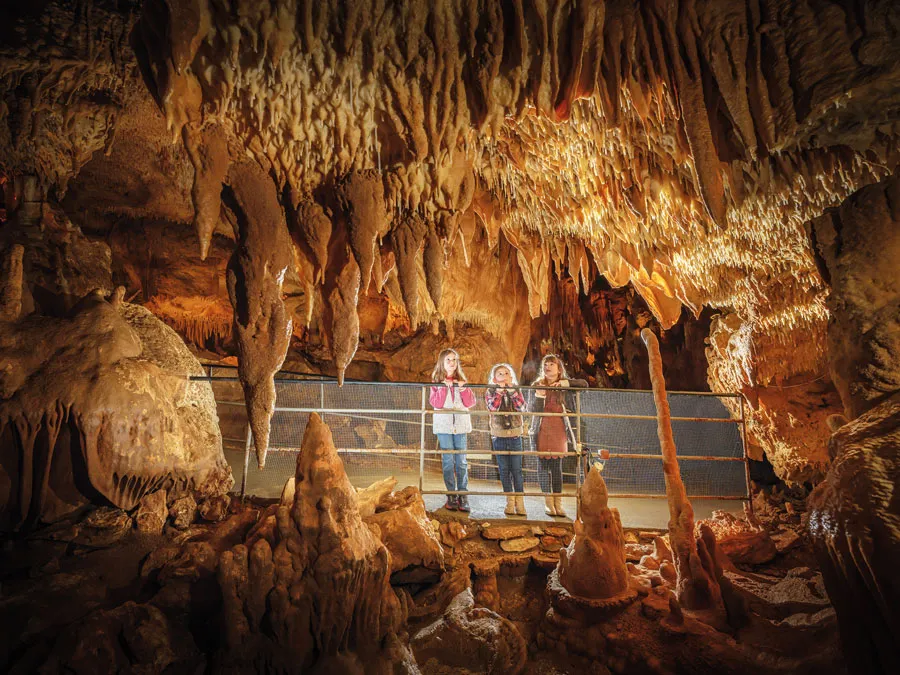
Villars combines original prehistoric paintings with stalactites, stalagmites, and calcite formations. Its official description explains how a thin calcite layer gives some painted horses a blue appearance.
It offers a different outing from the Vézère Valley sites. The 2026 practical information lists a 45-minute guided tour and an adult ticket of €12.80.
The cave does not provide wheelchair access, so check suitability before committing. Its expanded 2026 route adds the Salle du Chaos, where fallen rock illustrates the cave’s geological history.
Grotte de Maxange – A Hidden World of Unusual Crystals
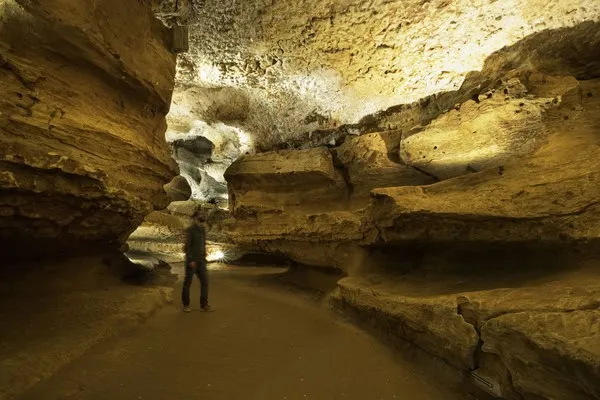
For a quieter experience away from the region’s most famous prehistoric attractions, Grotte de Maxange is worth discovering. The cave is celebrated for its extraordinary helictites, delicate mineral formations that grow in twisting and branching patterns.
Maxange offers guided tours lasting around 40–45 minutes. The cave stays at about 13°C year-round. Its official season covers February 9–March 8 and April 1–October 30.
In October, the published visiting hours are 2:00 p.m. to 5:00 p.m., and the cave is closed on Saturdays. Guided departures are scheduled for 2:30 p.m., 3:30 p.m., and 4:20 p.m.
New for 2026, Maxange also offers Le Chemin des Deux Mondes, an outdoor educational trail that follows the cave’s route from above. Families can explore the surrounding woodland while children solve puzzles about geology and the underground environment.
Reservations aren’t required for regular visits, but they’re recommended during busy periods.
How to Book Your Cave Visits
Choose your priority cave first, then arrange the rest of the day around its confirmed departure.
- Reserve restricted-access art sites first. Font-de-Gaume and Combarelles require online booking, with admission currently €13 per cave. Do not depend on buying tickets after arrival.
- Use Rouffignac’s current booking system. Online reservations open approximately five weeks ahead. Ticket holders must arrive 20 minutes before departure to collect their tickets.
- Check every participant’s requirements. Confirm ages, language, mobility needs, and available places before paying. A group may need separate departures at a limited-capacity site.
Seasonal calendars can change the day’s rhythm. Rouffignac’s 2026 public season runs from March 29 through November 1. Check each cave’s official calendar for your date rather than assuming neighboring sites share opening days.
A Relaxed Cave-Visiting Pattern for Your Stay
Give cave art two separate excursion days within a longer countryside stay. On one day, visit Lascaux IV and leave time for lunch in Montignac. On another, choose Font-de-Gaume or Combarelles near Les Eyzies. Add Villars on a separate day if your group wants geology alongside art.
Keep the arrival day free of timed attractions. Before each outing, save the attraction’s entrance location and check directions from your actual accommodation.
Allow time for parking and ticket collection beyond the estimated drive. Separate vehicles can give early-returning guests flexibility without ending everyone else’s excursion.
Make Time to Look Closely
A satisfying prehistoric-art trip leaves room to understand what you have seen. After the visit, compare the animals, techniques, and details that caught your attention over an unhurried meal. That conversation can be as rewarding as adding another attraction to the day.
Is Château de Lasfonds Right for Your Cave Trip?
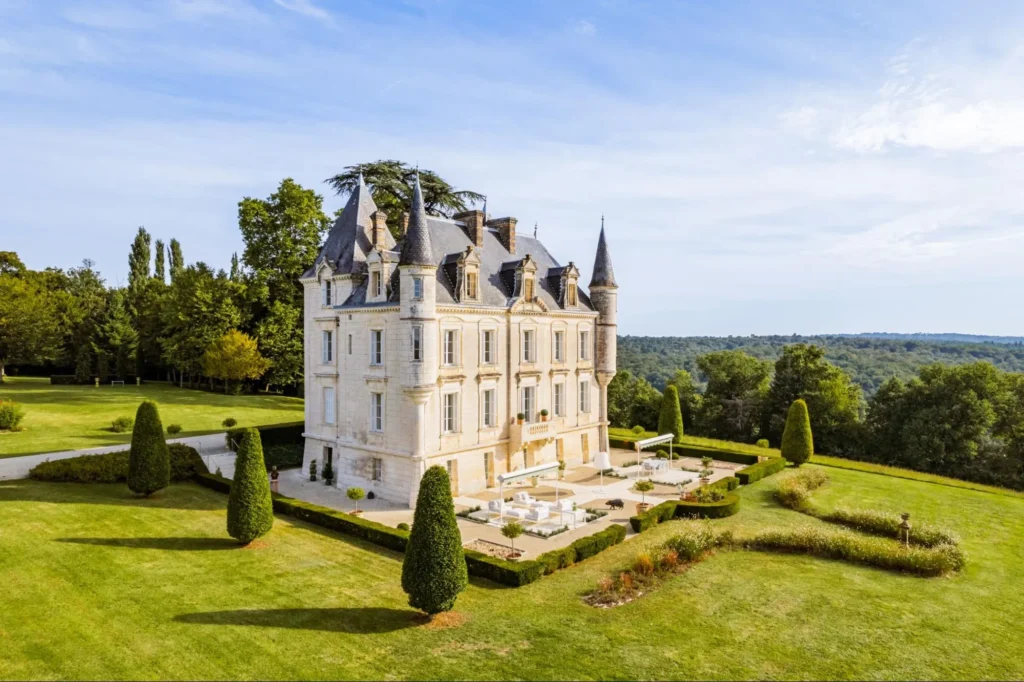
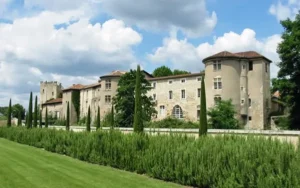
Château de Lasfonds sits on the Charente and Dordogne border. Treat the Vézère Valley as a planned excursion from the estate and compare the return journey with your group’s preferred pace.
Before renting, settle three practical questions:
- Who needs which room? The main château’s master suite occupies level 1, with three bedrooms on level 2. The level-2 rooms share two bathrooms.
- Will everyone join each outing? A shared base accommodates different interests, but agree on transport and children’s responsibilities before splitting the group.
- Does the stay include a celebration or retreat? Château de Lasfonds limits indoor spaces and facilities to 15 people at a time, while outdoor spaces have no equivalent limit.
Plan Your Private Château Stay at Château de Lasfonds
For a week combining cave excursions with private time together, Château de Lasfonds offers exclusive rental for one group, with a minimum stay of seven days. Confirm the maximum guest capacity and sleeping arrangements directly with us before booking. The kitchen and garden give you space for meals and quieter days between outings.
Explore the rooms, then send an inquiry with your dates, group size, and room requirements. We can discuss availability and connect you with external planning providers on request; their services require separate arrangements.
Frequently Asked Questions
Did Neanderthals or modern humans create Dordogne’s prehistoric paintings?
The famous Upper Paleolithic paintings and engravings of Dordogne are generally attributed to early modern humans, or Homo sapiens. Neanderthals lived in the region earlier, but no evidence links major decorated sites such as Lascaux to them.
How Much Time Should I Allow at Lascaux IV?
The operator recommends two to three hours on site, including the cave reproduction and other visitor areas. Add travel time separately.
Can Young Children Visit Font-de-Gaume and Combarelles?
The official guidance describes these tours as suitable for children ages seven and older. Families with younger children should contact the operator before reserving.
Is Rouffignac Suitable for Toddlers?
The operator considers the visit unsuitable for many children under three. Guests cannot leave before the train completes its tour.
Do Children Need Tickets When Admission Is Free?
At Lascaux IV, children under five still need a reserved time slot, even though admission is free. Include them when counting your party.
Can I Photograph the Cave Art?
Font-de-Gaume and Combarelles prohibit photography. Lascaux IV prohibits photographs inside the replica but allows them in its Workshop and other areas.
Can I Bring a Stroller to Lascaux IV?
The family visitor rules exclude strollers and rigid baby carriers. Only soft carriers are permitted for carrying babies through the visitor areas.
Why are human figures so rare in prehistoric cave art?
Animals dominate much of the region’s prehistoric artwork, while recognizable human figures are comparatively uncommon. Researchers have suggested various explanations involving cultural traditions, spiritual beliefs, and symbolic practices. However, no single explanation has been conclusively established.
What Should I Wear Underground?
Bring a warm layer and comfortable shoes. Rouffignac remains around 13°C, and sitting on the train can make the cool air feel even colder.
Can I Change My Cave Ticket Date?
Rouffignac does not exchange or refund tickets. Lascaux offers a Flex option for changes subject to availability. Check your chosen ticket’s terms before payment.