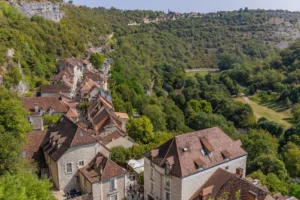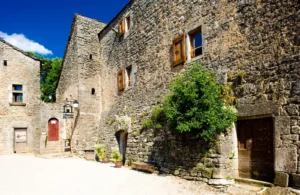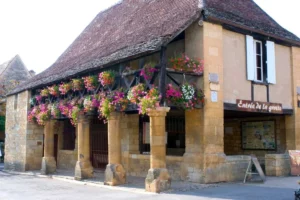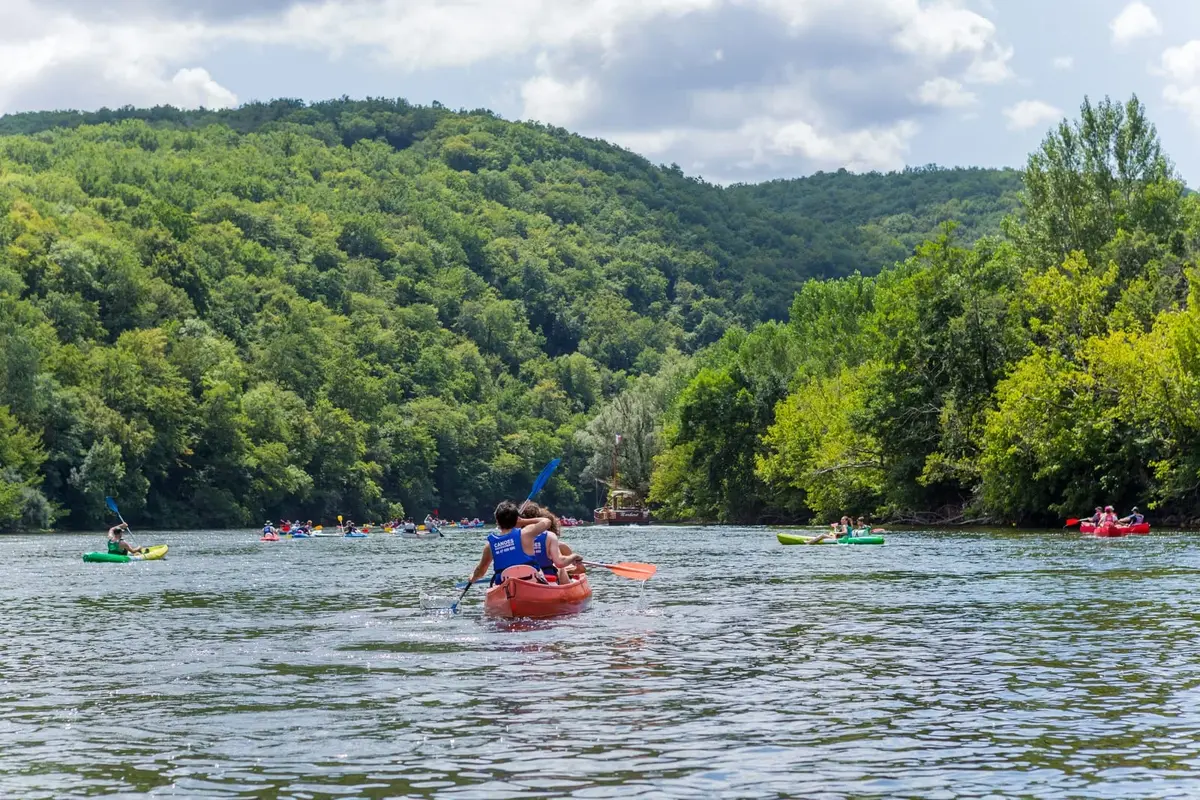
The Dordogne River flows through one of the most picturesque landscapes in France, passing golden stone villages, limestone cliffs, vineyards, and medieval castles. For travellers, the Dordogne River Valley offers a perfect mix of outdoor adventure and cultural discovery.
Visitors can paddle beneath historic fortresses near Beynac-et-Cazenac, swim at quiet river beaches, or explore villages such as La Roque-Gageac that appear almost unchanged for centuries. The river’s gentle currents and scenic views make it one of the best places in France for canoeing, photography, and slow countryside travel.
This guide explains the main sections of the Dordogne River, where travellers can safely swim, and how to plan memorable canoe trips while discovering the villages, viewpoints, and landscapes that define this remarkable region.
The River’s Origins and UNESCO Recognition
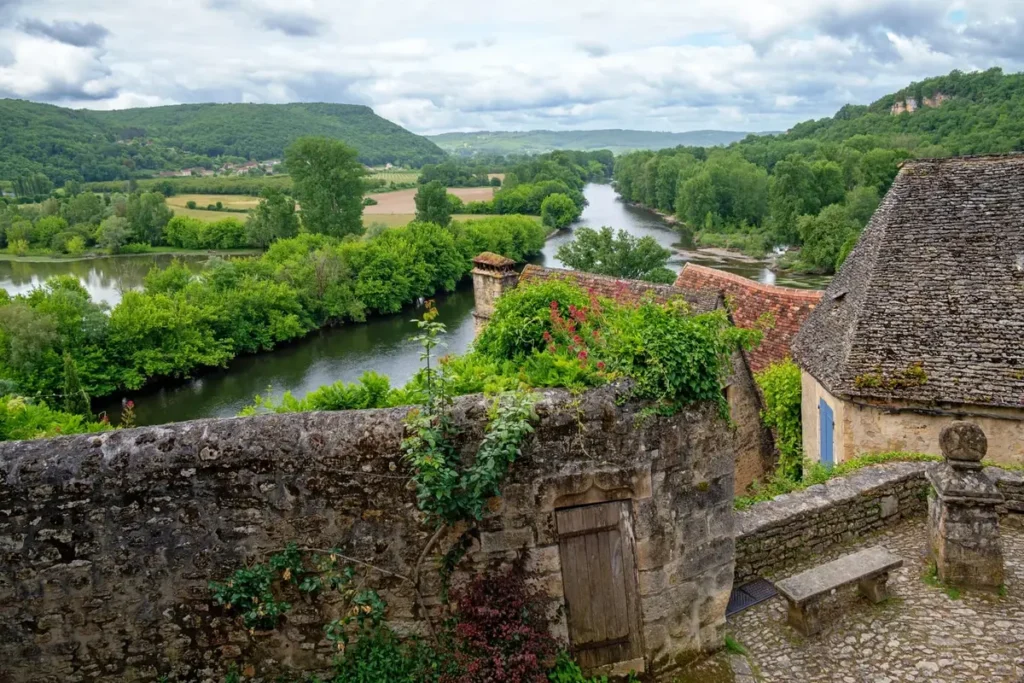
The Dordogne River begins where two mountain streams, the Dore and the Dogne, merge on the flanks of the Massif du Sancy in Auvergne. From there, it flows about 483 kilometres to the west until it meets the Garonne near Bordeaux and forms the Gironde estuary. Its name comes from an ancient pre-Celtic term meaning water. The valley has remained largely rural; unlike many European rivers, it was never heavily industrialised.
Because of its well-preserved landscapes and cultural heritage, the river basin was recognised by UNESCO in 2012 and added to the World Network of Biosphere Reserves. Visitors exploring the Dordogne River in France can experience a living landscape where history and nature coexist in harmony.
This biosphere status reflects both ecological value and human stewardship. The river supports habitats ranging from upland gorges to floodplain meadows, and it is home to species such as salmon, otter, and lamprey. Meanwhile, human communities depend on it for water, agriculture, tourism, and hydropower.
Understanding the River’s Sections
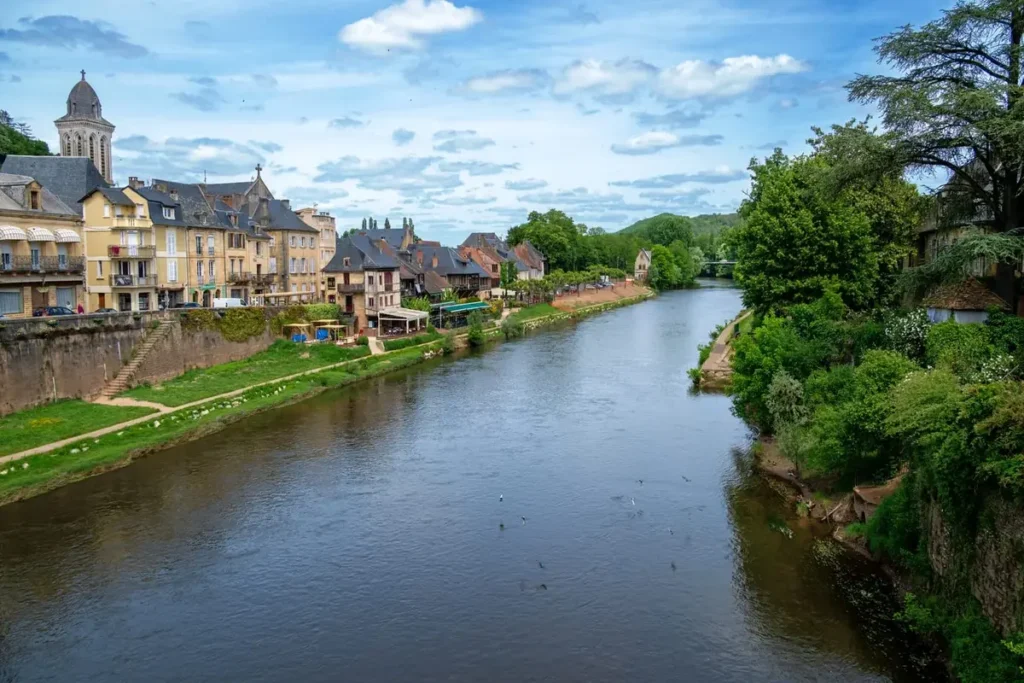
The course of the dordogne river in France can be divided into distinct sections, each offering different scenery and challenges. Knowing these segments helps travellers choose appropriate activities.
Upper Valley: Argentat to Beaulieu
The upper valley flows through narrow gorges carved into thick forests. Steep cliffs and swift currents appeal to walkers and experienced canoeists. In some parts, the river widens into long lakes behind dams, such as Bort-les-Orgues.
Canoe rental companies classify the stretch from Argentat to Beaulieu as category II, meaning it has moderate white-water features such as Le Battut and Le Malpas. This section is suitable for paddlers with some experience. Because it passes through remote gorges, camping gear is essential for multi-day trips.
Middle Valley: Carennac to Souillac
Downstream of Beaulieu, the river widens and meanders between limestone cliffs, walnut orchards, and fertile plains. It splits into channels that form verdant islands. Charming villages line the banks, including Carennac and Meyronne.
Castles appear on cliffs or tucked into hillsides. For visitors interested in river beaches, the central valley is ideal; beaches at Meyronne and Gluges entice passersby with calm water and vertiginous cliffs. The current here becomes gentler, and this section is suitable for families and photographers.
Castles Section: Vitrac to Limeuil
This iconic stretch is often called the Valley of the Five Castles. Starting near Vitrac and finishing at Limeuil, canoeists pass through villages such as Carsac, La Roque-Gageac, Castelnaud, and Beynac.
The north of the Dordogne travel guide notes that typical routes include Vitrac to Beynac (16 km, about 3 hours) and Carsac to Beynac (25 km, about 4.5 hours).
Along the way, paddlers admire fortresses like Castelnaud, Beynac, and Fayrac, as well as the lush gardens of Marqueyssac. Many canoe hire companies provide shuttle transport back to the starting point. Because the water is calm and wide here, this section is perfect for beginners and families. It also features several natural beaches for swimming.
Lower Valley and Bergerac
Past Limeuil, the river enters wine country. It loops in S-shaped meanders, notably at the Cingle de Trémolat near the village of Trémolat. The official tourism site for the Pays de Bergerac describes the cingle as a natural amphitheatre, with two symmetrical bends linked by a third, reversed bend, creating a 180-degree panorama.
Farmland inside the loop resembles a patchwork quilt, while hilltop lookouts provide sweeping views. The village of Trémolat also hosts an international water sports base offering waterskiing, stand up paddle, diving, and canoeing.
Farther west, the river runs through vineyards and eventually merges with the Garonne. Limeuil itself marks the confluence with the Vézère River, offering views of two rivers meandering across floodplains.
Swimming: Beaches, Safety and Water Quality
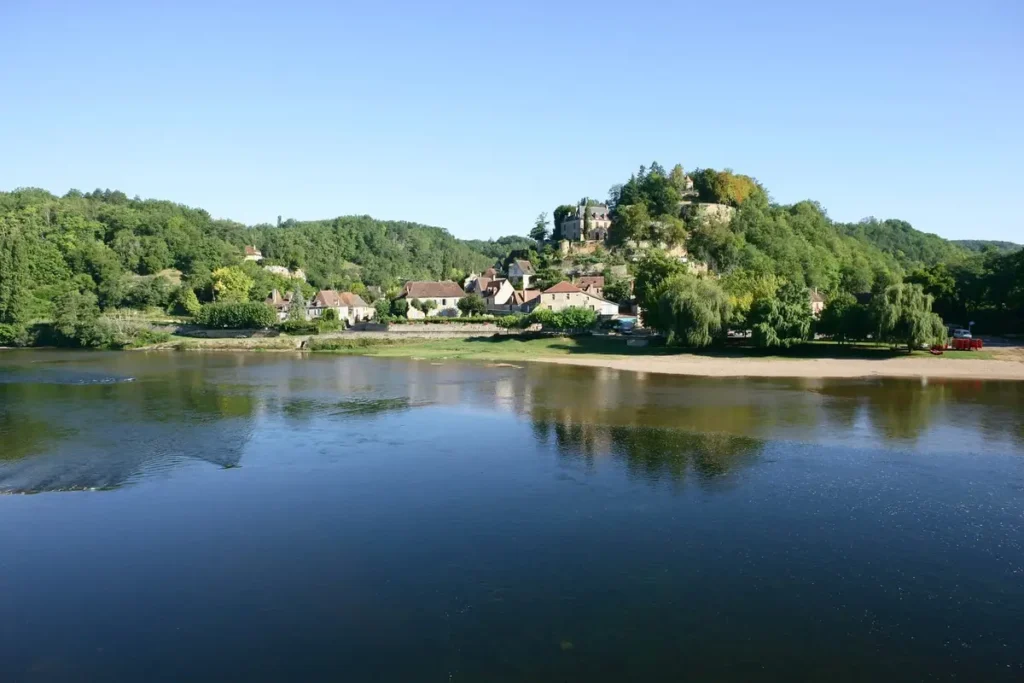
River Beaches and Leisure Lakes
Summers in the Dordogne are hot, often reaching around thirty degrees Celsius. The region’s rivers and lakes have warm, clean water in July and August and are among the cleanest in Europe.
Families can swim and engage in canyoning or cliff jumping. Many beaches and lakes are supervised in July and August, with lifeguards on duty and facilities such as parking, changing rooms, and refreshments.
Lakes provide alternatives to the river. Region’s lakes offer calm paddling and safe swimming, with beaches and water sports. Travellers who prefer still water can visit leisure centres like Trémolat’s water sports base.
Wild (Unsupervised) Beaches
As water levels drop in summer, pebble and grass beaches appear along the river. These wild beaches feel like hidden paradises, but they are unsupervised, so swimming is at one’s own risk. There are several beaches worth visiting:
- Plage du Bac de Sors near Siorac offers shallow water and a pebble shoreline.
- Plage de Limeuil sits at the confluence of the Dordogne and Vézère Rivers. Shallow water and tree shade make it popular for families.
- La Roque Gageac beach lies below cliffside houses; the river here flows slowly, and the village forms a picturesque backdrop.
- Plage de Caudon at Vitrac has a large sandy area and gentle current; it is one of the region’s favourite beaches.
- Plage de Creysse and Plage de Meyraguet, further upstream, provide tranquil settings among walnut trees.
Visitors should take any rubbish away and respect the natural environment. It is also important to check local regulations: water usage restrictions may be implemented during droughts.
For example, the Dordogne prefecture introduced restrictions on watering gardens, washing cars, and topping up swimming pools in July 2024 due to low water reserves.
Even though such rules target domestic water use, they remind travellers to treat water resources responsibly.
Water Quality and Cleanliness
The Dordogne is often described as France’s cleanest river. A French Ministry of Health interactive map allows bathers to check water quality across France; most sites on the Dordogne are rated “excellent,” and water is warm in summer. This map provides recent test results for each location.
Avoiding Hydrocution and Drowning
France’s Health Ministry warns that hydrocution (thermal shock) occurs when a sun-warmed body enters cold water too quickly, causing fainting or heart problems. To prevent it, the ministry advises entering the water gradually and avoiding extended sun exposure or large meals before swimming.
Signs such as headache or cramp should prompt swimmers to exit the water. The ministry also recommends swimming in supervised areas, keeping children within sight, and wearing appropriate flotation devices.
In the event of trouble, swimmers should float on their backs and call for help. Emergency numbers in France include 18 (fire and rescue), 15 (medical rescue), and 112 (European emergency number).
Canoeing and Kayaking: Routes, Hire and Safety
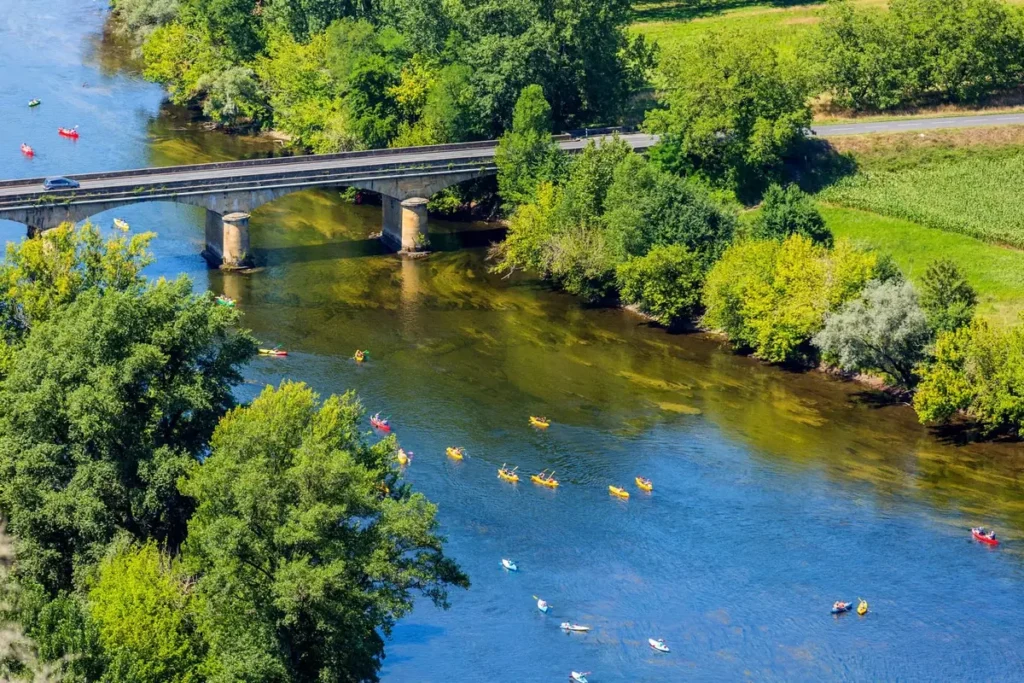
Canoeing is one of the most popular activities along the Dordogne River Valley. Multiple rental companies operate from spring to autumn. They provide equipment, life jackets, paddles, and route suggestions.
Age and Swimming Ability Requirements
Most providers require participants to know how to swim at least 25 metres in white water and be able to immerse themselves. Children under five or six often cannot take part because buoyancy aids are not suitable for them.
Children can go canoeing from age five if they know how to swim and wear a life jacket. Dogs are usually allowed on board, though owners should check individual rental policies.
Booking and Route Options
Booking is strongly recommended during the high season of July and August. Canoe Dordogne offers several routes:
- Vitrac to Castelnaud (12 km, 2.5 hours)
- Vitrac to Beynac (16 km, 3 hours)
- Carsac to Beynac (25 km, 4.5 hours)
Multi-day trips with bivouac are available for those seeking deeper immersion. Prices at Canoe Dordogne start at about 22 euros per person for a day trip and 25 euros per person per day for multi-day trips. Many companies offer a free shuttle service: paddlers are driven upstream, then paddle downstream back to their vehicles.
Safety Briefings and Instructions
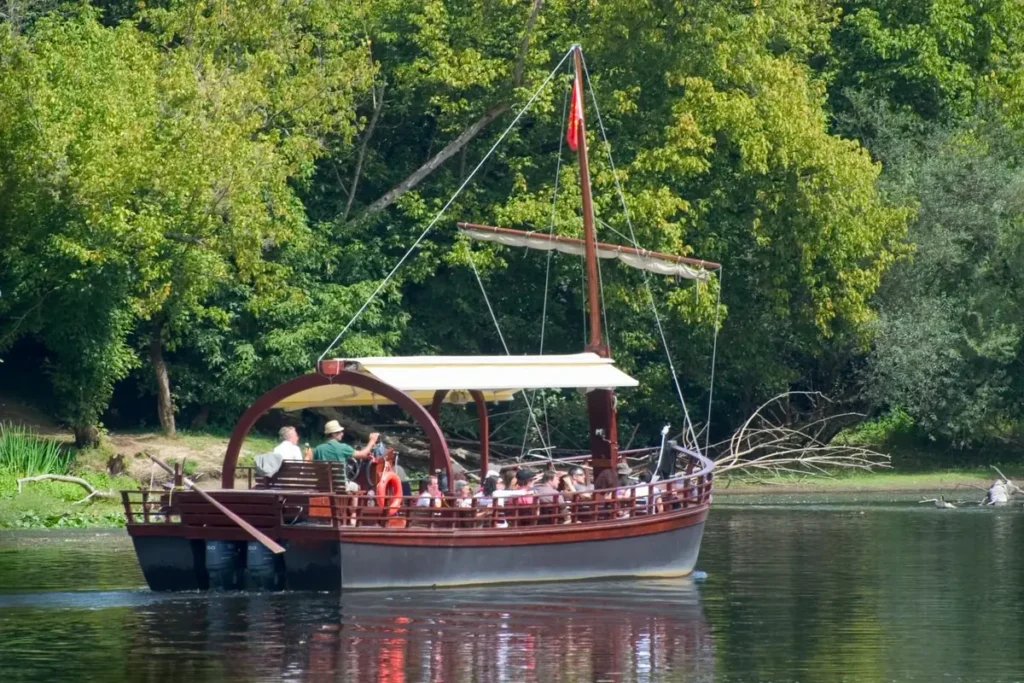
Before departure, the rental staff provides a safety briefing. Canoë Détente advises paddlers to stay in the middle of the river to avoid branches and to stop in bends where the current is weaker. It also instructs paddlers to pass between bridge pillars and to keep at least 5 metres from tourist boats called gabares.
- Wearing a life jacket is mandatory.
- Paddlers must know how to swim 25 metres
- immerse themselves and wet their necks regularly to prevent thermal shock,
- stay hydrated
- protect themselves from the sun
- wear closed shoes and a glasses cord, sail in the middle of the river
- Avoid swimming areas and fishermen.
- Personal belongings should be stored in watertight containers and left in vehicles if not needed.
What to Bring
Canoe Dordogne’s checklist advises bringing a swimsuit and light clothing, water shoes or closed sandals, sunscreen, a hat, sunglasses, water, a picnic, and a waterproof bag. Trips may involve stops at river beaches or small villages where food can be purchased, but carrying at least one bottle of water per person is prudent.
Seasonality and Weather
The canoeing season usually runs from May to September when water levels are optimal, and temperatures are pleasant. April and October may also be possible, depending on weather and water levels; some rental companies, like Copeyre, operate from April to November.
High summer brings crowds and hot temperatures, so early morning departures are recommended for cooler conditions. Spring and autumn are quieter; paddling in May brings wildflowers along the banks, while September offers grapes ripening in nearby vineyards.
Scenic Villages and Castles Along the River
La Roque Gageac
La Roque Gageac is often called one of the most beautiful villages in France. The Great Rail Journeys blog notes that it sits under craggy cliffs on a bend in the river. Houses built with golden stone and steep Périgord roofs blend into the cliff face.
In the Middle Ages, caves in the cliff served as defences during the Hundred Years’ War. A unique microclimate created by the cliff shelter has allowed exotic trees to flourish. Visitors can stroll through narrow streets lined with palm trees or view the village from the water aboard a traditional gabare.
Domme
Perched on a high limestone outcrop, Domme offers a panoramic view across the river and the surrounding countryside. Honey coloured houses form a labyrinth of lanes, and graffiti carved by Knights Templar imprisoned here in 1307 still adorn the dungeon walls.
The belvedere near the old castle provides a 180-degree panorama, particularly inspiring in the morning when mist hovers over the valley.
Beynac and Castelnaud
Just downstream from La Roque Gageac, the twin fortresses of Beynac and Castelnaud face each other across the river. A climb beyond Beynac’s village leads to a viewpoint where one can see neighbouring castles and the river curling below.
Late afternoon light emphasises the honey coloured stone. Castelnaud houses a museum of medieval warfare and offers additional views across the valley.
Loubressac and Rocamadour
Farther upstream, near the Lot border, the hilltop village of Loubressac boasts a twelfth- and sixteenth-century church and a castle.
Nearby Rocamadour clings to a cliff face and has been a pilgrimage site for centuries. Pilgrims once climbed 216 steps on their knees to reach the Sanctuary. A Black Madonna statue in the Chapel of Notre Dame draws believers, and the village’s dramatic setting offers awe-inspiring views.
Trémolat and the Cingle
Trémolat is a quiet village renowned for its cingle, a sweeping meander in the dordogne river france map near Limeuil. The roads leading to the top of the cingles of Trémolat and Limeuil reveal a one-of-a-kind panorama where two symmetrical bends are connected by a third reversed bend, creating a snake-like loop. Farmland inside the loop displays a patchwork of colours. A water sports base at Trémolat offers waterskiing, diving, and canoeing in a peaceful natural setting.
Viewpoints and Sunset Spots
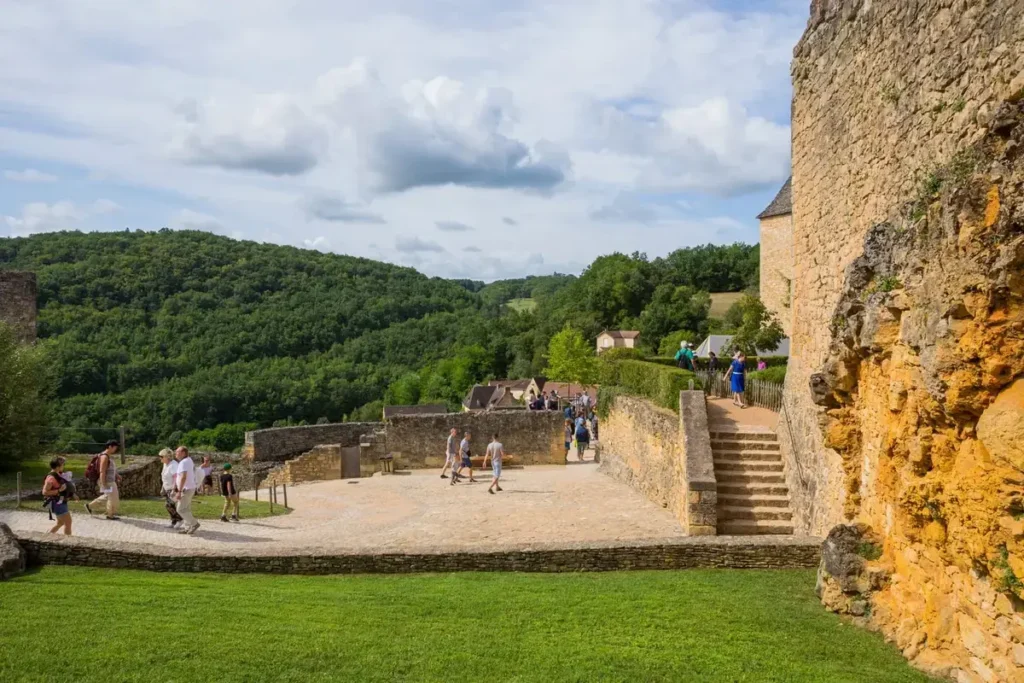
Scenic viewpoints pepper the Dordogne valley.
- Le Rocher du Peintre (Artist’s Rock) provides remarkable valley views; the page suggests visiting at sunset to enjoy colourful skies.
- Domme’s belvedere near the castle of the Roy offers a 180-degree panorama across the river, villages, and fields.
- Beynac’s lookout rewards those who climb beyond the village with vistas of nearby castles; the light is best in late afternoon.
Other viewpoints include Loubressac, Roc des Monges, and the Belvedere de Copeyre, each offering different angles on the valley.
The Vézère valley tourism site suggests additional sunrise and sunset spots. The Route des Chènes in Farges provides splendid valley views, particularly when morning mist fills the valley. The Panoramic Gardens of Limeuil, the Côte de Jor, and La Loulie near Mauzens et Miremont are other recommended locations.
For sunrise, the plains of Fleurac offer quiet scenes with cows and meadows, whereas La Madeleine glows at dusk as the setting sun illuminates stone facades. In the Vézère valley, hot-air balloon flights offer unmatched aerial perspectives. These varied viewpoints illustrate why photographers treasure the region.
After spending the day exploring the villages, castles, and scenic viewpoints of the Dordogne Valley, many travellers look for a peaceful place to relax in the countryside. Staying near the Dordogne River allows visitors to experience the region’s rhythm more fully, with easy access to canoe routes, river beaches, and historic villages, while enjoying quiet evenings surrounded by nature.
Stay in a Private French Château Near the Dordogne River
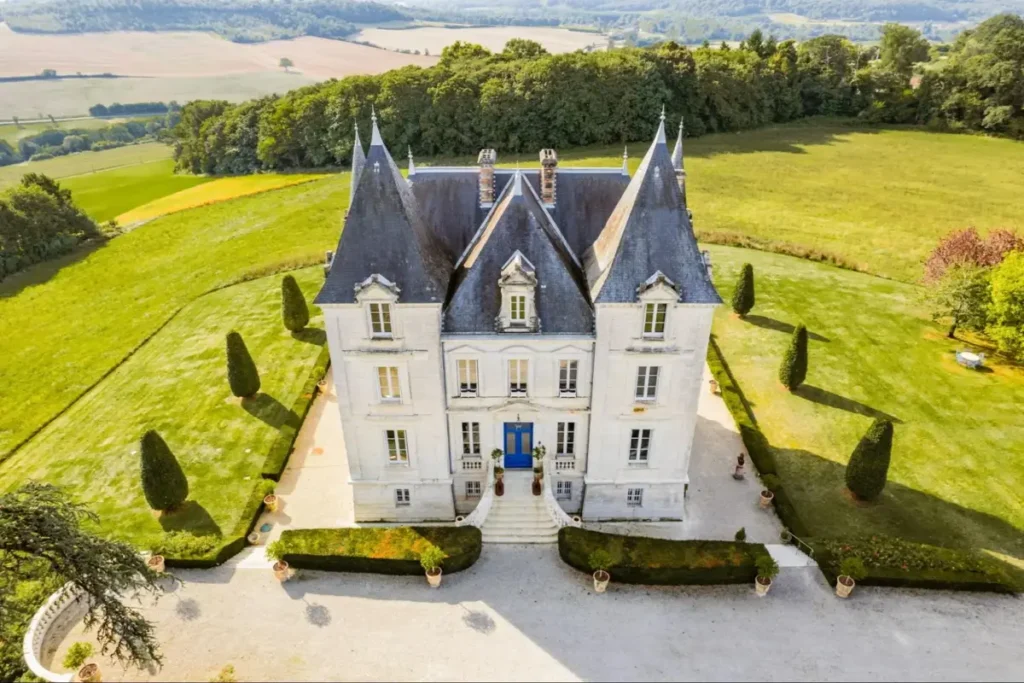
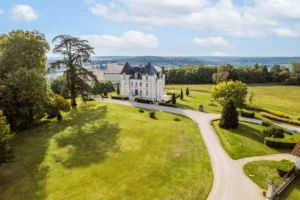
Travellers who want to experience the Dordogne River Valley beyond typical hotels may enjoy staying at Château de Lasfonds, a historic countryside estate that offers guests the opportunity to stay in a traditional French château while exploring the region.
Located within driving distance of many villages along the Dordogne River in France, the estate provides a peaceful rural setting surrounded by farmland, forests, and quiet country roads. This location allows visitors to spend their days canoeing along the river, exploring medieval towns such as Beynac and Domme, or visiting local markets, before returning to the château’s calm atmosphere in the evening.
Unlike typical accommodations, the château can host private group stays and family gatherings, allowing guests to enjoy the property exclusively. The estate includes landscaped gardens, outdoor terraces, and spacious interiors designed for relaxation after a day of exploring the Dordogne River Valley.
Guests staying here also benefit from convenient access to many highlights of southwest France. Within easy driving distance, travellers can visit the castles of the Dordogne valley, explore vineyards around Bergerac, and discover historic towns such as Sarlat.
For travellers seeking a memorable stay in southwest France, Château de Lasfonds offers an authentic château experience in the heart of the Dordogne region. If you are planning a trip to explore the Dordogne River Valley, you can book your stay or contact us to check availability and plan your visit.
Planning Tips: Practical Advice for Visitors
Book Activities Early: High season (July and August) sees heavy demand for canoes and accommodation. Booking your canoe hire and lodging well in advance will save time and disappointment.
Check Weather and Water Levels: Hydropower releases can change river levels quickly; pay attention to EDF’s warning signs and avoid prohibited zones. After heavy rain, currents may strengthen. Conversely, drought conditions may lower water levels and restrict water usage in some communes..
Choose the Right Section: Families and novices should choose the middle and lower valleys where currents are gentle. Experienced paddlers seeking a challenge can explore the upper valley’s gorges.
Respect Safety Rules: Always wear a life jacket and keep it fastened. Stay in the middle of the river, pass between bridge pillars, and avoid tree branches. Wet your neck to avoid thermal shock and take breaks to stay hydrated. Do not attempt to swim after drinking alcohol or eating heavily.
Pack the Essentials: Bring closed shoes, a hat, sunscreen, drinking water, snacks, and a waterproof bag for electronics. Use a glasses cord to prevent losing eyewear.
Camping and Multi-Day Trips: Numerous campsites line the river, enabling multi day adventures. Fires are generally prohibited and travellers should lock their canoes overnight. Some operators offer bivouac packages with tents and cooking gear.
Cultural Etiquette: The Dordogne is not only a natural playground but also a living community. Respect local residents by keeping noise levels low, avoiding private property, and greeting people politely. Support local businesses by purchasing meals in villages and visiting markets. In villages like Domme and La Roque Gageac, narrow streets can be crowded; patience and courtesy enhance everyone’s experience.
FAQs about the Dordogne River
Why is the Dordogne River famous?
The Dordogne River is famous for its dramatic scenery, medieval castles, and picturesque villages. The river winds through limestone cliffs and historic towns such as Beynac and La Roque Gageac, making it one of the most scenic river valleys in France.
What is special about the Dordogne?
The Dordogne region stands out for its combination of natural beauty, medieval architecture, and rich culinary traditions. Visitors explore castle-lined river valleys, prehistoric caves, vibrant markets, and vineyards while enjoying outdoor activities such as canoeing, swimming, and hiking.
What is the most beautiful town in Dordogne?
Many travelers consider La Roque-Gageac one of the most beautiful towns in Dordogne. The village sits between golden limestone cliffs and the river, with traditional stone houses and palm trees creating one of the most photographed scenes in southwest France.
Can you swim in the Dordogne River?
Yes, many parts of the Dordogne River are suitable for swimming. During summer, supervised beaches operate along the river and water quality is usually rated excellent. Popular swimming spots include Limeuil, Caudon, and several natural pebble beaches.
What food is Dordogne famous for?
The Dordogne region is renowned for traditional French cuisine, particularly duck confit, foie gras, walnuts, and truffles. Local markets also offer goat cheese such as Rocamadour and wines from nearby Bergerac vineyards.
What is the main town in Dordogne?
The capital of the Dordogne department is Périgueux, which serves as the administrative and cultural centre of the region. Other important towns include Bergerac, Sarlat-la-Canéda, Nontron, Terrasson-Lavilledieu, and Ribérac. Each town has its own historic character, markets, and access to the landscapes of the Dordogne region.
What does Dordogne mean in English?
The name Dordogne does not have a direct English translation. It comes from ancient roots referring to the two rivers, the Dore and the Dogne, whose names combine to form Dordogne.
How many days should you spend in Dordogne?
Most visitors spend three to five days exploring the Dordogne region. This allows enough time to visit medieval villages such as Sarlat-la-Canéda, canoe along the Dordogne River, explore castles like Beynac, and enjoy local markets and countryside landscapes.
What are the most beautiful villages along the Dordogne River?
Some of the most scenic villages along the Dordogne River Valley include Beynac-et-Cazenac, La Roque-Gageac, Domme, and Limeuil. These villages are known for stone houses, hilltop views, and historic castles overlooking the river.
When is the best time to visit the Dordogne River?
The best time to visit the Dordogne River in France is between May and September. Summer offers warm weather for swimming and canoeing, while spring and early autumn offer quieter villages, mild temperatures, and beautiful countryside.