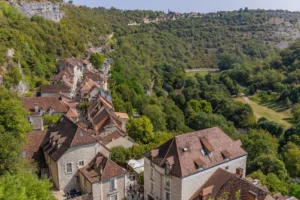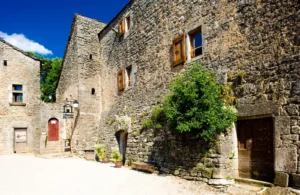
Dordogne offers a storybook setting of medieval castles, gentle rivers, and quaint villages that delight all ages. This region in southwest France (historically called Périgord) is famed for its “1001 castles,” prehistoric caves, and lush countryside, making it a versatile destination for families with toddlers, teens, and even grandparents. Unlike crowded tourist hotspots, Dordogne blends educational experiences (like exploring real caverns and fortress ruins) with outdoor fun (such as canoeing on calm rivers).
Parents appreciate the rich culture and gastronomy, while kids find plenty of space to play and hands-on activities to spark their curiosity. The climate is pleasant from spring through fall, and many attractions are open-air, allowing children to roam freely without feeling confined. In short, Dordogne’s mix of history, nature, adventure, and French country charm offers something for every generation to enjoy.
Tip: To avoid the peak crowds and heat, plan your visit for late spring or early fall. The region is at its busiest from mid-July to mid-August, so traveling just outside that window lets your family explore more comfortably.
Prehistoric Adventures: Caves & Interactive Parks
One of Dordogne’s biggest draws for families is its wealth of prehistoric sites. The Vézère Valley is a UNESCO-listed cradle of prehistoric art, and a visit here is like time-traveling to the Cro-Magnon era.
Lascaux IV and the World of Cave Art
Lascaux IV, the International Center of Parietal Art in Montignac, is the region’s most iconic prehistoric site. Families tour a full-scale replica of the original cave with a guide, allowing children to safely admire the famous bulls and horses painted by Paleolithic artists. Interactive displays and digital storytelling help explain cave art and early human life without overwhelming young visitors.
Hands-On Prehistory at Roc de Cazelle and Roque Saint-Christophe
Roc de Cazelle Prehistoric Park offers a rare chance to walk through real cliffside shelters once inhabited until the twentieth century. Life-size scenes show how prehistoric families lived, hunted, and gathered. Children can join workshops to try spear throwing, cave painting, or fire making using traditional techniques.
Roque Saint-Christophe provides a dramatic contrast. This vast limestone cliff stretches over one kilometer and once functioned as both a troglodyte settlement and a medieval stronghold. Families explore terraces carved into the rock, discovering kitchens, shelters, and a replica crane used to lift supplies. Educational workshops help children understand survival across different eras.
Préhisto-Parc in Tursac for Younger Children
For a lighter prehistoric outing, head to Préhisto-Parc in Tursac. This outdoor trail leads you through the woods to discover life-size scenes of Neanderthals and Cro-Magnons in everyday activities. It’s set up in a kid-friendly way, with buttons to press and models of prehistoric animals and plants, almost like a Stone Age storyboard.
Préhisto-Parc also offers thematic workshops (similar to the other parks) to deepen kids’ appreciation in a fun way. These parks are highly interactive, allowing children to not just see history but touch and try aspects of it – perfect for school-age kids who learn best by doing.
Underground Wonders: Family-Friendly Caves to Explore
Beyond Lascaux, the region offers impressive natural caves suitable for families. The Gouffre de Padirac, just across the border in the Lot, is a highlight. Visitors descend deep underground before boarding a boat that glides along a subterranean river beneath vast chambers and towering stalactites.
Closer to Sarlat, the Gouffre de Proumeyssac showcases dramatic calcite formations with a light-and-sound presentation. Its petrifying fountain often fascinates older children interested in science. The nearby Grotte du Grand Roc in Les Eyzies is smaller but known for delicate crystal formations and an intimate, fairy-like atmosphere.
National Prehistory Museum: Learning Beyond the Caves
To round out the experience, the National Prehistory Museum in Les Eyzies is a must for curious young minds. Home to France’s largest collection of Paleolithic artifacts, the museum presents tools, fossils, and art in a modern, child-accessible format.
Life-size models of prehistoric humans and animals help children visualize the past, while replica tools allow for hands-on learning. The dedicated Camp des Petits Sapiens play area offers interactive games, costumes, and creative activities, and seasonal workshops let kids try rock art painting or flint carving under expert guidance.
Medieval Castles & Villages: Living History for All Ages
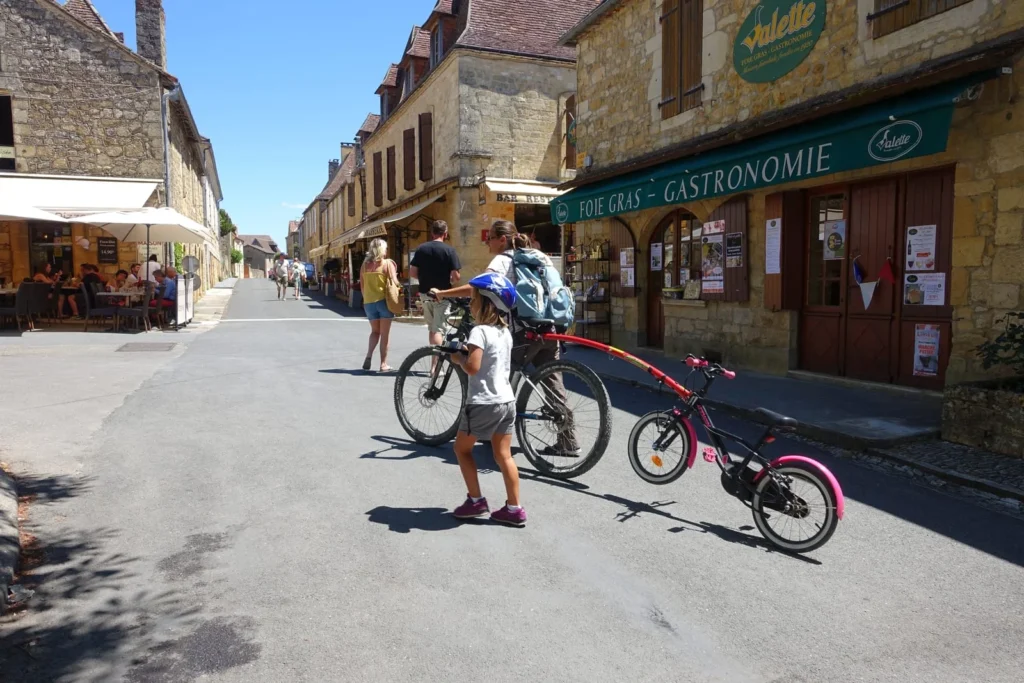
Dordogne’s medieval castles work well for families because many offer demonstrations, workshops, and open exploration rather than static exhibits. Children engage through movement, visuals, and hands-on activities, making history easier to absorb.
Château de Castelnaud: Medieval Warfare in Action
Château de Castelnaud overlooks the Dordogne River and is one of the most child-friendly castles in the region. Its museum focuses on medieval warfare, with armor, swords, and full-size trebuchets displayed throughout the site.
During summer, scheduled demonstrations show trebuchet firing, blacksmithing, and daily fortress life. Costumed guides explain how the castle functioned, and evening events such as torch-lit tours or mock tournaments are often available. These elements keep children engaged without requiring long explanations.
Château de Beynac: Clifftop Fortress Experience
Across the valley, Château de Beynac offers a more atmospheric visit. Formerly linked to Richard the Lionheart, the fortress rises above the village of Beynac-et-Cazenac on a steep cliff.
The uphill approach passes through the medieval village before reaching stone halls, battlements, and panoramic terraces. Castelnaud is visible from the ramparts, helping children visualize medieval rivalries. Beynac has fewer interactive features, but its scale and setting make it memorable.
Château des Milandes: Birds of Prey and Outdoor Shows
Château des Milandes suits younger children particularly well. Alongside its interiors, the estate hosts daily bird-of-prey demonstrations featuring eagles, falcons, and owls flying over the gardens.
Falconers explain each species and often involve children. The Children’s Falconry Workshop, aimed at ages five to thirteen, introduces basic handling and care concepts. Open lawns, gardens, and a small play area support a relaxed visit.
Château de Bridoire: Play-Based History
Château de Bridoire focuses on learning through play. In addition to furnished rooms, the estate offers access to more than one hundred traditional games across the castle and grounds.
Activities include large wooden board games, puzzles, mazes, archery, sack races, stilts, and a medieval-style catapult challenge. The variety suits all ages, making Bridoire a strong option for multi-generational families. Many visitors plan several hours on site and bring a picnic.
Château de Lasfonds: Elegant Rural Escape with Historic Flair
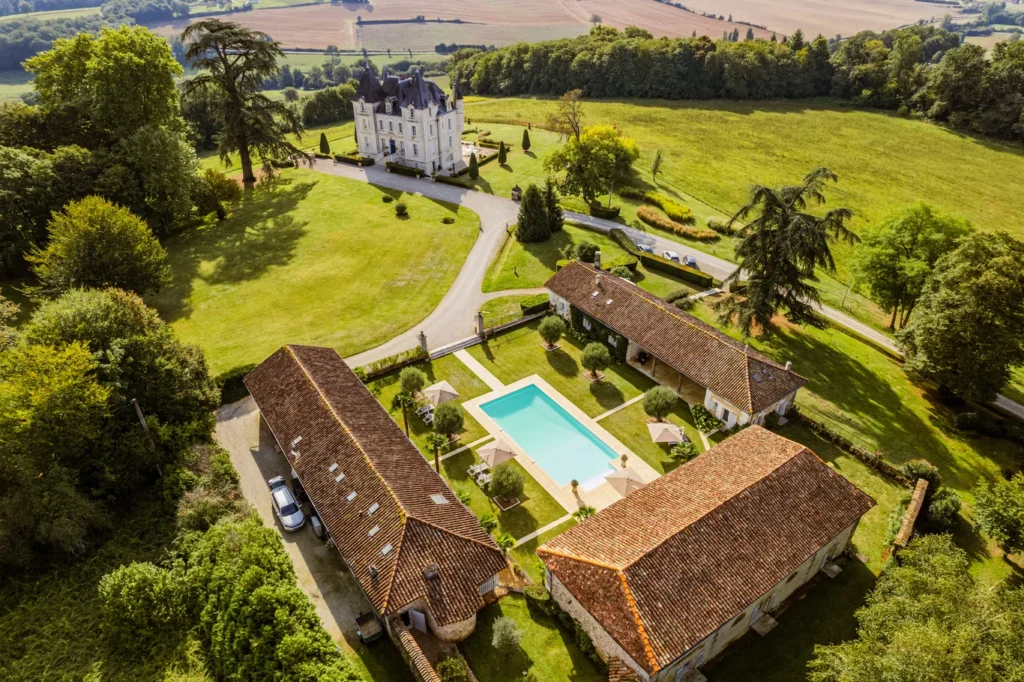
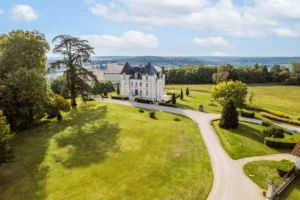
Château de Lasfonds sits on a gentle hill in the border area between Périgord Vert and Charente, under an hour from Périgueux, blending 19th-century Neo-Gothic and Neo-Renaissance architecture with modern comforts.
Unlike the more traditional fortress castles, Lasfonds isn’t a public museum — it’s a luxury private estate that you can rent for family stays or group gatherings, with spacious lounges, landscaped gardens, and a heated outdoor pool on its 6.5-hectare grounds. Children and adults alike appreciate the combination of historic stone façades, panoramic views over rolling countryside, and bright, elegant interiors that make the château feel like a real castle retreat.
Though Lasfonds doesn’t offer medieval warfare, its serene setting, large family spaces, and proximity to charming Dordogne villages and natural sites make it a memorable stop or even an overnight centerpiece to your Dordogne castle itinerary.
Medieval Villages and Storybook Towns of Dordogne
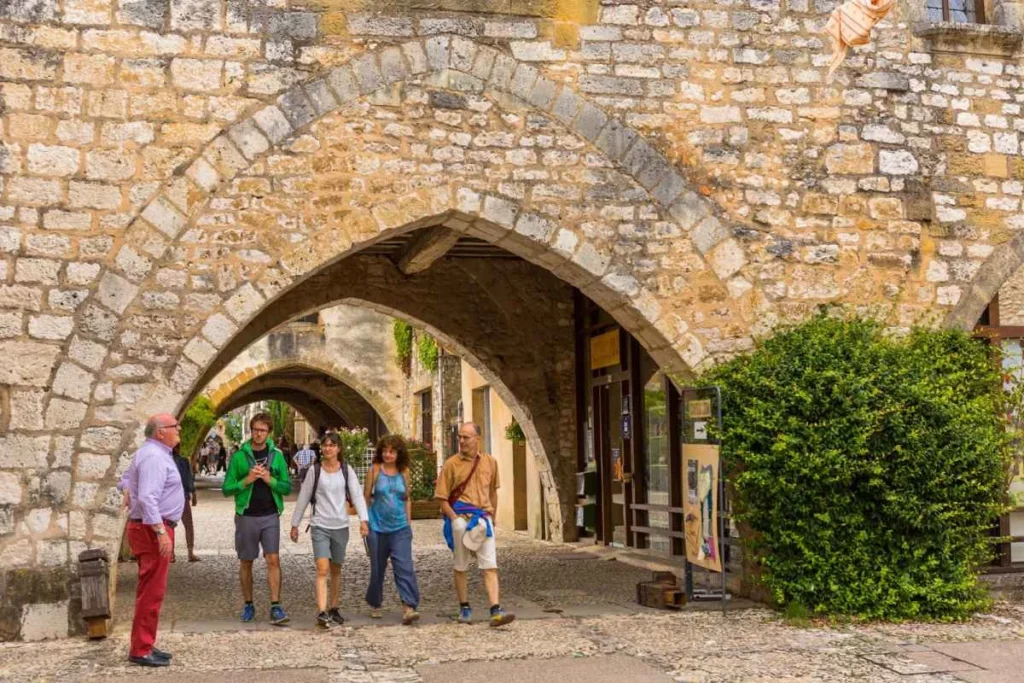
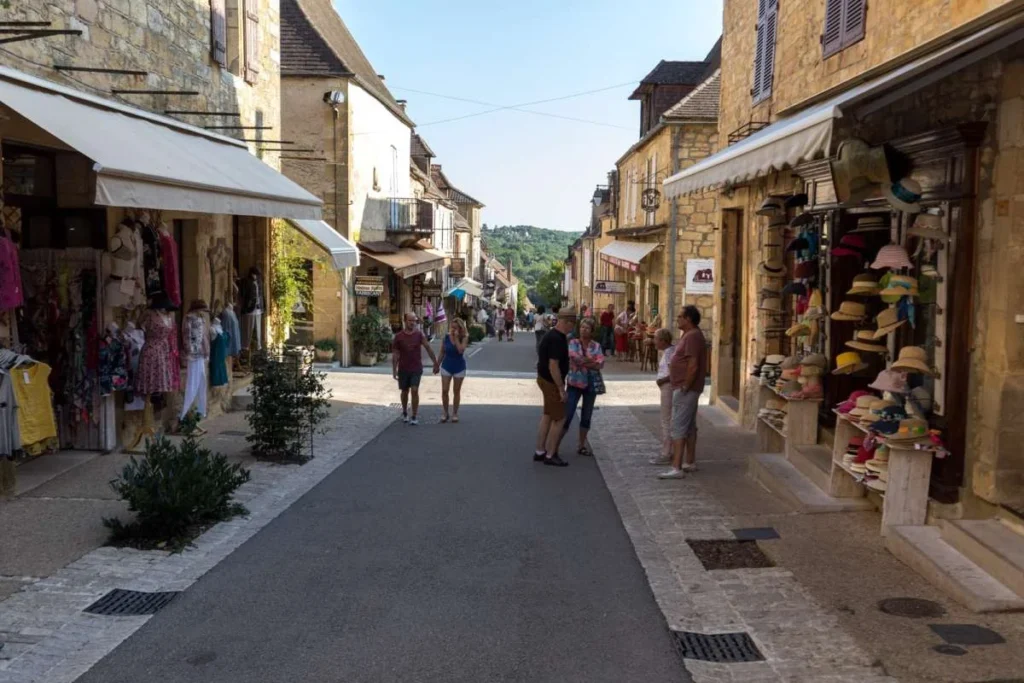
Dordogne’s medieval villages offer families an easy, low-stress way to experience history together. Compact layouts, car-free streets, and open squares encourage exploration without formal tours or rigid schedules.
Sarlat-la-Canéda is the most family-friendly base. Its golden-stone old town is ideal for wandering, with summer street performers and plenty of stops for ice cream or crêpes. The glass elevator inside St. Mary’s Church leads to a rooftop viewpoint overlooking the entire town, while the weekly market introduces children to local food in a lively setting.
Several nearby villages feel straight out of a storybook.
- La Roque-Gageac sits between river and cliff, where families can stroll narrow lanes, explore cliffside gardens, or take a traditional boat ride along the Dordogne.
- Domme, a fortified hilltop village, offers panoramic views and sections of old ramparts that children enjoy walking along while imagining life as a medieval lookout.
- Monpazier’s perfectly preserved bastide square gives children space to move freely while adults relax under arcaded walkways.
- Rocamadour, just outside Dordogne, adds a sense of adventure with its stacked chapels clinging to a cliff. The climb, or elevator ride, becomes part of the experience, especially for older children who enjoy the challenge and views.
Each village has its own stories and local specialties. Sharing small details, from knightly legends to regional cheeses, keeps children engaged. Many tourism offices also provide family walking routes or treasure-hunt maps, turning simple strolls into memorable discoveries.
Outdoor Fun: Rivers, Canoes, and Natural Playgrounds
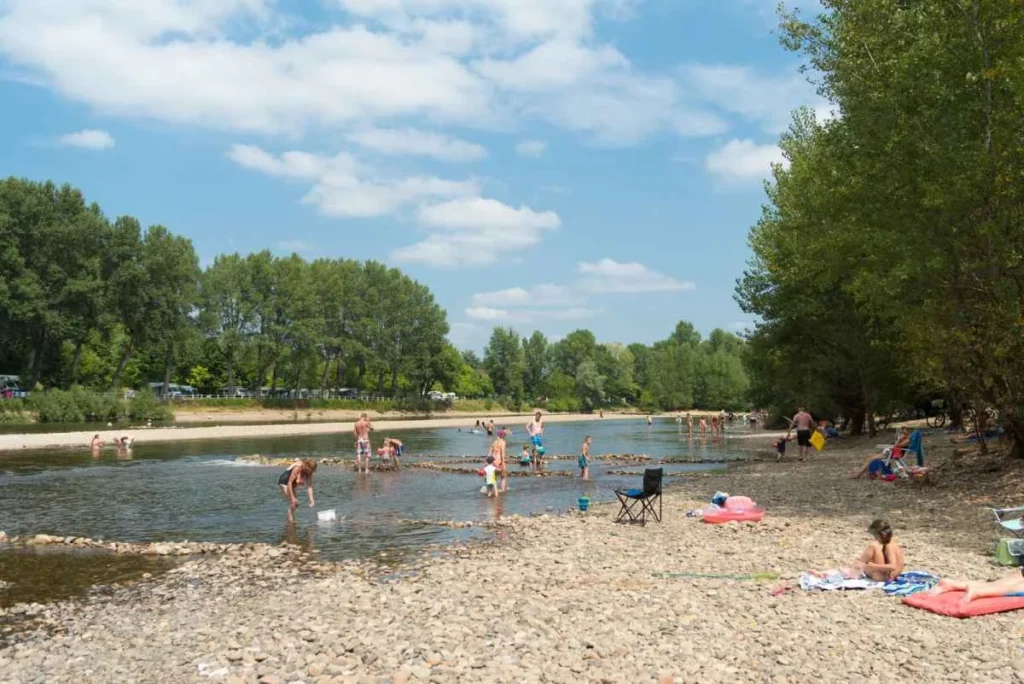
Dordogne’s rivers and countryside make outdoor activities easy to combine with family sightseeing. Most experiences are low-risk, well-organized, and suitable for mixed ages, which makes them ideal for relaxed family days.
Canoeing and River Cruises on the Dordogne
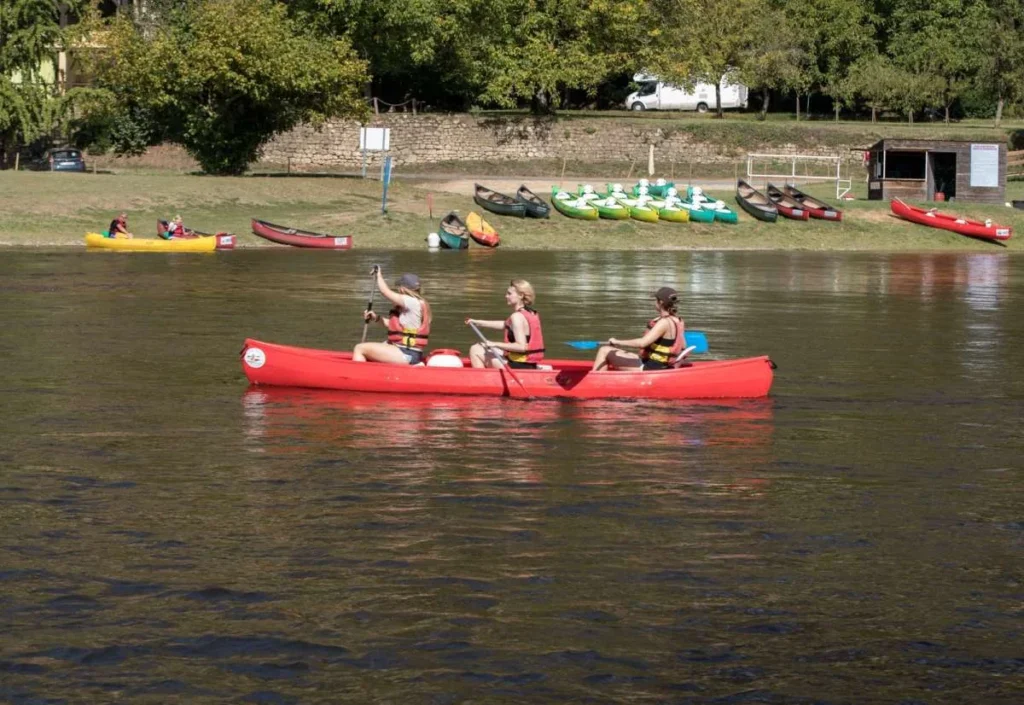
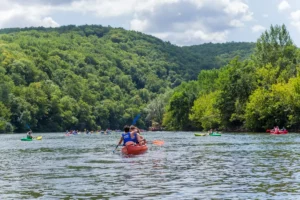
Canoeing or kayaking on the Dordogne River is one of the region’s most popular family activities. The river is calm and clean, and most routes are suitable for beginners. Children from around age six can paddle independently or ride with a parent.
Summer canoe rentals offer half-day routes that pass stone bridges, limestone cliffs, and castles such as Castelnaud and Beynac. The pace is slow, with plenty of pebble beaches for breaks or picnics. For families with very young children or those who prefer not to paddle, traditional gabare boat cruises provide a relaxed alternative, with commentary and unobstructed views of the riverside’s most beautiful villages and castles.
Swimming Spots, River Beaches, and Lakes
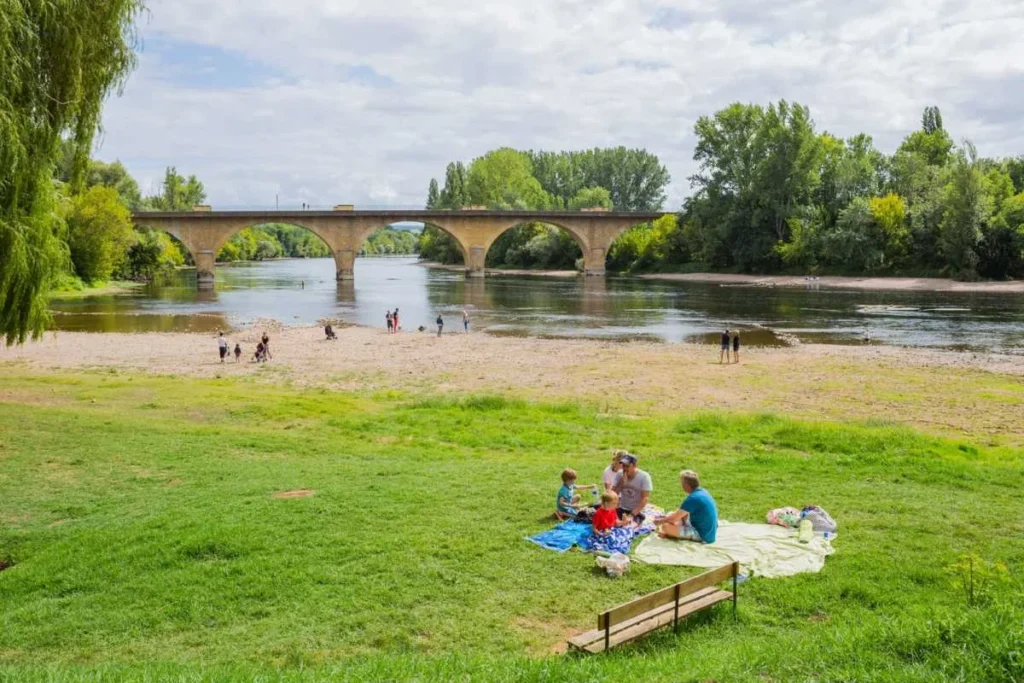
While Dordogne has no coastline on the ocean, it offers many safe swimming areas. Designated river beaches in France and lakes feature shallow entries and calm water suitable for children. Popular spots include Limeuil, where the Dordogne and Vézère rivers meet, and La Roque-Gageac, both offering scenic surroundings.
In high summer, some locations have lifeguards, picnic tables, playgrounds, and snack bars. Several small lakes also install inflatable water parks or slides, creating natural swim areas that appeal to school-age children. Carrying swimsuits on day trips is worthwhile, as swimming opportunities appear frequently.
Cycling the Sarlat Voie Verte
The Sarlat Voie Verte is a traffic-free cycling path built on a former railway line. It runs for roughly 50 kilometers through flat countryside, making it suitable for younger cyclists and multi-generational groups.
Bike rentals are available along the route, including child seats and trailers. Families cycle through woods, tunnels, and over stone bridges, with regular picnic areas and access points to the river. The route allows for flexible planning, from short rides to longer half-day outings.
Unusual Outdoor Activities for Older Kids
For something different, families can try vélo-rail rides in northern Dordogne. These pedal-powered carts run along old railway tracks and seat up to four people. Routes pass through forests and tunnels and require teamwork, with at least one strong adult pedaling.
Guided electric off-road scooter tours are another popular option, especially for families with teenagers. These tours follow country paths through forests and vineyards, covering more ground than hiking while requiring less physical effort. Safety gear and instruction are provided.
Treetop Parks and Nature Play Areas
Dordogne has several accrobranche parks with rope courses and zip lines set in forests. Most offer multiple circuits by age group, including continuous safety systems for younger children and more challenging routes for teens. These parks are well-suited for half-day visits and usually include picnic areas.
Some parks combine treetop courses with themed trails, such as dinosaur paths or cave exploration, which keeps younger children engaged and adds variety.
Easy Walks and Family-Friendly Gardens
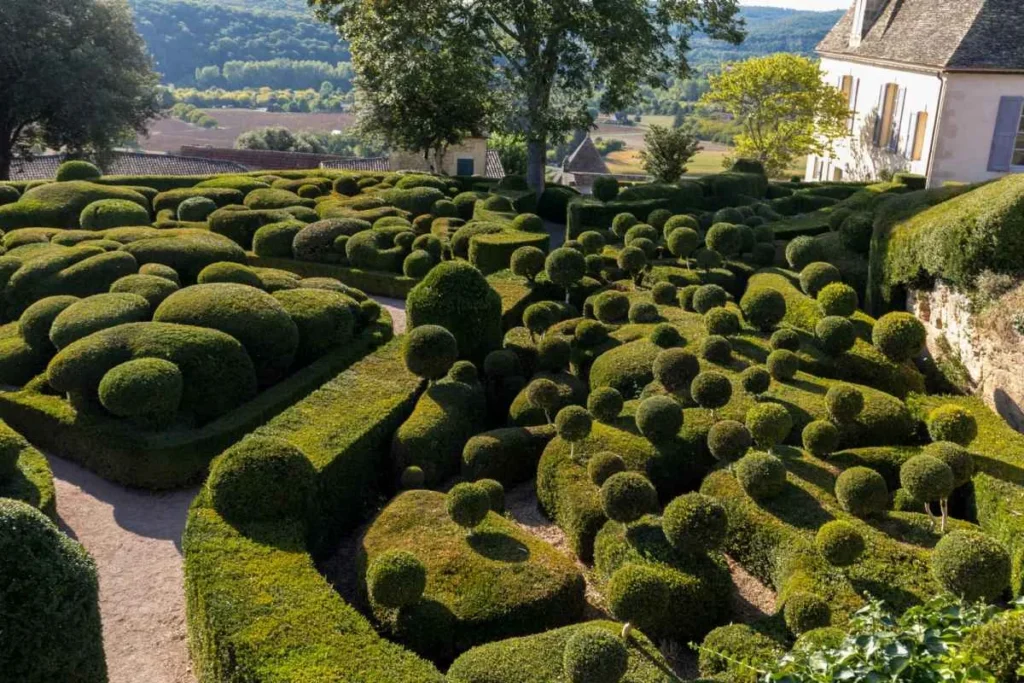
Simple walks often work best with children. Forest paths, river viewpoints, and short scenic trails allow families to enjoy nature without long hikes.
The Gardens of Marqueyssac are especially suitable for families. Wide, well-maintained paths wind through sculpted hedges, with viewpoints, swings, a small playground, and picnic areas. Children can explore safely while adults enjoy panoramic valley views. Summer candlelit evenings add a memorable atmosphere for families comfortable with later outings.
Tasting Dordogne: Family Food & Farm Experiences
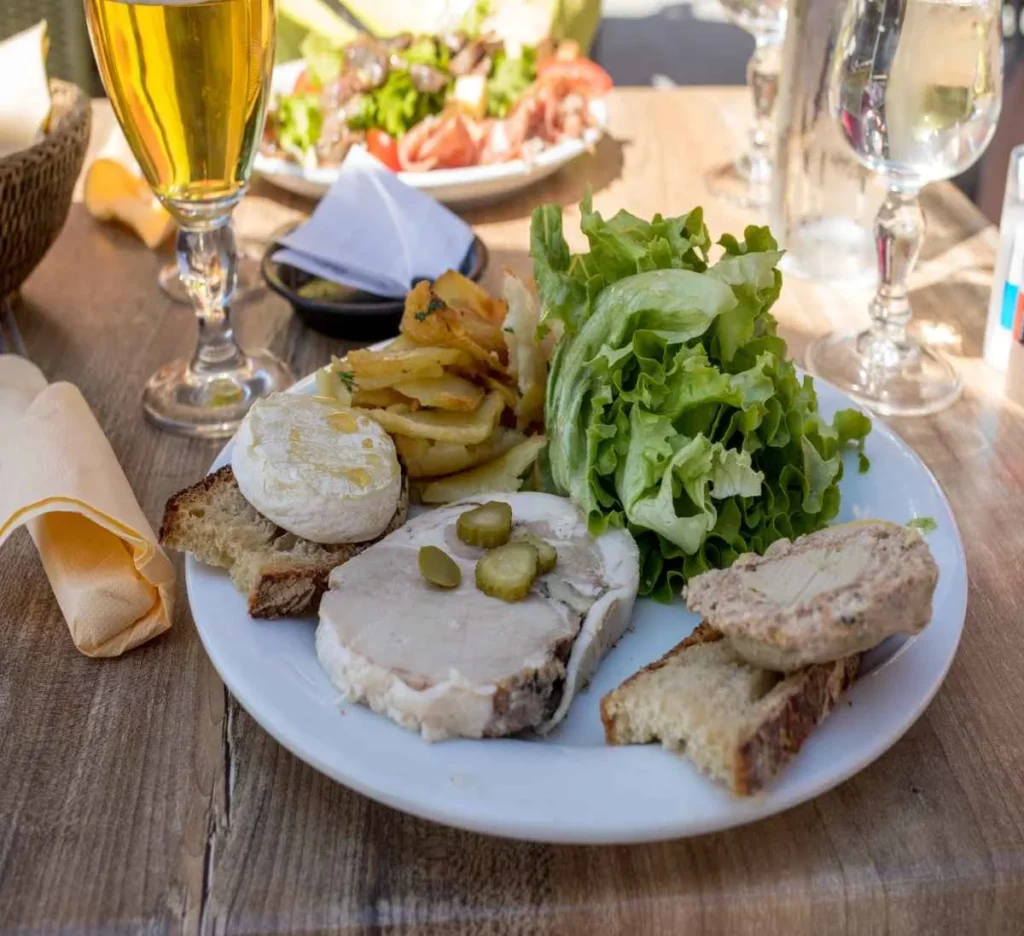
Dordogne’s food culture is rich, but it remains approachable for families. Markets, small museums, and farms offer hands-on experiences that help children engage with local food without requiring formal tastings or long meals.
Farmers’ Markets and Everyday Food Discovery
Farmers’ markets are one of the easiest ways to introduce children to local Dordogne food. Sarlat hosts the most famous market, but nearly every town has a weekly one. Bright fruit stalls, pastries, cheeses, and baked goods naturally attract young visitors.
Children can sample seasonal produce, walnut cake, or the best chocolates in Bordeaux while learning where food comes from. Markets also provide a gentle cultural lesson, as kids practice simple French greetings and interact directly with producers.
Bovetti Chocolate Museum in Terrasson
The Bovetti Chocolate Museum is a reliable favorite for younger children. The visit explains chocolate-making in a simple, visual way, from cocoa bean to finished bar.
A short workshop allows each child to create and decorate their own chocolate, which they take home. Parents can sample products as well, making this a well-balanced stop for the whole family and a good option on rainy days.
Moulin de la Rouzique: Hands-On Craft Experience
Near Bergerac, the Moulin de la Rouzique offers a hands-on visit to a working paper mill. The mill still produces paper using traditional methods, powered by a waterwheel.
Children make their own sheet of paper by dipping a screen into pulp, then lifting out a fresh page to dry. The activity is tactile and engaging, and the surrounding grounds are well-suited for a relaxed picnic afterward.
Farm Visits and Local Producers
Farm visits work well in Dordogne’s rural setting. Goat cheese farms often welcome families, allowing children to see animals and watch basic production steps before tasting. Walnut farms are another highlight, as the region is known for AOC walnuts.
Some producers demonstrate traditional walnut pressing or allow children to crack walnuts by hand. A few farms also offer farm-stay accommodations, where families can experience daily farm routines in a controlled, family-friendly environment.
Eating Out and Night Markets with Children
Restaurants in Dordogne are accustomed to families and tourists. Children’s menus are common, and staff usually provide high chairs and accommodate strollers. Parents can enjoy regional dishes while children choose simpler options.
In summer, village night markets create an especially relaxed dining experience. Food stalls sell local dishes that families eat at shared tables outdoors. Live music and open space allow children to move freely while trying small portions of different foods.
Picnics by the Dordogne River
Picnicking is often the easiest and most enjoyable way to eat as a family. Markets make it simple to assemble fresh bread, cheese, fruit, and local pâté.
Riverside picnic spots are common near canoe launches, parks, and village edges. While adults relax, children can play or paddle at the water’s edge, often with views of castles or medieval bridges. These unplanned moments frequently become the most memorable meals of the trip.
Best Family-Friendly Places to Stay in Dordogne
After adventure-filled days, you’ll want a comfortable and welcoming place to unwind. Dordogne offers plenty of family-friendly accommodation, from charming farmhouses to full-service resorts. Here are some top options and tips:
Family Hotels and Château Stays
Dordogne has a good selection of family-friendly hotels that balance comfort, space, and convenience after busy days exploring. Many offer family rooms, breakfast included, and easy access to town centers or countryside attractions.
In Sarlat and Bergerac, look for small hotels and guesthouses (chambres d’hôtes) with family rooms or apartment-style accommodations that keep young children close at hand. These often include hearty breakfasts with local products, which can be a simple way to start the day without extra planning.
Larger towns also have reliable chain hotels that offer practical amenities such as baby cots, late check-in, and English-speaking staff — useful when travelling with toddlers or arriving after a long journey.
Just outside town, renovated country properties often feel more like a family home than a hotel. These stays typically feature outdoor space, gardens, and pools where kids can play while parents relax. Pools and secure outdoor areas make these options especially appealing in summer.
Stay in a Private Château
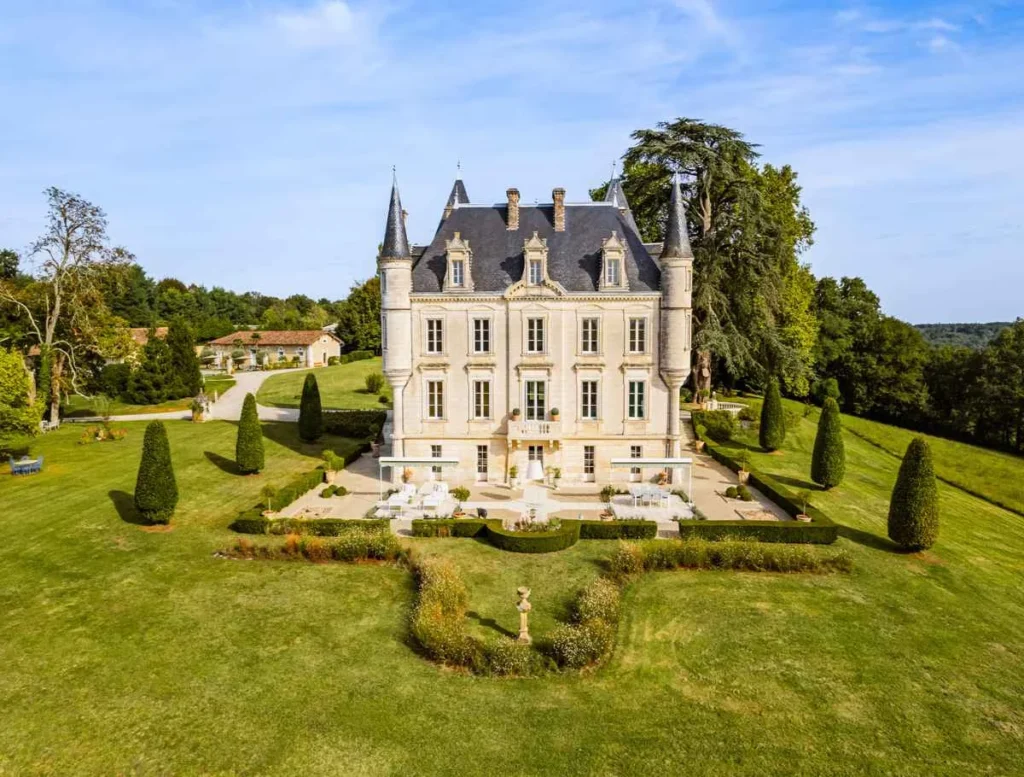
For families seeking a more immersive stay, Château de Lasfonds offers the opportunity to live on a private historic estate. Set in peaceful countryside, it works especially well for extended families or groups who want space, privacy, and a memorable château setting during their stay in the Dordogne.
Holiday Villages, Gîtes and Rentals
For more space and flexibility, gîtes and holiday villages are popular with families. Le Hameau du Moulin, near Lascaux, offers duplex cottages and apartments sleeping up to eight people, along with a kids’ club and outdoor pool. Baby equipment is available, and summer activities help keep children occupied.
In southern Dordogne, Castelwood provides fully equipped wooden chalets in a forest setting, with a heated pool and optional babysitting. Its proximity to Biron Castle allows easy, crowd-free early visits.
Private gîtes and villas are widely available across Dordogne, many with pools, enclosed gardens, and outdoor play areas. These rentals work especially well for longer stays or larger groups, offering kitchens, flexible meal times, and better value than multiple hotel rooms.
Camping and Holiday Parks
Dordogne is known for high-quality campsites that function more like outdoor resorts. Camping Le Moulin de la Pique offers multiple pools with slides, kids’ clubs, sports facilities, and a range of accommodation from mobile homes to glamping tents.
Domaine de Soleil Plage sits directly on the Dordogne River, with pools, a sandy river beach, and on-site canoe rentals. Activities for children and adults run throughout the season.
Smaller riverside campsites provide a quieter option. Camping de Carsac-Aillac combines a private river beach, pools, playgrounds, and family-sized mobile homes, while staying close to Sarlat.
Many campsites offer baby facilities, organized children’s activities, and communal spaces that suit multi-generational travel. These sites fill quickly in July and August, so advance booking is recommended. Shoulder seasons offer better availability and a calmer atmosphere.
Tips for a Smooth Family Trip
Plan a Balanced Itinerary
Dordogne offers more sights than most families can comfortably cover. Balance active mornings with slower afternoons to avoid burnout. Pair castle visits or caves with river time, picnics, or pool breaks. Let each child choose one activity they care about to help maintain enthusiasm throughout the trip.
Cater to Different Ages
Plan days around nap schedules if traveling with toddlers, and prioritize stroller-friendly sites such as gardens and town centers. Some castles and caves require baby carriers due to stairs. For teens, include activities that make them feel independent, like kayaking, treetop parks, or weapon-focused castle museums. Older travelers often enjoy boat rides, scenic viewpoints, and village cafés. Many major sites provide shuttles, elevators, or partial accessibility, making Dordogne workable for mixed-age groups.
Driving and Getting Around
A car is essential for families. Roads are rural and winding, so allow extra travel time and plan breaks for children prone to motion sickness. Download maps or use offline navigation, as mobile signal can drop in valleys. Child car seats are mandatory in France. Be aware of midday closures between roughly 12 and 2 pm, which often work well for lunch, rest, or naps.
Health and Safety
Dordogne is very safe, but supervision matters near castle ramparts and rivers. Follow posted safety guidance and avoid lifting children onto walls. At river beaches, mild currents still warrant floatation aids for younger children. Summer sun can be strong, so pack hats, sunscreen, and refillable bottles. Pharmacies are easy to find in towns and can assist with minor health issues.
Engage with Local Culture
Encourage children to use simple French greetings at markets and bakeries. Locals appreciate the effort, even when English is spoken. Casual interactions often lead to memorable moments, from watching a game of pétanque to learning about farm traditions.
Embrace the Slower Pace
Not every moment needs an activity. Some of the most memorable experiences come from unstructured time, such as riverside picnics, sunset views, or quiet evenings at your accommodation. Dordogne rewards families who slow down and enjoy being together as much as exploring the sights.
FAQs
Is Dordogne suitable for a family trip without speaking French?
Dordogne is very accessible for families who do not speak French. Most people in tourism speak English, signage is clear, and family travel in Dordogne is well supported through hotels, attractions, and restaurants used to international visitors.
How many days do families typically need to explore Dordogne comfortably?
Families usually need 7 to 10 days to comfortably explore the Dordogne. This timeframe allows a relaxed family holiday in Dordogne, with time for castles, outdoor activities, rest days, and flexible pacing without feeling rushed.
What is the best Dordogne base town for families with young children?
The best base town in Dordogne for families is often Sarlat-la-Canéda. It offers walkable streets, nearby attractions, markets, and family-friendly hotels, making family accommodation in Dordogne easier and reducing daily driving time.
Is Dordogne a good destination for a multi-generational family holiday?
Yes, Dordogne works extremely well for multi-generational family holidays. The region offers gentle activities, short driving distances, accessible villages, and varied accommodation, allowing grandparents, parents, and children to enjoy Dordogne together at their own pace.
Are Dordogne attractions suitable for children with limited mobility or special needs?
Some Dordogne attractions are suitable for children with limited mobility, but access varies by site. Many caves and castles provide partial accessibility, lifts, or shuttles, so checking family accessibility in Dordogne before visiting is essential.
What is the best way to travel to Dordogne with kids from Paris or Bordeaux?
The easiest way to reach Dordogne with kids is by train to Bordeaux, followed by a rental car. This route simplifies family travel to Dordogne, balances comfort with flexibility, and avoids long rural public transport connections.
Is Dordogne an expensive destination for family holidays compared to other parts of France?
Dordogne is generally more affordable for families than many French tourist regions. Accommodation, food, and activities are reasonably priced, making a family holiday in Dordogne good value, especially when renting gites or staying longer.
What should families pack for a summer trip to Dordogne?
Families visiting Dordogne in summer should pack light layers, sturdy walking shoes, sun protection, swimwear, and refillable water bottles. These essentials support outdoor activities in Dordogne while keeping children comfortable during long sightseeing days.
Are there rainy-day activities in Dordogne for families with children?
Yes, Dordogne offers several indoor and weather-friendly options for families. Museums, workshops, caves, and chocolate factories offer engaging rainy-day activities in Dordogne, ensuring children stay entertained even when outdoor plans change.
When is the cheapest time to visit Dordogne with family while still enjoying good weather?
The cheapest time to visit Dordogne with family is late May, June, or September. These months offer lower prices, fewer crowds, and pleasant weather, making them ideal for affordable family travel in Dordogne.