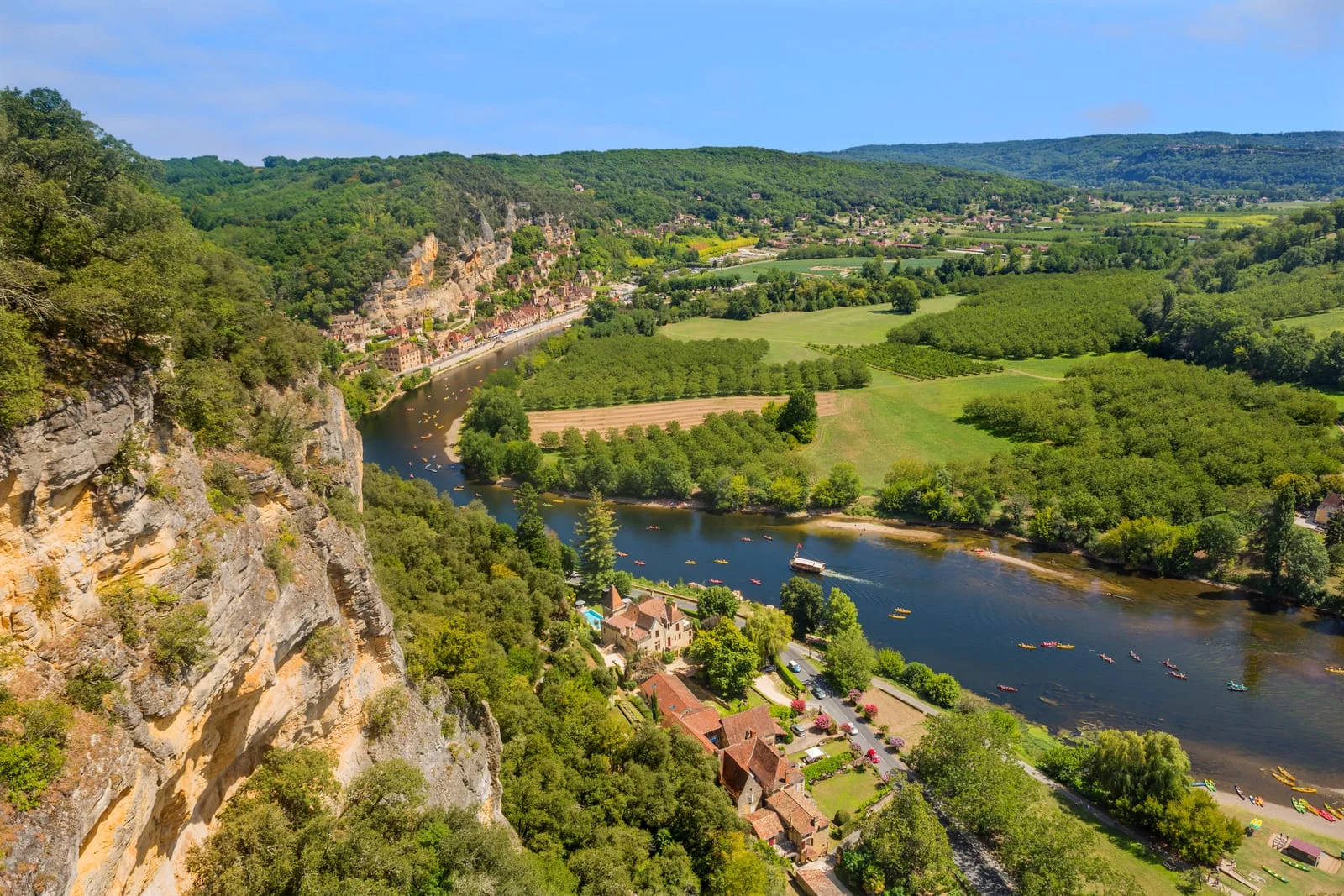
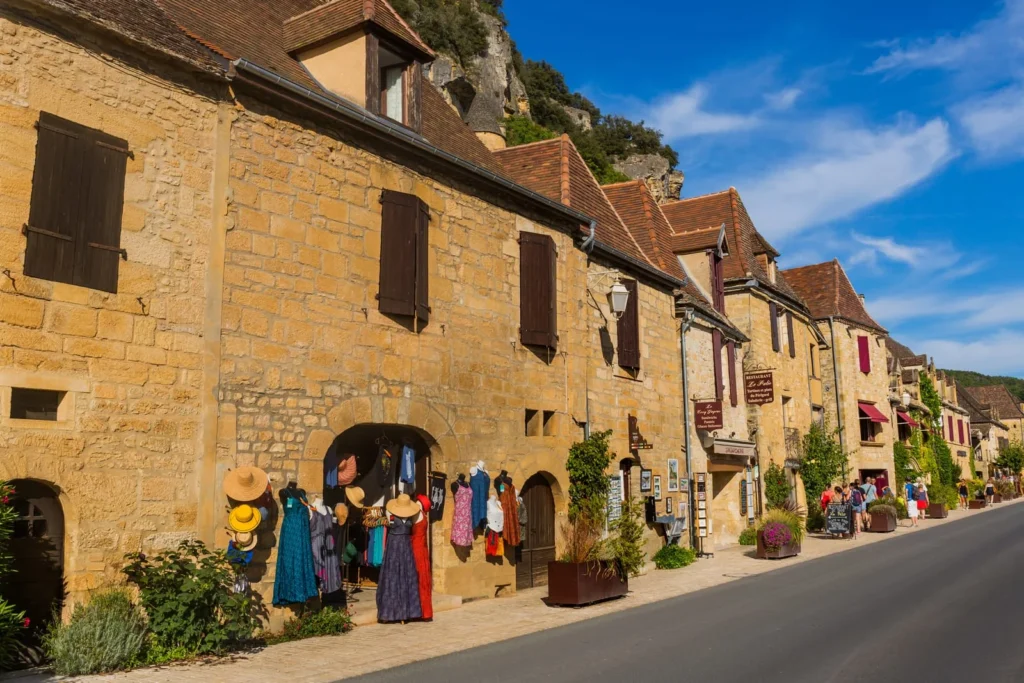
La Roque Gageac is a picturesque village in the Périgord Noir section of south‑west France. Its honey‑coloured houses are pressed against a steep limestone cliff along the Dordogne River. Since the 1970s, the south‑facing cliff has created a warm microclimate that shelters palm trees, banana plants, bamboo, and other exotic species.
The village is classified among “Les Plus Beaux Villages de France,” a designation awarded to communities with exceptional heritage.
This guide explores what to see in La Roque Gageac, recommends timing for visits, and explains how to enjoy the experience while staying in one of the region’s historic châteaux.
Historical Background and Origin of La Roque Gageac, Périgord
The fortified village we see today developed between the twelfth and sixteenth centuries. Its location along the navigable Dordogne River made it a small port where flat-bottomed boats, known as gabarres, transported goods such as timber, wine, salt, and walnuts.
During the Hundred Years’ War (1337–1453), control of the Dordogne Valley alternated between French and English forces. The cliff’s natural shelters made La Roque Gageac a defensible site; a troglodyte fort was carved into the rock to guard the valley.
In the eighteenth century, La Roque Gageac prospered as a port. Merchants built the handsome houses that now line the riverbank, giving the village its harmonious appearance. The port declined with the advent of railways, leaving La Roque Gageac an intact time capsule.
A dramatic rockfall in 1957 killed several residents, and another huge block threatened the village in 2010; these events prompted safety works on the cliff. Despite the risks, the inhabitants have preserved their heritage, and the village is now a major attraction in Périgord Noir.
Exploring the Village: What to See
The Church of Saint‑Donat (Saint‑Donatus)
The parish church of La Roque Gageac is often misidentified as Saint‑Sacerdos, but the local municipality explains that it is the Church of Saint‑Donat. It was built in 1330 and is roofed with traditional lauze slabs. The church is partly built into the cliff, and its terrace offers a panoramic view of the Dordogne valley.
Visitors can enter at any time; the terrace remains open year‑round. The bell tower and walls have been restored, and inside you’ll find a simple nave lit by stained glass. Standing on the terrace, you can appreciate how the cliff shelters the village and observe the changing light on the river.
Manoir de Tarde
A short stroll from the church brings you to the Manoir de Tarde, a manor built in the fifteenth century. Its architecture combines a square main building with a round tower and mullioned windows.
The manor served as the residence of the bishops of Sarlat before passing to private hands. It later became the home of Canon Jean Tarde, famous for mapping the diocese of Sarlat, and the philosopher Gabriel Tarde.
The building is protected as a historical monument. Visitors cannot tour the interior, but the façade and tower are visible from the street and illustrate the transition from fortified house to Renaissance manor.
The Troglodyte Fort (Fort de la Roque Gageac)
Above the village, at an altitude of around 120 m, the troglodyte fort clings to the cliff. Carved into natural rock shelters, it dates from the twelfth century and served as a defensive stronghold during the Middle Ages.
The cliff’s marine limestone contains cavities created by springs; medieval builders enlarged these hollows and added walls and platforms to create a refuge from attackers. Access to the fort originally involved a wooden staircase, rock‑cut steps, and a ditch. The defenders designed murder holes and arches to repel invaders.
Visitors reach the fort by climbing about 140 steps. At the top, you stand on a terrace with a 180‑degree panorama over the valley, ideal for spotting black kites and peregrine falcons. The interior troglodytic spaces remain closed for safety reasons, but interpretive panels recount the fort’s history.
The fort is open daily, with hours varying by season (generally 10 a.m.–6 p.m., with longer hours in summer and shorter in winter). Ticket prices for 2025–2026 are €7 for adults, €6 for students, €3.50 for children aged 10–17, and free for children under 10. The visit takes roughly 30–45 minutes and includes a free audio guide. Dogs are allowed if kept on a lead, and a car park lies about five minutes from the entrance.
The Exotic Garden and Bamboo Grove
Behind the church, you’ll find an exotic garden integrated into the cliff. The microclimate created by the south‑facing rock allows giant bamboo, fig trees, banana plants, palms, and other Mediterranean species to flourish.
Narrow paths weave through dense foliage, and the vegetation changes with the seasons; spring sees magnolias and camellias bloom while summer brings bananas and palms into full glory. The garden is free and open day and night, offering shade on hot days. Early morning and late afternoon are particularly pleasant times to wander through, when the light is soft and the crowds thinner.
Gabarres and River Cruises
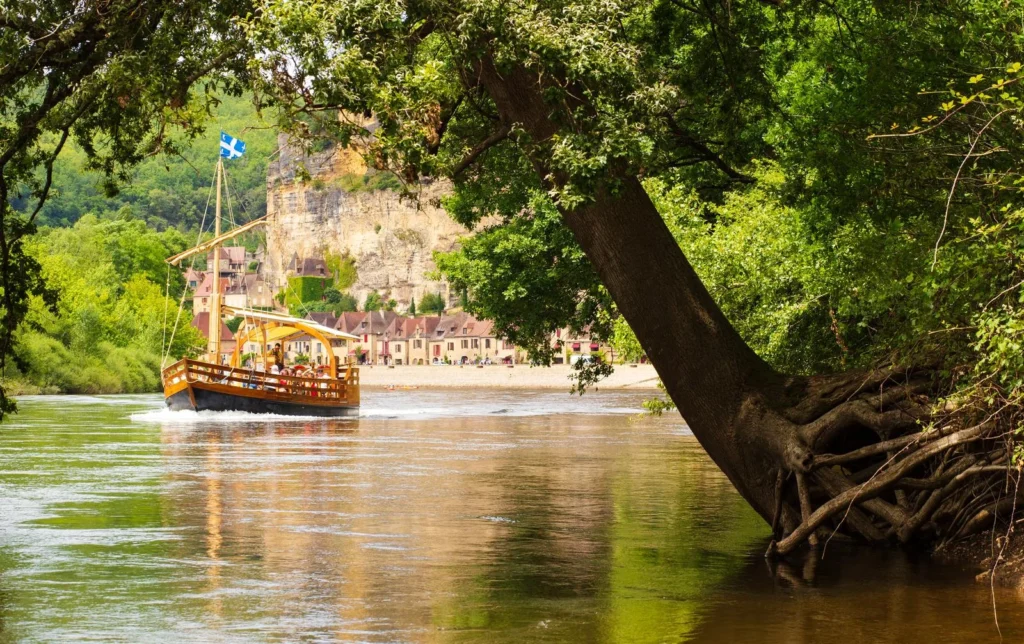
Flat‑bottomed gabarres once carried timber, wine, and salt along the Dordogne. Today, they take visitors on scenic cruises. The La Roque‑Gageac gabarre circuit covers about 6.5 km and lasts around 50 minutes. Boats depart daily from April 1 to November 1, between 9:30 a.m. and 6:00 p.m., with afternoon departures only in October.
Passengers sit on wooden benches and listen to commentary on local history and wildlife as they glide past limestone cliffs, walnut groves, and castles. The cruises provide views of Château de Beynac, Castelnaud, and the hanging gardens of Marqueyssac. Bird‑watchers can spot cormorants, herons, and birds of prey along the river.
During peak season (July–August), gabarres fill quickly, so advance booking is recommended; late afternoon cruises offer the soft golden light that highlights the honey‑coloured stone of La Roque‑Gageac. In spring and autumn, the river is quieter, and the experience feels more intimate. The slow pace of the boat allows you to imagine how vital the river once was for commerce and defence.
Best Times to Visit La Roque Gageac
Seasonal Considerations
The Dordogne Valley has a temperate climate with warm summers and mild winters. However, the microclimate of La Roque Gageac amplifies heat because the cliff reflects sunlight. Visiting during spring (March–May) offers blooming gardens and comfortable temperatures. April and May are particularly beautiful when the exotic garden is fresh, and the riverbanks are verdant.
Summer (June–August) is high season. Markets and festivals create a lively atmosphere, but the narrow streets can be crowded. To enjoy summer, start your explorations early in the morning or late in the afternoon; midday can be hot, and parking may be scarce.
Autumn (September–November) may be the best time. The cliffs glow with golden foliage, the grape harvest is underway, and the crowds thin. Temperatures remain pleasant, and the gabarres still operate until the end of October. Late September and early October are ideal for combining walks, cruises and castle visits.
Winter (December–February) is the quietest period. Many restaurants and some attractions reduce hours, but the village retains its beauty. Frost occasionally dusts the bamboo and palms, giving the exotic garden an unusual look. Responsible travel advice notes that truffle season runs from December to March, and some hotels close for the season.
Audley Travel suggests that the best overall periods to visit La Roque Gageac are April–June and September–October, when the weather is pleasant and visitor numbers moderate. River cruises operate from March to October, so if a gabarre trip is important, plan accordingly.
Time of Day
Because of the microclimate, midday sun can be intense, particularly on the cliff path to the fort. The Visit Dordogne Valley site advises arriving in late afternoon when crowds have eased, and the honey‑coloured walls glow in warm light.
Early morning is also rewarding; the rising sun bathes the village in soft pinks, and you may have the exotic garden to yourself. Photographers will appreciate both times of day for capturing the contrast between the cliff, river, and vegetation.
Practical Tips
Parking in the village is limited and charged during the main season. A paid parking lot lies at the entrance; free spaces are available off‑season. Arrive before 9 a.m. to secure a spot and enjoy the cool air. Good walking shoes are essential; though the village is small, stairs and cobbled lanes can be slippery. A hat and water bottle help when climbing to the fort, and binoculars enhance wildlife viewing on the river.
Staying in Historic Châteaux Near La Roque Gageac
The Dordogne Valley is famous for its romantic châteaux, many of which now operate as hotels or holiday rentals. Staying in a château enhances the atmosphere of a visit to La Roque Gageac, as you immerse yourself in the region’s architectural heritage and enjoy close proximity to the village. Below are notable examples.
Château de Lasfonds
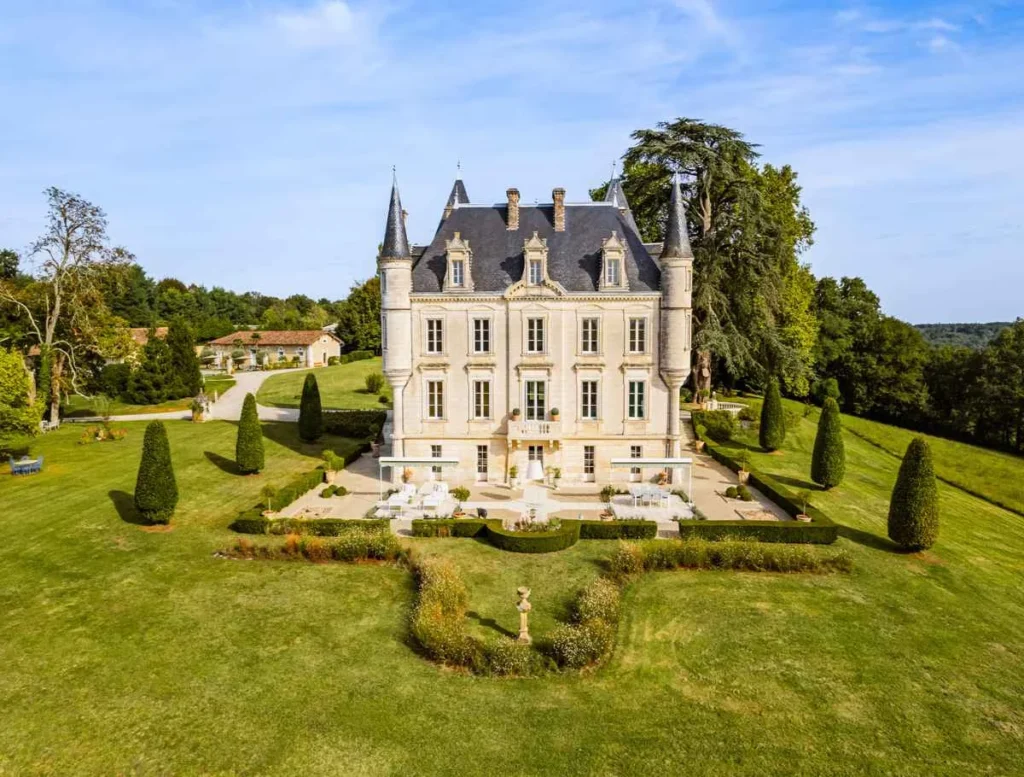
Château de Lasfonds offers a different model of château stay. Instead of operating as a conventional hotel, it functions as a fully private rental designed for small groups seeking immersion in the Dordogne countryside.
The property is positioned in a rural setting between the Périgord and Charente regions, surrounded by unspoiled landscape and intended as a quiet base removed from busy tourist routes. The château remains reachable from major transport links, including TGV connections via Angoulême and nearby regional airports, which support longer residential-style stays.
Architecturally, the building reflects nineteenth-century historicist taste, combining Neo-Gothic and Neo-Renaissance influences while retaining many original details through careful renovation.
The château sits on an estate of roughly 6.5 hectares, with landscaped grounds including gardens, mature trees, and restored outbuildings originally used for agricultural purposes. These auxiliary buildings now expand guest accommodation and activity space, reinforcing the sense of a small private domain rather than a single residence. The grounds are designed for outdoor living, with terraces, leisure areas, and a heated pool integrated into the landscape.
Designed for Group Retreats, Family Gatherings, and Extended Stays
Accommodation is designed to host groups of roughly 18 to 20 guests, making the château suitable for family reunions, celebrations, or multi-day cultural stays. Interior layouts include several bedrooms, shared social spaces, and dining areas intended for collective use rather than hotel-style turnover.
Modern amenities such as Wi-Fi, fireplaces, game rooms, and outdoor facilities are integrated alongside historical interiors to balance comfort with a heritage atmosphere.
Seasonally, visits are most popular from spring through autumn when outdoor spaces and the pool are fully usable, though the property operates year-round.
Why It Fits a La Roque Gageac Itinerary
For travelers structuring a Dordogne visit around landscape, gastronomy, and village exploration, Château de Lasfonds functions as a residential anchor. Its scale, privacy, and countryside setting support the slower rhythm that villages like La Roque Gageac reward, where days revolve around markets, river walks, and returning to a single base.
Château de Castelnaud
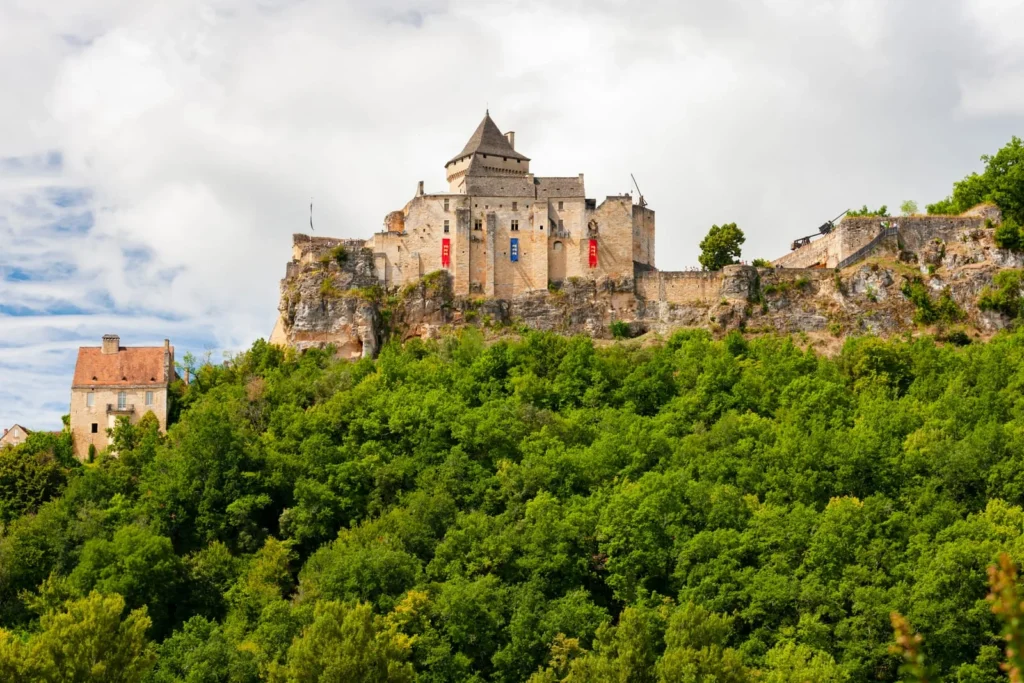
Château de Castelnaud rises above the Dordogne on a rocky spur and remains one of the valley’s clearest expressions of medieval military design. Founded in the twelfth century, it now houses the Museum of War in the Middle Ages.
Inside, the displays focus on arms, armour, and reconstructed siege engines based on historical sources. In summer, working trebuchet demonstrations bring context to the fortress setting. Allow time to take in the terrace views, which explain the castle’s strategic role in controlling the river corridor.
Château des Milandes
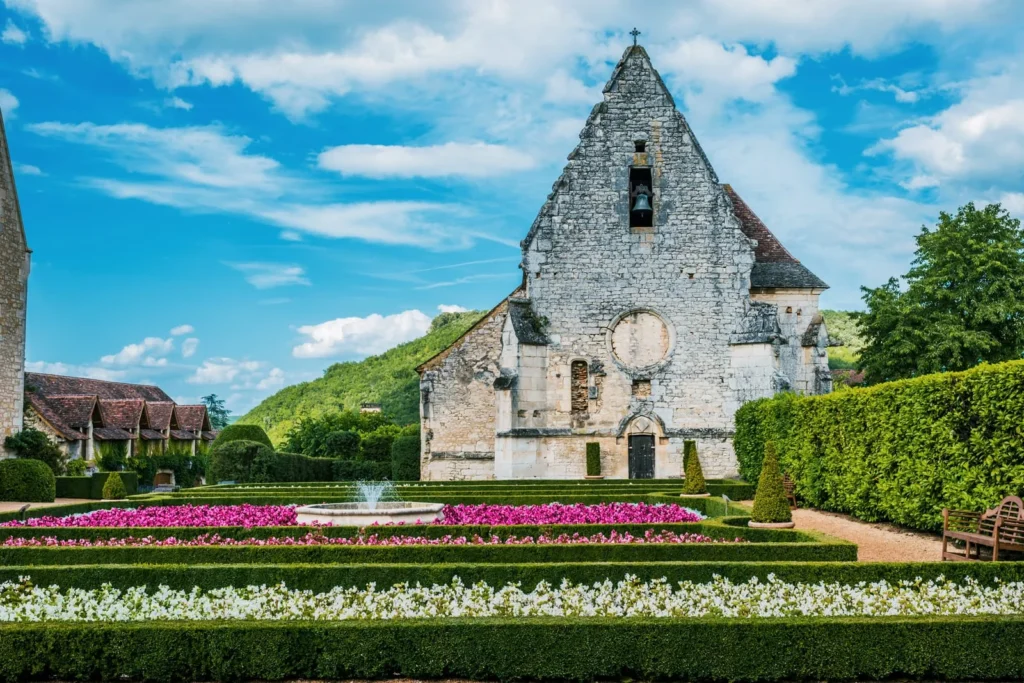
Built in 1489, Château des Milandes reflects a shift from fortress living to comfort, blending Gothic structure with early Renaissance light and ornament. The estate later gained international significance as the home of Joséphine Baker.
Baker purchased the château in 1947 and turned it into both a residence and a social project centered on cultural unity. Today the site presents her story through exhibitions and preserved interiors. The landscaped grounds carry the Jardin Remarquable designation and host daily falconry displays, which remain a defining visitor experience.
Gardens of Marqueyssac (Hanging Gardens)
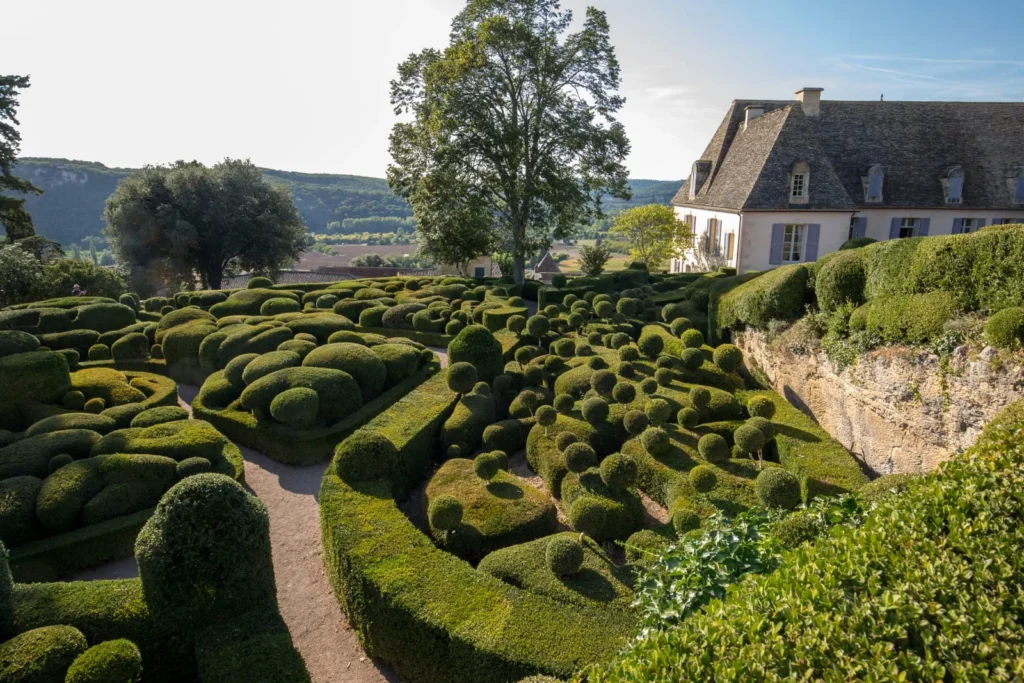
The Gardens of Marqueyssac spread across steep slopes opposite La Roque-Gageac and are known for their sculpted boxwood forms arranged along six kilometres of walking paths. Created in the nineteenth century by Julien de Cerval, the garden combines Italian inspiration with the region’s rugged terrain.
Paths lead to a high belvedere overlooking the Dordogne Valley, one of the most complete panoramas of the Périgord landscape. Summer candlelit evenings transform the site into an atmospheric walking experience rather than a formal garden visit.
Domme: the Bastide on the Cliff
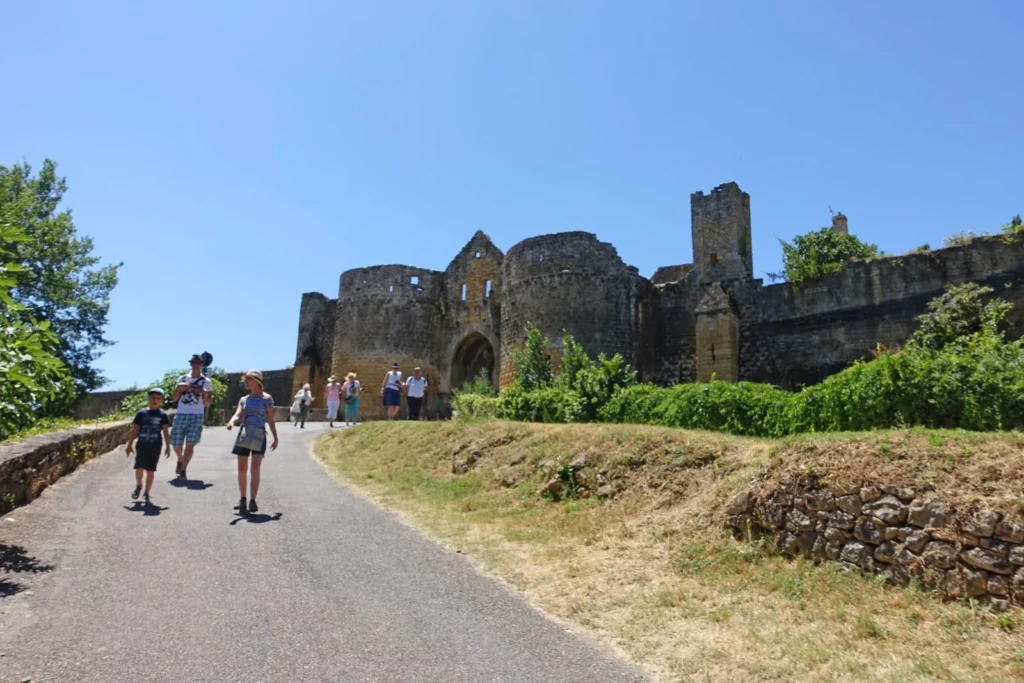
A short drive from La Roque-Gageac, Domme sits atop a fortified plateau built in 1281 to oversee the valley. The town retains its defensive walls, gates, and ordered bastide layout.
Key features include the Porte des Tours, the central market square, and the church of Notre-Dame de l’Assomption. Beneath the square lies the Grotte de Domme, a cave network extending hundreds of metres. The overlook terraces offer wide views across the river bends toward Beynac and La Roque-Gageac, clarifying the geographic logic behind the settlement.
Suggested Itinerary from a Château Stay
Below is a sample day’s itinerary for visitors staying in a nearby château.
- Morning: Leave your château around 9 a.m. and drive to La Roque‑Gageac. Secure parking early. Wander the exotic garden and climb to the troglodyte fort before the sun becomes too hot. Explore the Church of Saint‑Donat and Manoir de Tarde.
- Late morning: Enjoy coffee or fresh orange juice on a terrace by the river. Consider visiting a local artisan shop or gallery.
- Lunch: Choose a restaurant in the village or on the riverbank. Recommended options include La Belle Étoile, which serves gourmet regional dishes; Le Patio for salads and pizzas; or the casual Taverne des Remparts. Many restaurants feature foie gras, duck confit, walnuts, and truffles.
- Afternoon: Board a gabarre cruise to admire the cliffs, castles and wildlife. After the cruise, drive to Château de Beynac or Castelnaud for a self‑guided tour; or cross the river to wander through the Marqueyssac gardens.
- Evening: Return to your château for dinner. In summer, plan to see the candlelit nights at Marqueyssac on a Thursday; in autumn, watch sunset from Domme’s terrace.
This itinerary emphasises flexibility; you can add or substitute visits based on your interests and energy levels. Staying in a château allows you to spread sightseeing over multiple days, avoiding the rush.
Practical Considerations and Travel Tips
- Transportation: A car is essential for exploring Périgord. Roads are narrow but well-maintained. Parking is usually paid in La Roque Gageac during high season and free in low season. Public transport is limited.
- Mobility: The village and the fort are accessible only on foot, over steep, uneven terrain. Wear sturdy shoes and avoid visiting the fort if you have serious mobility issues. The exotic garden path is less steep and suitable for most visitors. Domme’s ramparts and the caves involve steps.
- Accommodation booking: Châteaux hotels and guesthouses fill quickly in summer. Book at least 6 months in advance for July and August. Consider April, May, September or October for lower rates and comfortable weather.
- Safety: The cliff above La Roque Gageac has been stabilised, but rockfalls remain a risk. Respect barriers and heed any temporary closures. Avoid climbing outside marked trails.
- Local culture: The region’s cuisine features duck confit, foie gras, truffles, walnuts, and chestnuts. Visit weekly markets in neighbouring villages to sample cheeses, charcuterie, and seasonal produce. In spring and autumn, mushroom foraging and walnut harvests are local traditions.
FAQS about La Roque-Gageac Périgord
Is La Roque Gageac suitable for a slow travel Dordogne itinerary?
Yes, slow travel in Dordogne works beautifully here because the village rewards unhurried exploration. You can spend meaningful time walking riverside paths, observing architectural details, and returning later in the day when light and atmosphere shift noticeably.
How long should you plan to stay near La Roque Gageac, Perigord?
Most visitors benefit from staying at least 3 nights when planning a stay in La Roque Gageac, Perigord. This allows time to balance sightseeing with rest, enjoy nearby villages, and avoid the fatigue that comes from trying to see everything quickly.
Is La Roque Gageac a good base for exploring Périgord Noir villages?
Yes, it functions well as a hub for Périgord Noir villages because driving distances remain short and scenic. You can explore markets, castles, and viewpoints in manageable segments, then return to a familiar setting each evening.
What type of traveler enjoys La Roque Gageac the most?
Travelers seeking cultural depth and a connection to the landscape often prefer heritage travel in the Dordogne. The setting encourages observation, photography, and local food discovery rather than fast-paced sightseeing, making it ideal for reflective and experience-driven journeys.
Can you visit La Roque Gageac without an intensive travel schedule?
Absolutely, relaxed Dordogne travel is very achievable because the village itself provides enough atmosphere for a full day. Sitting by the river, walking shaded lanes, and enjoying meals slowly can feel as rewarding as structured excursions.
Is La Roque Gageac appropriate for multi-generational family trips?
Yes, family travel to Dordogne, France, often includes this village due to its compact scale and visual appeal. Families can explore at different energy levels, regroup easily, and combine light walking with scenic drives and shared meals.
How does staying in the countryside enhance a Dordogne cultural visit?
Choosing countryside accommodation in Dordogne allows you to experience quieter rhythms that mirror regional life. Morning sounds, open landscapes, and evening returns after excursions create a sense of continuity, helping visitors feel connected rather than simply passing through.
Is La Roque Gageac worth visiting outside peak tourist season?
Yes, visiting during the shoulder months supports a more personal off-season Dordogne travel experience. Reduced crowds make it easier to notice textures, sounds, and seasonal colors, which often become the most memorable aspects of the visit.
How accessible is La Roque Gageac for travelers interested in regional food experiences?
The village sits within reach of farms and markets that define gastronomy travel Dordogne, making it easy to integrate tastings into daily plans. You can explore nearby producers, then return to enjoy regional ingredients in a relaxed setting.
Why do many travelers combine château stays with visits to La Roque Gageac?
A chateau stay in Dordogne complements the village by extending its historical atmosphere into your accommodation. Living within a historic property deepens the sense of place and allows time to absorb the landscape at a comfortable pace.