Many travelers exploring the Dordogne region visit Dordogne Sarlat, a lively market town known for its regional cuisine and preserved medieval streets. A visit often begins on market days, when farmers, artisans, and food producers gather in the center of Sarlat-la-Canéda.
Stalls fill the squares with regional produce, and the surrounding lanes invite a relaxed old town walk through stone passageways and shaded courtyards. Quiet corners and terrace cafés create natural photography spots throughout the medieval town.
After the market slows, the town settles into a calmer rhythm. Restaurants open their terraces for relaxed evening dining, and the historic streets take on a quieter atmosphere. Planning ahead for parking makes it easier to explore the town comfortably on foot.
For travelers staying across the Périgord Noir, Sarlat makes for a rewarding day trip amid the wider landscapes of the Dordogne valley.
Sarlat-la-Canéda and Its Role in the Dordogne Region
While many towns dot the Dordogne valley, Sarlat, Dordogne, France, has developed a reputation as one of the region’s most recognizable historic centers. The town sits within the Périgord Noir, an area known for wooded hills, traditional villages, and a strong agricultural heritage.
Over the centuries, Sarlat grew into a commercial hub where surrounding farms and small communities gathered to trade food, crafts, and seasonal goods.
This regional role shaped the town’s identity. Local farmers brought produce from across the countryside, and merchants established shops and markets that supported everyday trade.
The tradition continues today, which explains why the markets and food culture of Sarlat Dordogne, remain central to the town’s atmosphere. Travelers often encounter the region’s culinary specialties here before exploring nearby villages and landscapes.
Sarlat also serves as a convenient gateway to the wider Périgord Noir. From the town, travelers can reach river valleys, hilltop villages, and historic castles that define the Dordogne landscape. For this reason, many visitors treat Sarlat as an introduction to the region before continuing their journey through the surrounding countryside.
The Sarlat Market: A Tradition at the Center of Town Life
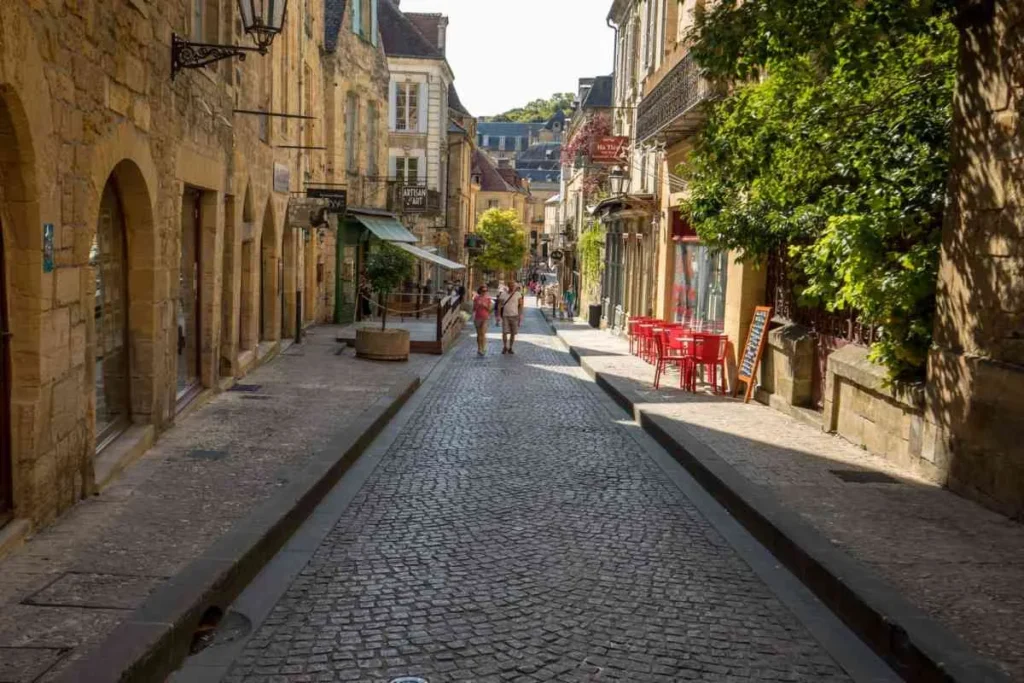
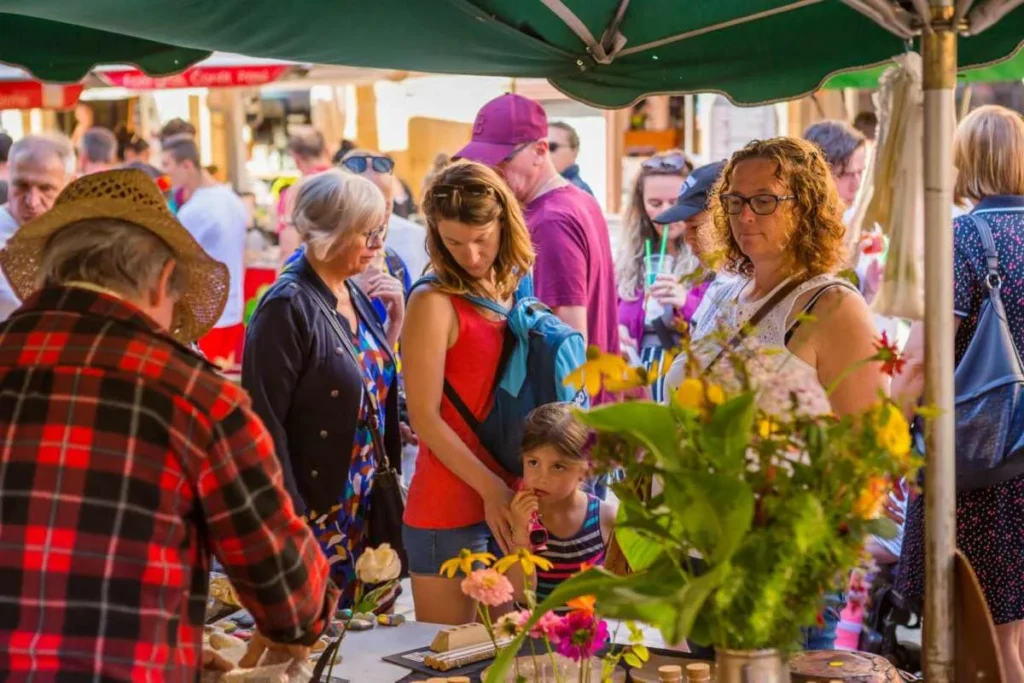
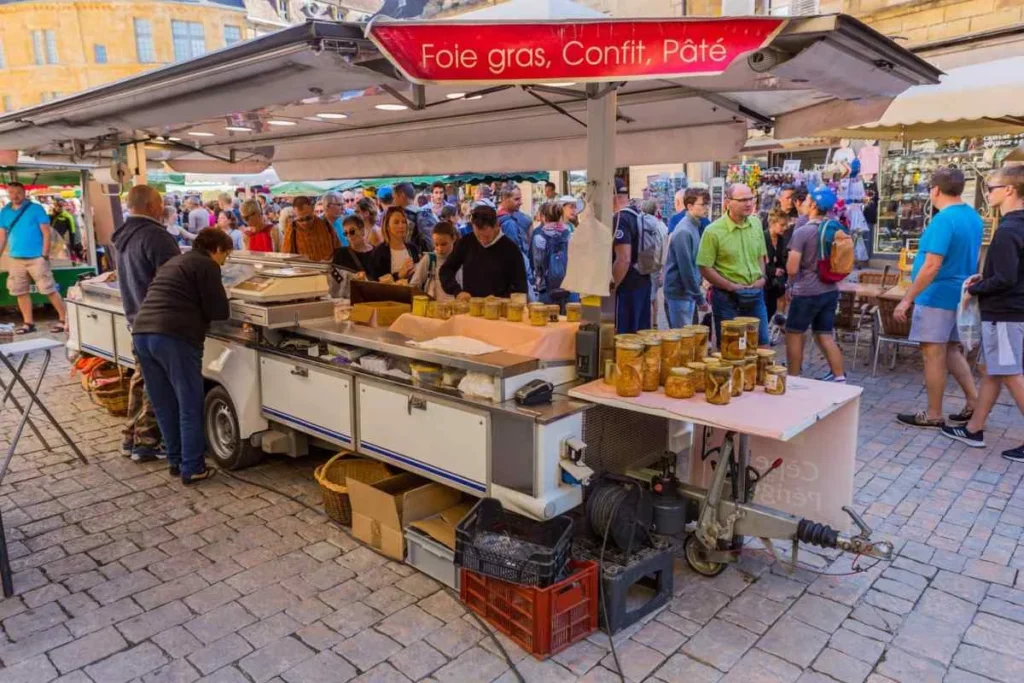
The weekly market forms one of the most recognizable traditions in Sarlat, Dordogne. Each week, the town center fills with farmers, food producers, and artisans who travel from villages across the Périgord Noir to sell regional products. For visitors, the market offers a direct introduction to the ingredients and food culture that define this part of southwest France.
Saturday Market in Sarlat
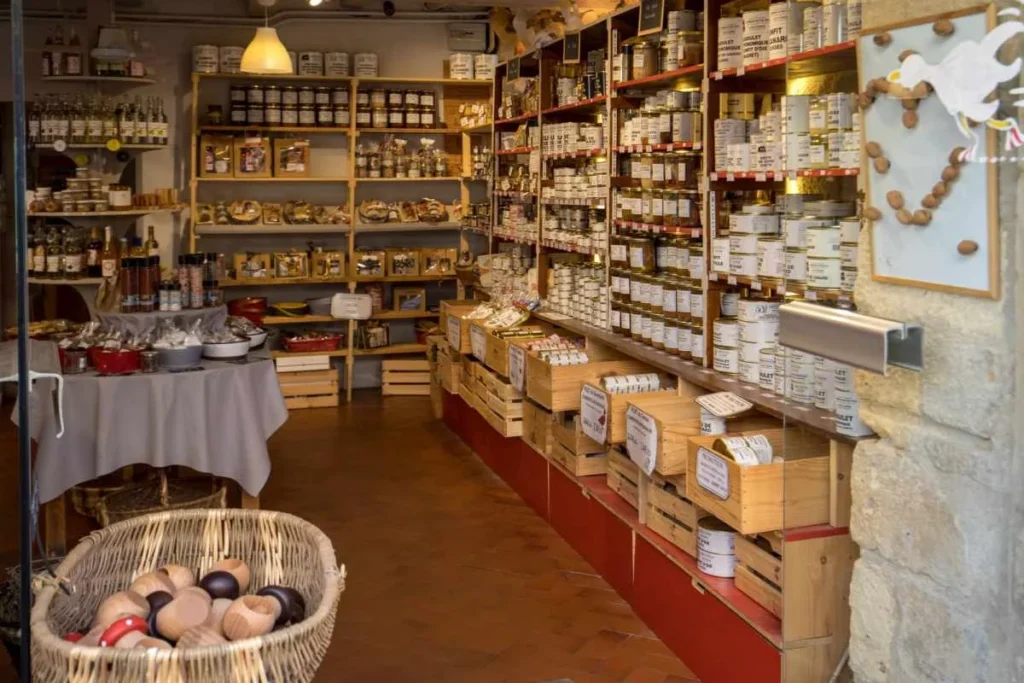
Saturday is the largest market day in Sarlat-la-Canéda. Stalls spread through the streets around Place de la Liberté and the surrounding medieval lanes. Visitors find local specialties such as foie gras, duck confit, walnuts, honey, cheeses, seasonal vegetables, and regional wines that reflect the agricultural traditions of the Dordogne countryside.
The market opens in the morning and continues throughout the day, with the busiest period usually before midday.
Wednesday Market
A second traditional market takes place on Wednesday morning in the historic center of Sarlat, Dordogne, France. This market focuses mainly on fresh food products and runs from early morning until around midday.
The atmosphere tends to feel calmer than at the Saturday gathering, allowing visitors to browse the stalls and speak with local producers at a more relaxed pace.
The Covered Market in Sainte Marie Church
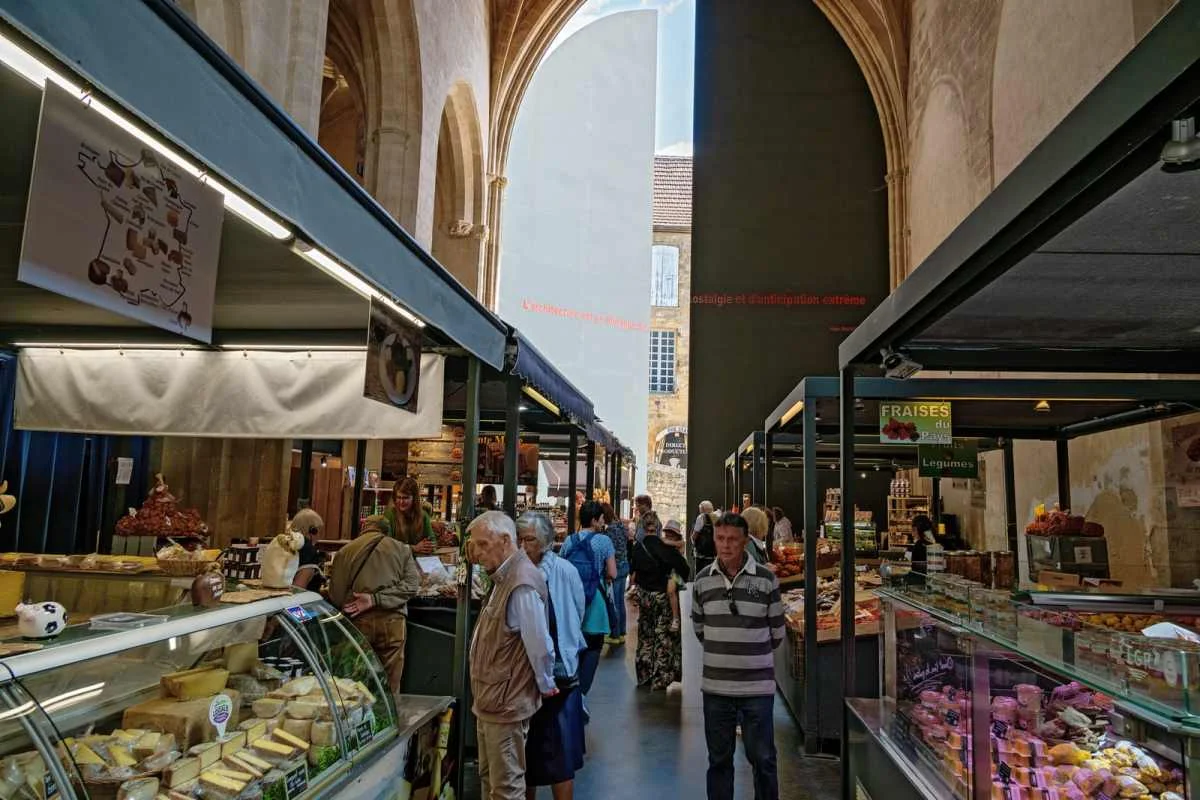
Another distinctive feature of the town is the covered market located inside the former Sainte Marie Church. The historic building now serves as a food hall, where vendors sell cheeses, fruits, vegetables, and other regional specialties year-round.
The combination of outdoor markets and an indoor food hall allows visitors to experience the culinary traditions of the Périgord Noir year-round. For many travelers exploring Sarlat Dordogne, the market becomes the natural starting point for discovering the region’s culinary traditions.
Exploring the Old Town of Sarlat: A Walk Through the Medieval Center
The historic center of Sarlat-la-Canéda offers one of the most complete collections of medieval buildings in the region. More than two hundred protected structures stand within a compact network of streets, many dating from the fourteenth to the seventeenth centuries. Walking through the stone lanes of the old town reveals how closely the architecture reflects the town’s long commercial history.
An old town walk allows visitors to move gradually between squares, churches, and historic houses while observing the details that define the town’s character.
Place de la Liberté
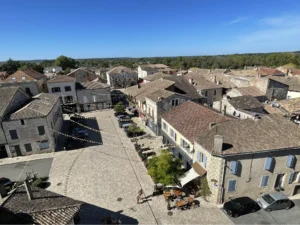
Many visitors begin their walk in Place de la Liberté, the main square of Sarlat-la-Canéda. Historic stone buildings frame the open space, and cafés and small shops occupy the ground floors. The square acts as a natural meeting point where several medieval streets converge.
From here, visitors can easily step into the narrow lanes that form the core of Sarlat, Dordogne, France. During the morning, the square feels lively as people move between nearby bakeries and market stalls, while the atmosphere becomes calmer later in the afternoon.
Medieval Streets and Historic Houses
From the central square, streets such as Rue de la République and Rue des Consuls lead deeper into the historic center. Walking along these lanes reveals tall limestone houses with steep slate roofs, reflecting the building traditions of the Périgord Noir.
Several important historic residences appear along these streets, including the Maison de La Boétie, a Renaissance house associated with the writer Étienne de La Boétie.
Nearby, the Lanterne des Morts stands as one of the town’s oldest surviving monuments. This unusual cylindrical tower dates from the twelfth century and remains one of the distinctive landmarks of Sarlat, Dordogne.
Sainte Marie Church and Bell Tower
Sainte Marie Church forms another key point in the old town. The church dates to the twelfth century and later underwent restoration that introduced a modern elevator inside the bell tower.
Visitors who take the lift reach a viewing platform that looks across the rooftops of Sarlat, Dordogne, France, and the surrounding valley. Inside the building, the church now houses a food market that connects the historic structure with the town’s culinary traditions.
Quiet Corners and Small Courtyards
Beyond the main market streets, several quieter passages reveal a different side of Sarlat-la-Canéda. Small courtyards appear behind stone archways, and narrow lanes connect lesser-known squares away from the busiest parts of the town. Streets around Rue des Consuls and the upper lanes near the cathedral often feel calmer once the market activity fades. These areas reflect how residential life once unfolded within the walls of the medieval town.
Photography Moments in the Old Town
The architecture of the historic center creates many memorable photography spots. Early morning light highlights the texture of the limestone façades and casts long shadows across the streets.
Late afternoon and evening provide another perspective as warm light reflects off the stone buildings. Viewpoints near the church tower and along smaller streets, such as Rue des Consuls, often offer distinctive perspectives on Sarlat’s stone architecture.
Parking and Access: Arriving in Sarlat on Market Days
Planning where to park before entering Sarlat, Dordogne, France, can significantly impact the overall visit. The historic center of Sarlat, Dordogne, is largely pedestrian, and most vehicles remain outside the medieval streets.
Visitors usually leave their cars in one of the public parking areas that surround the old town and then walk a short distance into the center. This layout helps preserve the historic streets while allowing travelers to explore the town comfortably on foot.
Public Parking Areas Near the Historic Center
Several parking areas sit within walking distance of the old town. Parking at Grande Rigaudie and Plantier is commonly used by visitors because it provides convenient access to the historic district. Arriving early on market days increases the chance of finding space in these areas.
Other options include parking zones near Avenue Gambetta and the larger public lots that surround the town’s ring roads. Some parking areas offer paid spaces with meters, while others remain free depending on the time of year or location.
Parking Rules and Time Limits
Parking regulations in Sarlat-la-Canéda vary across several zones around the town. In many locations, the first hour of parking is free, although visitors must still register their vehicle at the parking meter to activate the free period. Some central streets allow only short-term parking, while larger parking areas permit longer stays.
During the busy tourism months, some areas switch to paid parking to manage visitor traffic. Apps and parking meters let travelers extend their time without returning to their cars.
Best Arrival Times on Market Days
Market days attract large numbers of visitors to Sarlat Dordogne, particularly on Saturdays. The main market begins around 8:30 in the morning and spreads through the historic center. Visitors who arrive early in the morning usually find parking more easily and can explore the market before the busiest hours.
Later arrivals may need to park farther from the town center and walk several minutes to reach the market streets. Many travelers choose to arrive before 9:00 in the morning on Saturdays or visit the Wednesday market for a quieter experience.
Walking Into the Historic Center
From most parking areas, the walk into the old town takes only five to ten minutes. Streets gradually narrow as visitors approach the medieval center of Sarlat, Dordogne France, where traffic becomes limited, and pedestrians fill the historic lanes. This short walk often serves as the first introduction to the town’s atmosphere before the market squares and historic streets appear ahead.
Evening Dining in Sarlat: Experiencing the Town After the Crowds
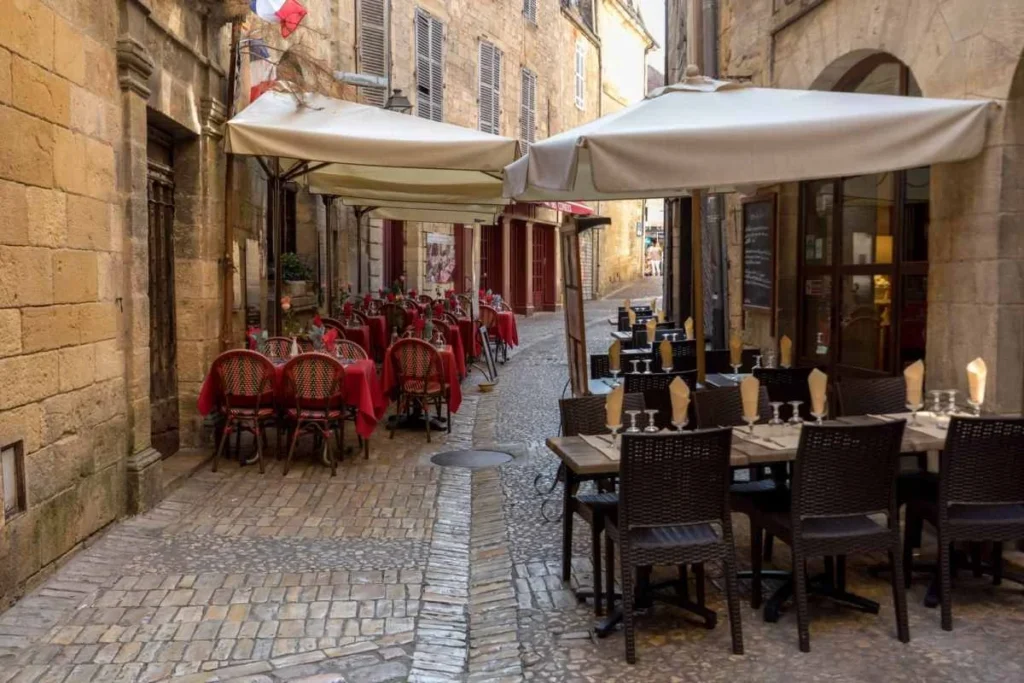
As the afternoon crowds begin to leave, the atmosphere of Sarlat Dordogne France gradually shifts. The historic streets become quieter, restaurant terraces open across the old town, and warm lighting reflects across the limestone façades of Sarlat Dordogne. For many visitors, dinner becomes the most relaxed part of the day in the town.
Where Evening Dining Happens
Many restaurants concentrate around Place de la Liberté and along the surrounding medieval streets. These areas offer outdoor terraces in the historic center where visitors can sit and watch the town’s evening activity. Some well-known restaurants are located directly on the square and serve traditional regional cuisine.
Across the old town, several restaurants also focus on seasonal ingredients and local cooking traditions.
Regional Dishes to Try
Menus in Sarlat Dordogne France often highlight foods associated with the Périgord Noir. Many restaurants serve dishes prepared with ingredients that appear earlier in the local markets.
Common specialties include:
- duck confit and foie gras
- walnut salads and walnut desserts
- truffle omelettes during the winter season
- regional cheeses and local wines
Restaurants frequently source ingredients from nearby farms, which keeps the cuisine closely tied to the agricultural traditions of Sarlat Dordogne.
The Evening Atmosphere
Dinner in Sarlat often continues at a relaxed pace. After sunset, lanterns illuminate the stone streets, and visitors walk through the historic center after their meal. The quieter evening setting allows travelers to appreciate the architecture and small courtyards of Sarlat, Dordogne, France, without the daytime market’s activity.
For travelers staying in the Périgord Noir countryside, dinner in Sarlat often marks the final part of a day’s visit before returning to quieter landscapes outside the town.
Weather in Sarlat Dordogne: Choosing the Right Season for Your Visit
Seasonal weather shapes the experience of visiting Sarlat, Dordogne France. The town sits in southwest France within the Périgord Noir, where the climate is generally mild but varies noticeably across the year.
Spring: Mild Weather and Fresh Markets
Spring marks the beginning of the active travel season in Sarlat Dordogne France. Temperatures usually range between 12 and 20 degrees Celsius from March through May. Trees begin to bloom across the surrounding countryside, and local markets offer early-season produce. Many visitors prefer this period because the streets remain lively without the heavier summer crowds.
Summer: Warm Days and Busy Streets
Summer brings the warmest weather to Sarlat Dordogne, with daytime temperatures often reaching 25 to 30 degrees Celsius during July and August. This period attracts the most travelers, and the historic center becomes especially active during the weekly markets. Evenings remain pleasant, which is why many visitors stay in town for terrace dinners after exploring the streets earlier in the day.
Autumn: Harvest Season in the Périgord Noir
Autumn offers another attractive period for visiting Sarlat, Dordogne France. Temperatures remain comfortable, often between 15 and 22 degrees Celsius in September and October. Markets begin featuring seasonal products from the surrounding farms of the Périgord Noir, including walnuts, mushrooms, and other regional specialties. Many travelers appreciate the calmer atmosphere that arrives after the peak summer season.
Winter: Quiet Streets and Seasonal Markets
Winter brings cooler weather to Sarlat Dordogne, with temperatures typically ranging from 5 to 10 degrees Celsius. The town becomes quieter during these months, although markets and local restaurants continue operating. Some visitors travel to the region during winter to experience truffle markets and traditional seasonal cuisine.
Planning a Simple Sarlat Market Day From the Countryside
Many visitors organize their trip to Sarlat, Dordogne, France, around the weekly market. Planning the day in advance helps travelers experience the market, explore the stone lanes of the old quarter, and enjoy the town without rushing through the visit.
Morning: Arrive Early for the Market
The main market begins early in the morning and spreads through the streets around Place de la Liberté in Sarlat, Dordogne. Arriving before mid-morning allows visitors to walk through the stalls while the atmosphere remains manageable. Local producers bring foods such as walnuts, cheeses, duck products, and seasonal vegetables from farms across the Périgord Noir.
Exploring the market during the morning also allows visitors to observe how residents shop for regional ingredients that define the town’s food culture.
Midday: Walk Through the Historic Center
After the market, many visitors continue their old town walk through the medieval streets of Sarlat, Dordogne, France. This period works well for exploring architectural landmarks, small courtyards, and narrow lanes that connect the historic squares.
Visitors often stop for lunch in one of the restaurants near the central square before continuing their walk through the quieter streets of the historic district.
Afternoon: Explore at a Slower Pace
By early afternoon, the busiest part of the market begins to wind down. This time allows visitors to explore parts of Sarlat Dordogne that may have been crowded earlier in the day. Many travelers visit historic sites, small shops, or quieter corners of the town during this period.
Evening: Dinner Before Returning to the Countryside
Visitors who remain in town in the evening often enjoy dinner in the historic center before returning to the Périgord Noir countryside. Restaurants around the old town serve regional dishes that reflect the ingredients sold in the markets earlier in the day.
This simple rhythm allows travelers to experience the market, the architecture, and the Dordogne food culture within a single visit.
Travelers planning this type of visit often begin considering where to stay as they explore the region. Many visitors prefer accommodation outside the historic center so they can reach the town easily while avoiding the busiest areas during market hours.
Staying Near Sarlat: A Countryside Base at Château de Lasfonds
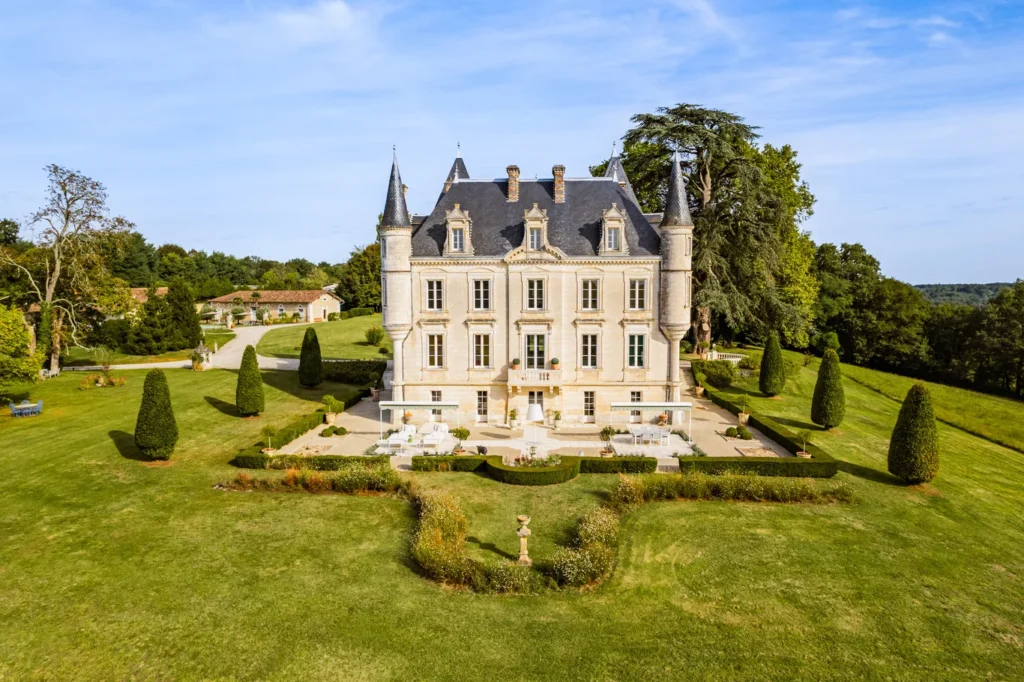
One option within driving distance of Sarlat, Dordogne, France, is Château de Lasfonds, a nineteenth-century estate located about thirty minutes from Sarlat in the countryside of the Périgord Noir, where visitors can experience authentic château living in France.
The restored property functions as a private residence for group stays and reflects what defines a traditional château in France, while serving as a convenient base for visiting the markets, historic streets, and nearby villages of Sarlat, Dordogne.
Guests staying at the estate can visit Sarlat for a morning market or an evening meal in the old town, then return to the quieter countryside afterward.
Facilities and services at Château de Lasfonds include:
• historic château accommodation and guest houses for group stays
• landscaped gardens and private estate grounds
• heated outdoor swimming pool
• interior lounges, dining areas, and fireplaces within the château
• fitness room and indoor leisure spaces
• concierge support for arranging activities, local visits, or private dining
The location also places visitors close to several well-known villages of the Périgord Noir, including Domme, Beynac et Cazenac, and La Roque Gageac. Using a countryside base allows travelers to combine a visit to Sarlat, Dordogne, France, with broader exploration of the Dordogne valley, and to review how to reach Château de Lasfonds from nearby cities when planning their trip.
Extending Your Visit Beyond Sarlat: Villages of the Périgord Noir
Many travelers treat Sarlat, Dordogne, France, as a starting point for exploring the surrounding Périgord Noir and planning holidays in the Périgord region that include nearby villages and river landscapes. Several historic villages lie within a short distance of the town and can easily be visited during the same trip.
Domme
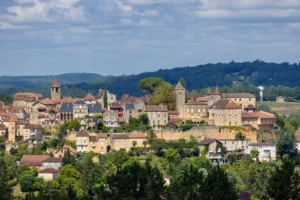
Domme stands about ten kilometers from Sarlat, Dordogne, and sits on a hill above the Dordogne Valley. This bastide village developed as a fortified bastide town in the thirteenth century and today offers wide views across the river valley. Visitors often walk along the village ramparts and explore the central square before continuing their journey.
Beynac et Cazenac
Beynac sits along the Dordogne River, roughly fifteen minutes from Sarlat, Dordogne, France. The village climbs a steep hillside beneath the Château de Beynac, a medieval fortress that overlooks the river. Narrow stone streets connect the houses along the slope and lead toward the castle above.
La Roque Gageac
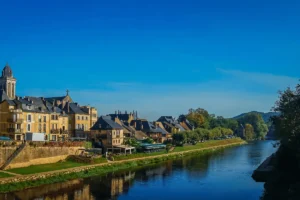
La Roque Gageac lies beside the Dordogne River and remains one of the most photographed villages in the region. Houses built from warm stone line the riverbank beneath tall cliffs. Visitors often walk through the small streets or take riverboat excursions along the valley near Sarlat, Dordogne.
Castelnaud la Chapelle
Castelnaud-la-Chapelle sits across the river from Beynac and features another well-preserved medieval castle. The fortress now houses a museum dedicated to medieval warfare. Many travelers visit the castle while exploring the countryside surrounding Sarlat, Dordogne, France.These villages illustrate how Sarlat Dordogne connects to a broader landscape of historic medieval towns, castles, and river valleys across the Périgord Noir.
FAQs About Visiting Sarlat Dordogne
What is Sarlat known for?
Sarlat-la-Canéda is known for its well-preserved historic center and regional food traditions. The town is located in the Périgord Noir and attracts visitors for its medieval architecture, local markets, and restaurants that highlight traditional Dordogne cuisine.
How far is Sarlat from Bordeaux?
Sarlat Dordogne France is about 200 kilometers east of Bordeaux. The drive usually takes around 2.5 hours. Travelers can also reach the region by train to nearby cities such as Brive-la-Gaillarde and then continue by car.
Is Sarlat a walkable town?
Yes. Sarlat Dordogne is compact and largely pedestrian. Most visitors explore the town on foot because the medieval streets connect squares, restaurants, and historic buildings within a small area.
When was Sarlat founded?
The settlement that became Sarlat-la-Canéda developed around a Benedictine abbey during the ninth century. Over time the town expanded into an important commercial center in the Dordogne region.
How far is Sarlat from the Dordogne Valley villages?
Several villages in the Dordogne Valley lie within 10 to 20 kilometers of Sarlat Dordogne France. Popular stops such as Beynac et Cazenac, Domme, and La Roque Gageac can usually be reached within twenty minutes by car.
Is Sarlat good for food lovers?
Yes. The cuisine of Sarlat Dordogne reflects the agricultural traditions of the Périgord Noir. Local restaurants often feature dishes prepared with duck, walnuts, mushrooms, and seasonal ingredients from nearby farms.
How many historic buildings are in Sarlat?
Sarlat Dordogne France contains more than two hundred protected buildings. Many of these structures date from the medieval and Renaissance periods, which gives the town one of the most complete historic townscapes in the region.
What region of France is Sarlat located in?
Sarlat Dordogne France is located in the Dordogne department within the Nouvelle Aquitaine region of southwest France. The town forms part of the historic Périgord Noir, an area known for forests, castles, and traditional villages.
How long does it take to explore Sarlat?
Most travelers spend half a day to a full day exploring Sarlat Dordogne. This allows enough time to visit the historic center, enjoy local restaurants, and explore nearby villages in the surrounding countryside.
Are there castles near Sarlat?
Yes. Several historic castles stand within a short distance of Sarlat Dordogne France. Château de Beynac, Château de Castelnaud, and Château des Milandes are among the best known castles in the Dordogne Valley.