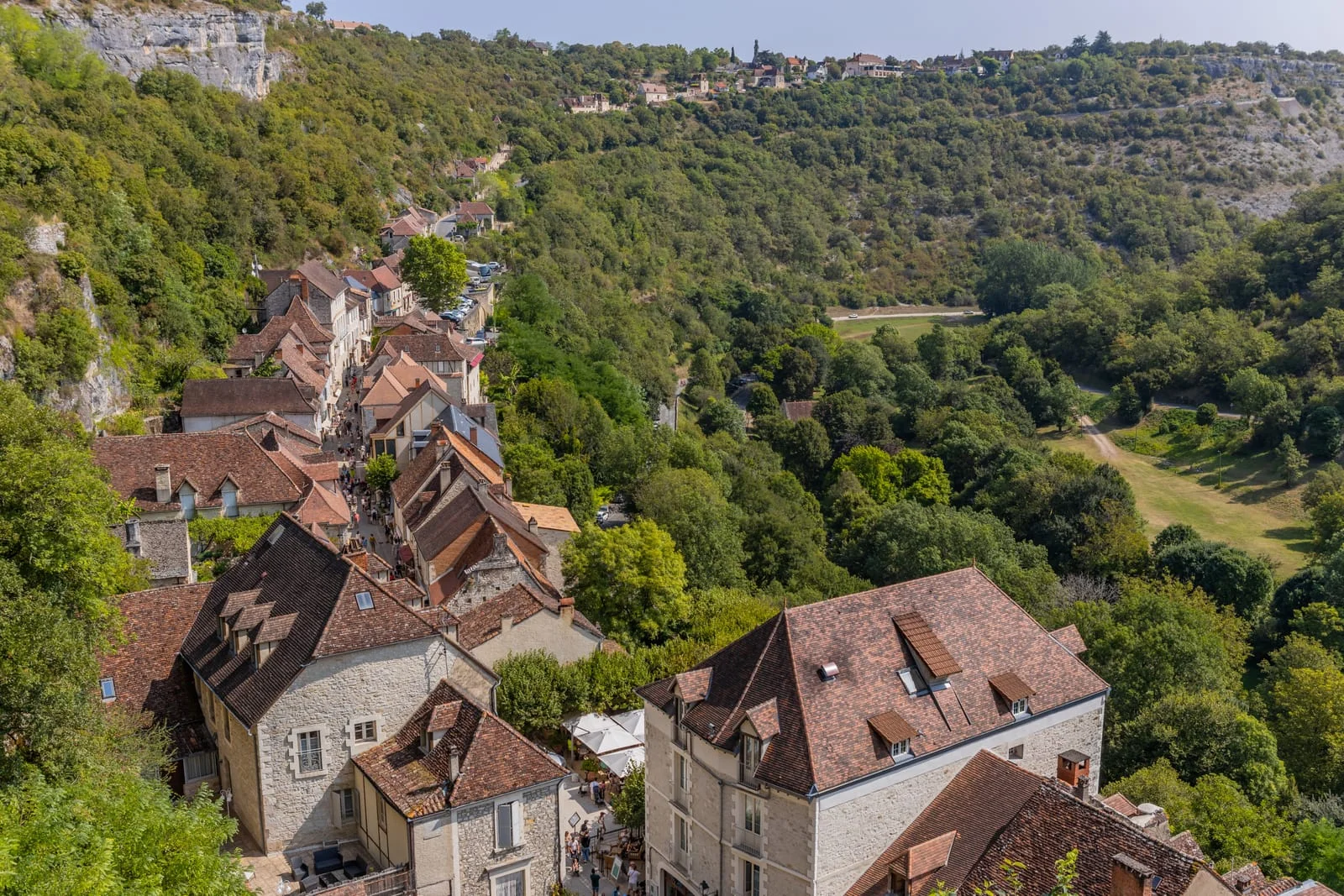
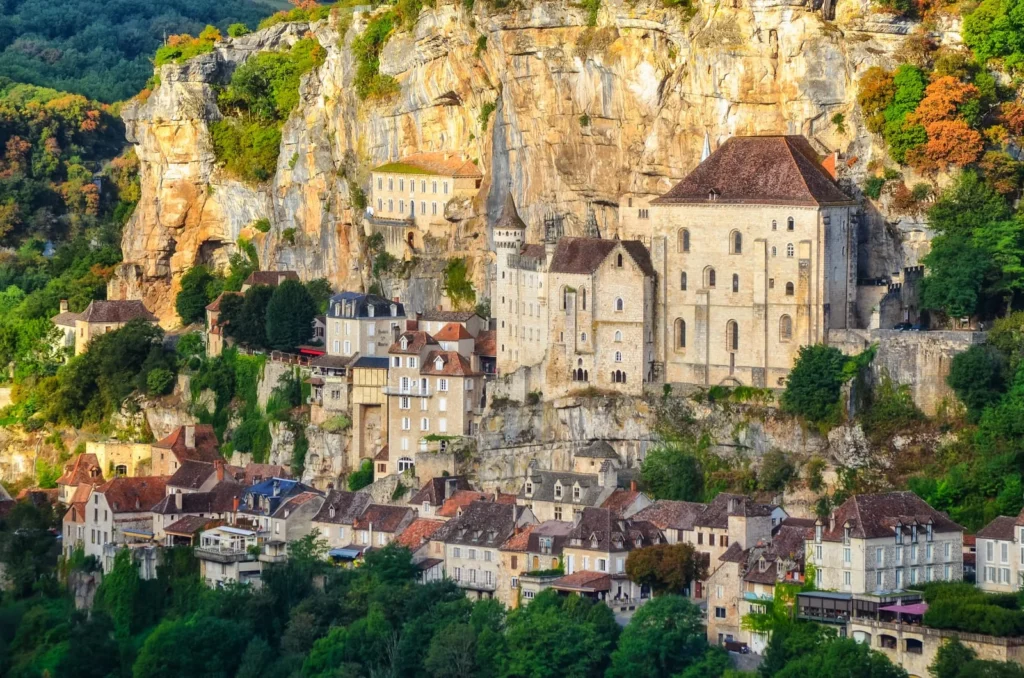
Rocamadour is one of the most striking villages in France. Built vertically against a limestone cliff above the Alzou valley, the settlement appears almost suspended between rock and sky.
For centuries, pilgrims, travellers, and curious visitors have been drawn to this dramatic location in southwestern France. The village is known not only for its unusual cliffside architecture but also for its historic sanctuary, the Black Madonna, and sweeping views across the Causses du Quercy landscape.
Today, Rocamadour attracts visitors interested in history, architecture, hiking, and regional culture. Planning a visit requires understanding how the village is organised, how to navigate its steep levels, and when to arrive to avoid the busiest crowds.
Location and Setting
Rocamadour sits in the Lot department of the Occitanie region, within the Dordogne valley. The village stands on the right bank of the Alzou stream, which runs through limestone cliffs about 120 metres deep.
The settlement rises in three distinct levels:
- Lower level: the medieval village and its narrow main street near the river
- Middle level: the sanctuary terrace with chapels and religious buildings carved into the cliff
- Upper level: fortified walls and the château overlooking the valley
This structure reflects the medieval social order. Workers lived near the river, clergy occupied the sanctuary level, and nobility controlled the castle above.
From the castle ramparts, visitors see wide views across the Alzou valley and the Causses du Quercy plateau.
Getting There
Most visitors reach Rocamadour, France, by car.
Toulouse → Rocamadour: about 2 hours
Roads pass through the Causses du Quercy countryside and include some narrow sections and single-lane bridges. The nearest train stop is Rocamadour Padirac station, about 3 kilometres from the village. Train service is limited, so travellers usually take a taxi from the station.
The historic village is pedestrian-only. Visitors must park in designated car parks outside the village and continue on foot or by lift.
History and Legends
The cliffs around Rocamadour have sheltered people since prehistoric times. Cave paintings in the nearby Grotte des Merveilles show human activity thousands of years ago.
Local tradition connects the name Rocamadour to Saint Amadour, a hermit who lived in the cliffs and carved a small chapel into the rock. Another theory links the name to a Roman soldier who returned from the Holy Land and settled here.
By the ninth century, the site had become associated with devotion to the Virgin Mary. Its importance increased in 1166 when workers discovered a preserved body near the chapel entrance. Many believed it belonged to Saint Amadour or Zacchaeus from the New Testament.
Reports of miracles spread across Europe, and Rocamadour became an important medieval pilgrimage destination alongside Jerusalem, Santiago de Compostela, and Rome.
Development of the Sanctuary
The sanctuary complex expanded during the twelfth century after the discovery of the preserved body. Chapels were built directly into the cliff.
The main buildings include:
- Basilica of Saint Sauveur
- Crypt of Saint Amadour
- Chapelle Notre Dame
These structures are part of the UNESCO pilgrimage routes to Santiago de Compostela.
The sanctuary grew through pilgrim donations but suffered damage during the Wars of Religion in 1562 when Protestant troops burned parts of the complex. Restoration in the nineteenth century, led by Abbot Chevalt and architect Viollet-le-Duc, stabilised the cliffside chapels.
Today, the sanctuary includes seven chapels, including the Chapelle Miraculeuse.
Legends of Durandal and Miracles
Several legends surround Rocamadour. Above the sanctuary hangs a sword called Durandal, which local tradition attributes to Roland, Charlemagne’s nephew.
According to legend, Roland threw the sword after a battle in the Pyrenees so it would not fall into enemy hands. It travelled across France and lodged in the cliff at Rocamadour.
Stories of miracles and pilgrimage strengthened Rocamadour’s reputation as a major religious site in medieval Europe.
Village Layout and Monuments
The Lower Village
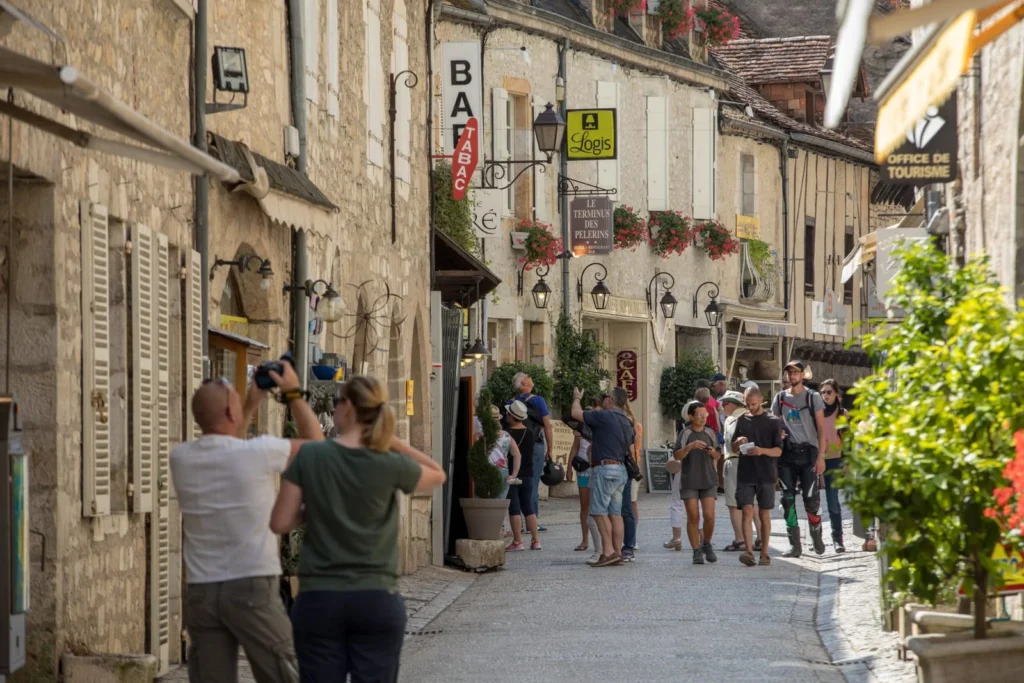
From the parking areas above and below the village, visitors enter the lower streets on foot. The main street, Rue de la Couronnerie, is the heart of Rocamadour. It is lined with stone houses, cafés, restaurants, and small shops. Medieval gateways such as Porte Salmon and Porte du Figuier mark the entrances.
Restaurants serve regional dishes including duck confit and cassoulet, while local shops sell Rocamadour goat cheese, walnut liqueur, and religious souvenirs.
The Grand Escalier (Great Staircase)
The traditional route to the sanctuary climbs the Grand Escalier, a staircase carved directly into the cliff.
In the Middle Ages, pilgrims climbed these steps on their knees as an act of devotion. Today, visitors walk the staircase, stopping at terraces for rest and views of the valley.
Visitors who prefer to avoid the climb can use lifts connecting the village, sanctuary, and castle levels.
The Sanctuary Terrace
Halfway up the cliff lies the sanctuary terrace, a cluster of chapels built directly into the rock.
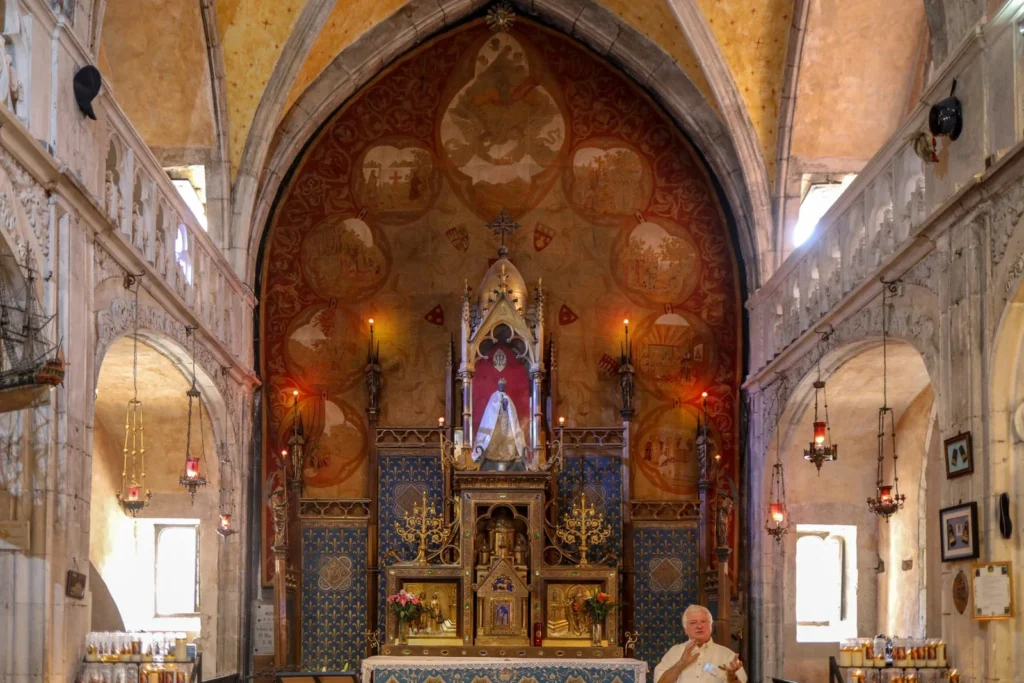
The most important site is the Chapelle Notre-Dame, home to the Black Madonna of Rocamadour, a twelfth-century wooden statue linked to miracles and pilgrimages. Pilgrims continue to pray here and ring the Miraculous Bell, believed to sound when a miracle occurs at sea.
In the Middle Ages, pilgrims traditionally climbed the Grand Escalier on their knees as an act of devotion before praying at the Black Madonna.
Nearby stands the Basilique Saint Sauveur, with the crypt of Saint Amadour beneath it. Other chapels on the terrace include:
- Chapel of Saint Michel
- Chapel of Saint Blaise
- Chapel of Saint Anne
- Chapel of Saint John the Baptist
Inscriptions and memorial plaques throughout the terrace recall centuries of pilgrims and reported miracles.
The Way of the Cross and the Castle
Above the sanctuary, the Way of the Cross climbs through trees to the cliff top. Small shrines along the route represent the Stations of the Cross.
Near the summit, one station is carved into the rock beside a small cave containing a statue of Christ in the tomb.
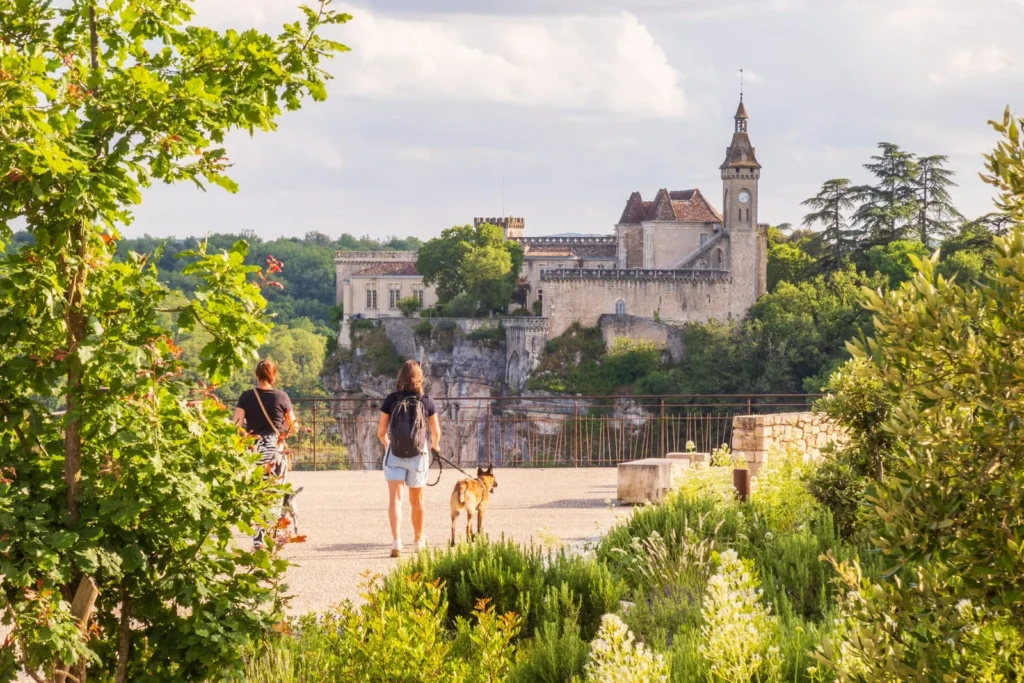
The path ends at the castle ramparts, which offer panoramic views over Rocamadour and the Alzou valley. This area provides some of the best photo viewpoints in the village.
The View from L’ Hospitalet and the Voie Sainte
One of the best views of Rocamadour in France comes from the nearby hamlet of L’ Hospitalet, located above the village. In the Middle Ages, it served as a refuge for pilgrims.
Today, it offers parking areas and the Belvédère viewpoint, where visitors can see the entire cliffside village.
From here, the Voie Sainte (Holy Way) descends through woodland to the sanctuary. Walking this path reveals Rocamadour’s dramatic cliffside setting, where buildings appear stacked against the rock above the Alzou valley.
Pilgrim Paths and Walking Loops
The Holy Way and Way of the Cross
Pilgrims have reached Rocamadour by several routes over the centuries. One scenic approach begins at L’Hospitalet and follows the Holy Way toward the sanctuary.
The Way of the Cross climbs from the sanctuary to the cliff top, with small shrines marking the Stations. At the summit, an iron cross marks the final station. From here, visitors can walk along the cliff toward L’Hospitalet, creating a scenic loop.
Longer Hiking Routes
The surrounding Causses du Quercy Regional Natural Park offers several hiking routes that pass through or begin near Rocamadour.
One of the most popular is the Rocamadour Loop, an 8.5-kilometre circuit that climbs through forests to the plateau above the village. The route passes the Roquefraiche mill and several viewpoints overlooking the valley. Most hikers complete the trail in 2.5 to 3 hours. The elevation gain is about 330 metres, and the trail is moderately challenging.
A shorter option is the L’ Hospitalet route, a 2.6-kilometre walk that focuses on viewpoints and the connection between the hamlet and the village.
Additional trails in the Alzou gorge offer views of Rocamadour from different angles and highlight how the village blends into the limestone cliffs.
When hiking in the area, carry water, wear sturdy shoes, and prepare for uneven terrain. The weather can change quickly, especially in spring and early autumn.
Getting There and Around
By Car
Driving is the easiest way to reach Rocamadour. Most visitors arrive via rural roads through the Causses du Quercy plateau, where narrow lanes and occasional single-lane bridges are common.
From Toulouse, follow the A20 motorway north to exit 54, then continue on local roads through the Causses du Quercy. From Sarlat-la-Canéda, take the D704A and D703 to Souillac, then the D247 toward Rocamadour.
Expect narrow country roads and occasional single-lane bridges. Mobile reception can be limited in rural areas, so carrying an offline map can be helpful.
By Train
The nearest railway station is Rocamadour Padirac, about 3 kilometres from the village. Trains arrive from Brive-la-Gaillarde three times daily and from Capdenac six times daily. There is no regular shuttle service, so visitors usually take a taxi from the station.
Because train schedules are limited, travellers often combine rail travel with car rental or organised tours to explore the surrounding region.
Tours and Buses
Several companies offer day tours to Rocamadour from Sarlat, Toulouse, and nearby towns.
These tours remove the need to arrange parking and often include stops at regional attractions such as:
- Gouffre de Padirac cave
- villages of the Dordogne valley
Public bus connections are limited, so independent travellers usually rely on car travel or organised tours.
Getting around Rocamadour
The village itself is explored mainly on foot.
Paths and staircases connect the different levels of Rocamadour. Two lifts help visitors move between the main areas:
- Vertical lift: lower village → sanctuary terrace
- Funicular: sanctuary → castle level
These lifts are useful for visitors with limited mobility, families with strollers, or anyone visiting during hot weather. A practical route is to start at the castle level, walk downhill through the sanctuary and village, then take the lift back up.
Parking and Mobility
The main parking areas include:
- P4, near the lower entrance, with easy access to the village street
- P2, near the château, convenient if you want to start at the top and walk down through the village
Parking fills quickly in summer and during festivals, so arriving early in the morning is recommended. During busy periods, the village may be closed to through traffic, and a shuttle bus connects the car parks with the village entrance. Payment machines usually accept coins or credit cards.
Accessibility
Rocamadour has added several features to improve access. Two lifts connect the main levels of the village:
- lift from the lower village to the sanctuary
- funicular from the sanctuary to the château
These lifts allow wheelchair users and visitors with limited mobility to reach most major sites.
Some streets remain cobbled and uneven, and the steep terrain can make walking difficult in certain areas. The main path across the sanctuary terrace is wider and easier to navigate, and accessible toilets are located near the lifts.
Planning your route in advance and using the lifts can make exploring Rocamadour much more comfortable.
Climate and Best Times to Visit
Climate Overview
Rocamadour has a temperate oceanic climate (Cfb). The average annual temperature is about 12.5°C (54.5°F), with about 967 mm of rainfall.
Spring tends to be the wettest period, with April and May averaging about 104 mm of rain. July is the driest month, with rainfall averaging 63–66 mm. Summer temperatures remain moderate, with July averaging about 20.8°C (69.5°F). Winter is cooler, and January temperatures average around 4.6°C (40.3°F).
Best Times to Visit Rocamadour village
Spring (April to June) and autumn (September to October) are generally the best times to visit Rocamadour. The weather is mild, the countryside is green, and visitor numbers are lower than in summer.
Spring brings blooming wildflowers across the Causses du Quercy, while autumn offers clear skies and warm colours in the surrounding forests and vineyards.
Summer attracts the largest crowds, especially during festivals and holidays. Visiting early in the morning or late in the afternoon helps avoid peak crowds and provides better light for photography. Early arrival also makes parking easier.
Winter is much quieter. Temperatures are cool but rarely fall far below freezing. The sanctuary and village remain open year-round, though some restaurants and shops may close during the off-season. Major religious celebrations, such as Christmas and the Feast of the Assumption (15 August), bring special services and events.
Weather Considerations in Rocamadour village
Rocamadour’s cliffside location can create slightly different weather conditions than the surrounding plains. Morning fog sometimes covers the valley, and winds are stronger near the château.
Rain can make the limestone steps slippery, so shoes with a good grip are recommended. In summer, the stone paths absorb heat, making the climb warmer by midday. Carry water, sunscreen, and a hat, especially when walking or hiking in the area.
Checking the forecast before longer walks is helpful, as spring and early autumn showers can appear quickly.
A Peaceful Countryside Retreat Near Rocamadour: Château de Lasfonds
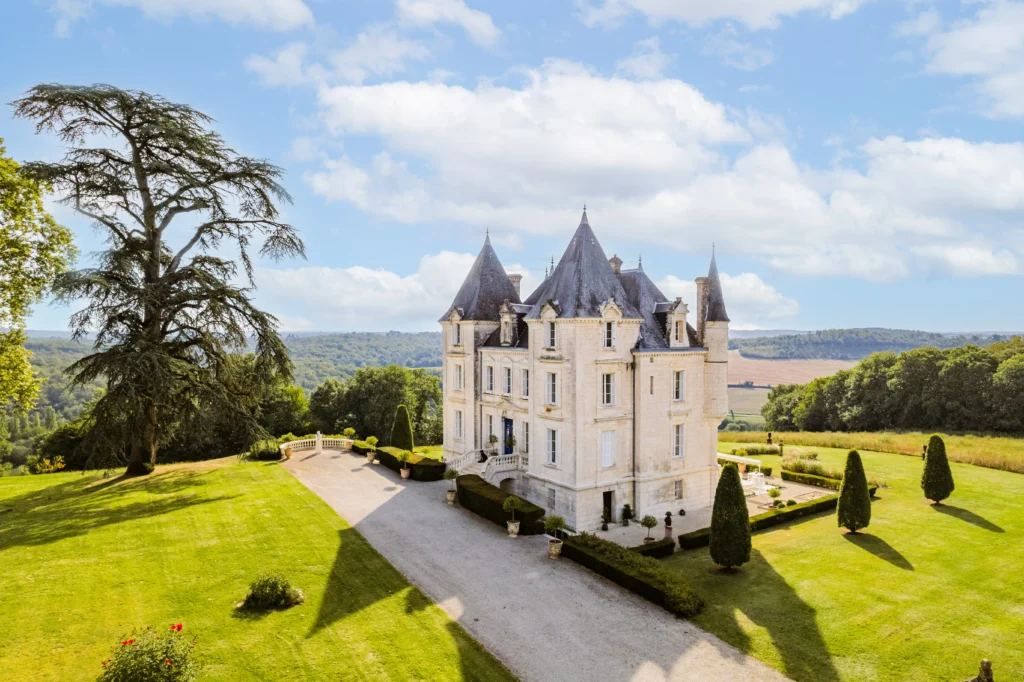
For travellers exploring Rocamadour and the Dordogne region, staying in the surrounding countryside offers a quieter and more immersive experience. One notable option is Château de Lasfonds, a restored nineteenth-century château set in peaceful rural landscapes between Charente and Périgord.
The estate blends historic architecture with modern comfort. Originally built in the 1800s in Neo-Gothic and Neo-Renaissance styles, the château has been carefully renovated while preserving its original character.
What Makes Château de Lasfonds Special
- Historic setting – a restored nineteenth-century château with elegant period architecture and countryside views.
- Private estate – the property sits on more than 6.5 hectares of gardens and parkland, offering privacy and wide rural views.
- Group accommodation – the château and guesthouses together can host up to about 18–20 guests, making it ideal for family gatherings or small retreats.
- Modern comforts – renovated interiors include contemporary furnishings, air conditioning, floor heating, and shared spaces for dining and relaxation.
Staying here places visitors within reach of the historic villages of the Périgord region, the wine areas of Bordeaux and Cognac, and natural sites across southwestern France.
For travellers planning several days in the region, Château de Lasfonds provides a peaceful base from which to explore Rocamadour, local markets, prehistoric caves, and the landscapes of the Dordogne Valley.
Events and Festivals
Rocamadour hosts several annual events that highlight local culture, music, and traditions.
- Fête des Fromages (Pentecost Sunday): This cheese festival gathers producers from across France. Visitors can taste Rocamadour AOP goat cheese and other regional cheeses while watching traditional cheesemaking demonstrations.
- Les Médiévales (July): A medieval festival that fills the village with costumed performers, jousting shows, and evening processions. The streets recreate scenes from Rocamadour’s medieval past.
- Rocamadour Sacred Music Festival (August): A three-week classical music festival held inside the Basilique Saint Sauveur. International musicians perform sacred and classical works, taking advantage of the basilica’s acoustics.
- Montgolfiades Hot Air Balloon Festival (late September): Around 30 hot air balloons launch near the village, creating dramatic views over the Dordogne valley.
During festival periods, accommodation fills quickly, so booking ahead is recommended.
Practical Tips and Itinerary Suggestions
Plan your arrival time carefully. Early morning offers quiet streets and easier parking before tour buses arrive. Late afternoon provides softer light and fewer crowds. Midday in summer can be hot, and the steep steps become tiring.
Many visitors choose to stay in the quiet countryside nearby, where historic properties such as Château de Lasfonds offer a peaceful base for exploring Rocamadour and the Dordogne Valley.
Choose parking based on how you want to explore:
- Château level parking: start at the top, walk down through the Way of the Cross and the sanctuary, then explore the village
- P4 lower parking: begin near the shops, take the lift to the sanctuary, then walk down
Bring water, comfortable walking shoes, and sun protection. Rocamadour involves many steps and steep paths.
Suggested Half-Day Itinerary
Start at the L’Hospitalet viewpoint: Park near the upper viewpoint and enjoy the panoramic view of Rocamadour. From here, walk the Voie Sainte toward the sanctuary.
Explore the sanctuary terrace and visit Chapelle Notre-Dame to see the Black Madonna. Step into the Basilique Saint Sauveur and the crypt of Saint Amadour.
Climb to the castle: Follow the Way of the Cross to the cliff top. The castle ramparts offer some of the best views of the village and valley.
Descend to the village: Walk down the Grand Escalier if you are comfortable with stairs. Otherwise, use the lifts. In the lower village, explore Rue de la Couronnerie and local shops.
Lunch and nearby attractions: Try regional dishes such as duck confit, cassoulet, or salads with Rocamadour cheese. Nearby attractions include:
- Monkey Forest wildlife park
- Rocher des Aigles bird sanctuary
- Durandal medieval show
- Gouffre de Padirac underground cave and river
Crowd Avoidance and Photography
Visit weekdays outside school holidays for fewer crowds. Arriving before 9 AM or after 5 PM helps avoid tour groups. The best lighting for photography occurs shortly after sunrise and before sunset. Top viewpoints include:
- Belvédère de L’Hospitalet
- Castle ramparts
- Meadows in the Alzou valley
These locations reveal the full cliffside profile of Rocamadour.
Accessibility Tips
Use the lifts connecting the village levels if mobility is limited. The sanctuary terrace has wider paths, making it easier to navigate. The Grand Escalier is steep and uneven, so it may not suit visitors with knee or balance issues. The Way of the Cross path includes shaded areas where you can rest.
Strollers work well in the lower village but are difficult on staircases. Carry some cash for small purchases or donations, as not every shop accepts cards.
Additional Attractions near Rocamadour
Rocamadour’s surroundings offer varied experiences for those with more time. The Causses du Quercy Regional Natural Park offers opportunities for hiking, birdwatching, and exploring limestone landscapes. A few attractions stand out:
- Monkey Forest (La Forêt des Singes). Located a short drive from Rocamadour, this park is home to about 130 Barbary macaques that roam freely in an oak forest. Visitors can walk among them and feed them under supervision. It is an educational and fun activity for families.
- Rocher des Aigles Eco park. This bird sanctuary hosts flying displays with eagles, vultures, condors, and other raptors soaring over the canyon. It combines entertainment with conservation awareness.
- Durandal Show. A medieval-themed stunt show features actors on horseback re-enacting battles and legends, including the story of Durandal. It is particularly popular with children.
- Grotte des Merveilles and Grotte de Linars. These prehistoric caves contain drawings and geological formations. Guided tours reveal artwork dating back twenty thousand years. They provide a deeper understanding of human habitation in the region.
- Gouffre de Padirac. Located about fifteen kilometres away, this impressive chasm leads to an underground river. Visitors descend by elevator or stairs and then board boats to explore chambers filled with stalactites and stalagmites. It complements a visit to Rocamadour with an underground adventure.
- Local farms and lavender distilleries. Goat farms such as Borie d’Imbert offer tours and tastings. Lavender fields in the surrounding countryside provide fragrant walks and the opportunity to purchase essential oils and artisanal soaps.
FAQs
1. Is Rocamadour suitable for a day trip?
Yes. Many travellers visit Rocamadour as a day trip from towns such as Sarlat, Brive-la-Gaillarde, or Cahors. A half-day is usually enough to explore the sanctuary, village street, and viewpoints, though staying overnight allows quieter early-morning visits.
2. How long does it take to climb the Grand Escalier?
The Grand Escalier climb usually takes about 10 to 15 minutes at a relaxed pace. Visitors often pause along the terraces to rest and enjoy views over the Alzou valley and the surrounding limestone cliffs.
3. Is Rocamadour crowded during peak tourist season?
Yes. During July and August, especially around midday, the village can become very busy with tour groups and holiday visitors. Early morning and evening visits provide a much quieter atmosphere and better opportunities for photographs.
4. Are guided tours available in Rocamadour?
Guided tours are available through local tourism offices and private tour companies. These tours often include explanations of the sanctuary’s history, medieval pilgrimage traditions, and legends connected with Rocamadour and the surrounding region.
5. Can you visit Rocamadour with children?
Yes, Rocamadour is family-friendly. Children often enjoy the nearby Monkey Forest and Rocher des Aigles wildlife parks. However, parents should be prepared for steep steps and cobbled streets when exploring the village.
6. Are there good restaurants in Rocamadour?
The village has several small restaurants serving traditional cuisine from the Lot region. Many menus feature local specialties such as duck confit, walnut dishes, and Rocamadour AOP goat cheese paired with wines from southwestern France.
7. Is Rocamadour open year-round?
Yes, Rocamadour remains accessible year-round. However, some restaurants, shops, and attractions may close temporarily during the winter months, particularly outside weekends and holiday periods.
8. Do you need to book tickets to visit the sanctuary?
No ticket is required to enter the sanctuary terrace or chapels. Visitors can freely explore most religious buildings, although donations are encouraged to help maintain the historic structures and support the pilgrimage site.
9. Is photography allowed inside Rocamadour’s chapels?
Photography is generally permitted in the sanctuary’s outdoor areas and the village. However, inside certain chapels or during religious services, photography may be restricted or discouraged to maintain a respectful atmosphere.
10. What nearby towns are worth visiting after Rocamadour?
Several charming towns lie within easy driving distance. Popular options include Sarlat-la-Canéda, Cahors, and Martel, each known for medieval architecture, traditional markets, and regional food culture.