A day trip to Domme offers a rare combination of elevated views, layered medieval history, and regional cuisine in a compact setting. Domme sits high above the Dordogne Valley, offering visitors an immediate visual payoff without demanding a rushed schedule. Travelers staying in nearby towns often choose Domme because it fits cleanly into a single day without sacrificing depth.
Domme stands apart from other Dordogne villages because its layout was designed with purpose rather than ornament. The bastide structure shapes how visitors move through the town, how viewpoints reveal the river below, and how history remains visible in everyday streets. You experience the village by walking, looking outward, and eating locally, rather than jumping between disconnected attractions.
This guide focuses on practical decision-making. It explains how to plan the visit, how to reach Domme along scenic routes, how to understand its history through what you see, and how to time meals without breaking the flow of the day. Every section is designed to support travelers who value clarity, efficiency, and substance over filler.
Is Domme Worth Visiting on a Dordogne Trip
Domme suits travelers who want a complete experience within a single village. History, geography, and food connect naturally over the course of one day. The elevated setting provides a clear view of the Dordogne Valley, while the bastide layout supports clear, efficient walking. Visitors who value understanding place over ticking attractions often find Domme more rewarding than larger destinations.
Domme works best for travelers staying in the central Dordogne who want depth without logistical effort. The village does not depend on a single landmark to justify a visit. Meaning emerges through movement, timing, and observation, from the approach roads to the ramparts and onward to a well-timed meal.
Travelers focused mainly on castles or river activities may prefer other villages. Domme appeals to those who appreciate structure, proportion, and perspective. When planned with intention, the village delivers focus and clarity rather than spectacle.
Planning a Domme Day Trip: Location, Base Towns and Timing
Many travelers ask a simple but important question: where is Domme, France, and how practical is it for a day trip? Domme sits on a limestone plateau in the heart of Dordogne, directly overlooking the Dordogne Valley. Its elevated position places it within short driving distance of several major villages while still feeling distinct and self-contained.
Domme, Dordogne France works best as a day trip when you stay in a nearby base town rather than inside the village itself. Sarlat-la-Canéda remains the most practical option due to its central location, accommodation range, and road connections. From Sarlat, the drive to Domme usually takes under 30 minutes, allowing you to arrive early and explore without pressure. Bergerac and the surrounding valley towns also work well if you plan a broader Dordogne route.
Timing matters more than distance. Morning arrivals allow quiet walks along the ramparts and clear valley views before tour traffic increases. Late morning suits travelers who want to pair sightseeing with lunch in the village. If your visit coincides with a Domme France market day, which typically takes place once a week during the warmer months, plan extra time for parking and walking since the village becomes more active and locally focused.
This planning stage shapes everything that follows. Once you understand where Domme fits geographically and how much time it realistically needs, the day unfolds with far less friction and far more intention.
Scenic Routes to Domme Through the Dordogne Valley
Reaching Domme forms part of the visit rather than a transition between destinations. Roads in the Dordogne follow the river and surrounding limestone formations, which creates a gradual visual explanation of the village before arrival. The approach establishes scale, elevation, and separation long before you enter the historic core.
The Dordogne River Valley Route
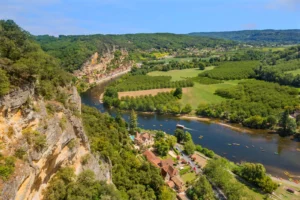
The river valley road offers the most visually continuous approach. This route follows the Dordogne River closely and passes fortified villages, cultivated riverbanks, and exposed cliff faces. Travelers often pass near La Roque-Gageac, where stone houses sit tightly against the rock.
This stretch shows how the settlement adapted to the limited space at river level, a contrast with Domme’s elevated position.
Inland Countryside Route to Domme
An inland approach provides a quieter understanding of the region. Roads cut through farmland, walnut groves, and small settlements that reflect working rural Dordogne rather than its most photographed views.
The scenery changes gradually, emphasizing how Domme rises distinctly from its surroundings rather than blending into them. This route suits travelers who prefer reduced traffic and a broader landscape context.
Scenic Pull-Over Stops Along the Way
A small number of informal stops add clarity without extending the drive. Near La Roque-Gageac, riverside pull-offs allow close observation of the river as it presses against limestone cliffs.
On the hillside above Beynac, roadside viewpoints reveal the wider valley and explain how elevation controlled visibility and movement.
Inland routes from Vitrac include brief clearings where Domme first appears above farmland, reinforcing its role as an overlook rather than a riverside village.
Final Ascent to Domme and Plateau Views
Both routes converge near the base of the plateau, where the climb toward Domme becomes unavoidable. The ascent narrows sightlines and then opens them suddenly as the village comes into view.
This sequence reflects Domme’s historical role, since control of elevation shaped its defensive strength and regional influence. By the time you arrive, the geography has already provided much of the explanation.
Things to Do in Domme France: Walking the Village and History
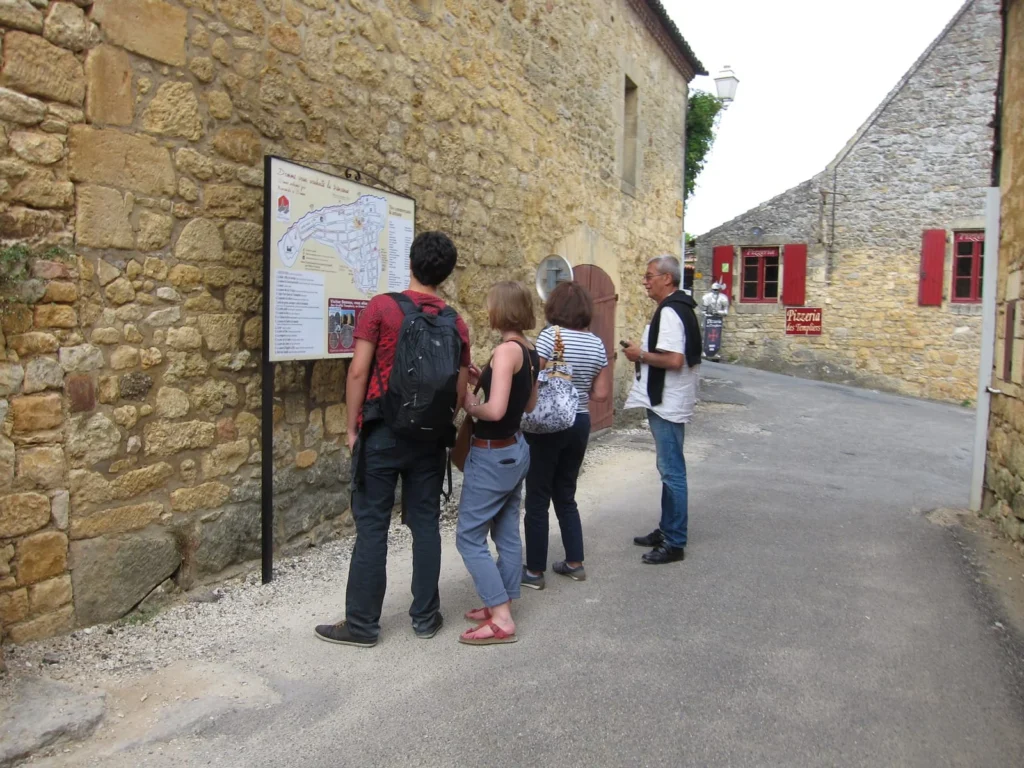
Walking through Domme explains the village more clearly than any overview ever could. Domme was founded as a bastide in the thirteenth century, and its original structure continues to shape how people move through it today.
Streets guide visitors toward edges and openings rather than concentrating attention on a central monument. This design reflects Domme’s original purpose as a defensive and administrative settlement overlooking the Dordogne Valley.
Ramparts Views and Strategic Position
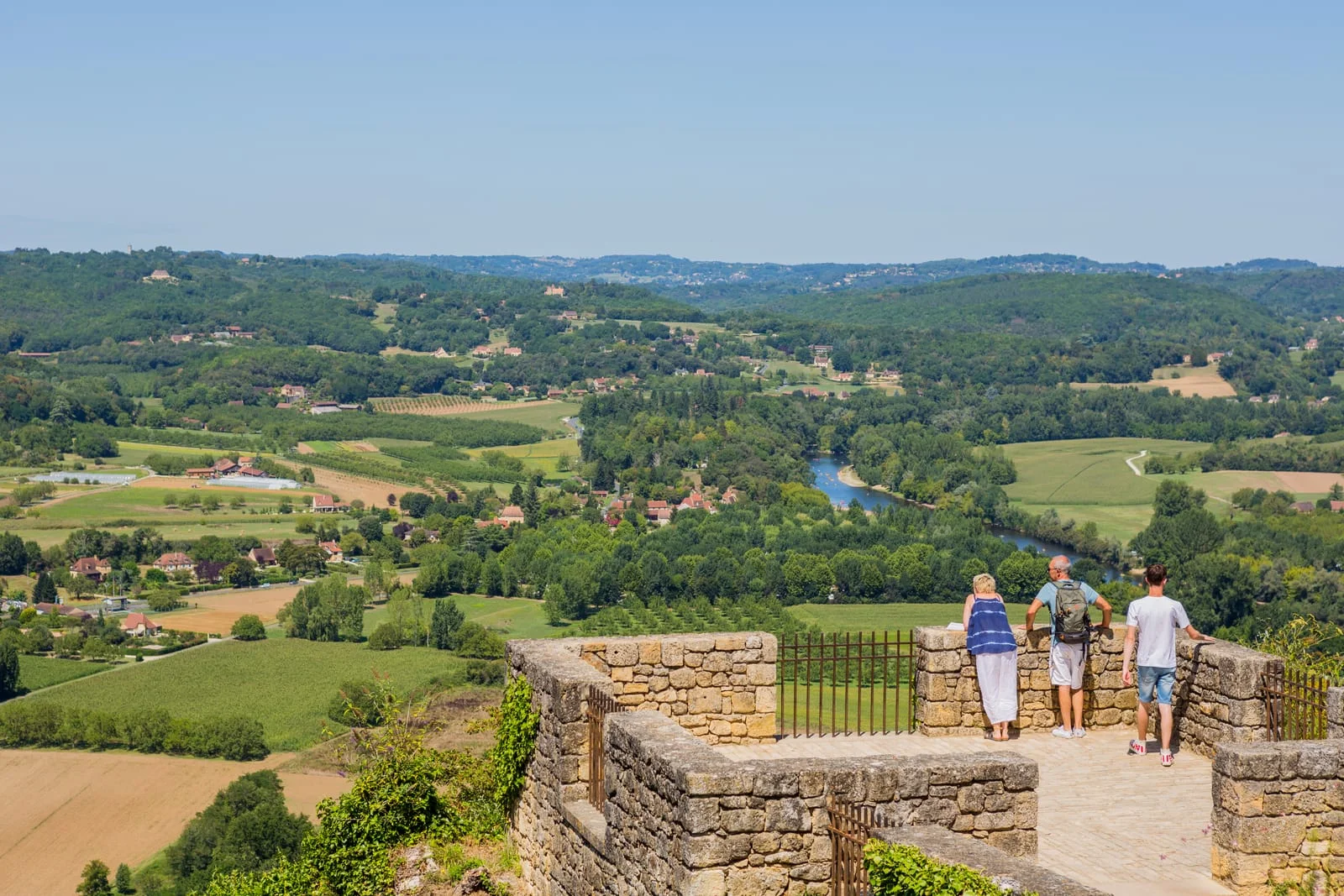
The ramparts form the defining experience of Domme. From these elevated edges, the Dordogne Valley opens in wide, uninterrupted views that explain the village’s historic importance. The river below once controlled trade, movement, and military access across the region.
Domme’s height provided protection and oversight, making it a valuable stronghold during periods of conflict. Today, these viewpoints allow visitors to understand Domme France history through geography rather than narration.
Porte des Tours and the Medieval Past
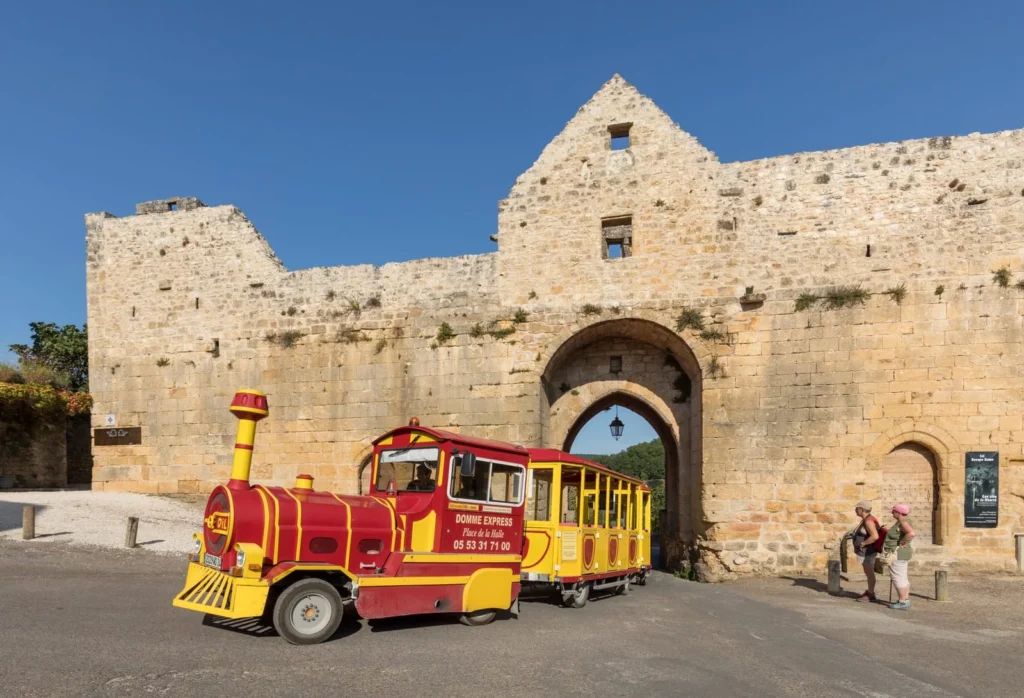
The Porte des Tours provides a direct connection to Domme’s medieval history. This fortified gate served as a prison for members of the Knights Templar during the early fourteenth century. Inscriptions carved into the stone by imprisoned knights remain visible and intact.
These markings anchor broader historical events in physical evidence that has not been reconstructed or staged. The surrounding streets continue this sense of continuity, with stone houses and small squares that remain part of everyday village life.
Exploring Domme on foot reveals a settlement shaped by intention rather than ornament. The village communicates its past through elevation, structure, and restraint, which allows a single walk to convey lasting historical context without excess explanation.
Eating in Domme: Local Food and Meal Timing
Food in Domme reflects the agricultural rhythm of the Dordogne rather than a curated dining scene. Meals here work best when they follow the pace of walking and viewing rather than interrupting it. Restaurants remain small, menus stay focused, and ingredients reflect what the surrounding countryside produces well.
What to Eat in Domme and Why It Matters
Local menus center on duck, walnuts, and seasonal produce drawn from the valley and nearby farms. Duck confit and magret appear frequently because preservation and fat-based cooking suited the region long before refrigeration.
Walnuts feature in salads, sauces, and desserts, reflecting their importance as a regional crop. In season, truffles appear in restrained preparations that emphasize aroma rather than excess. These dishes connect directly to place and history rather than presentation trends.
When and Where to Eat During a Day Trip
Lunch fits naturally after a morning walk along the ramparts, when the village remains active but manageable. Terrace seating near the edges of the plateau pairs meals with valley views and reinforces Domme’s elevated perspective.
Late-afternoon dining works well for shorter visits and suits travelers who prioritize walking first and eating later. On a Domme France market day, simple market foods and casual cafés often provide a more grounded experience than full-service restaurants.
Eating in Domme works best when it supports the flow of the day. A well-timed meal enhances the visit by extending observation and rest without pulling attention away from the village itself.
How to Plan Your Day in Domme
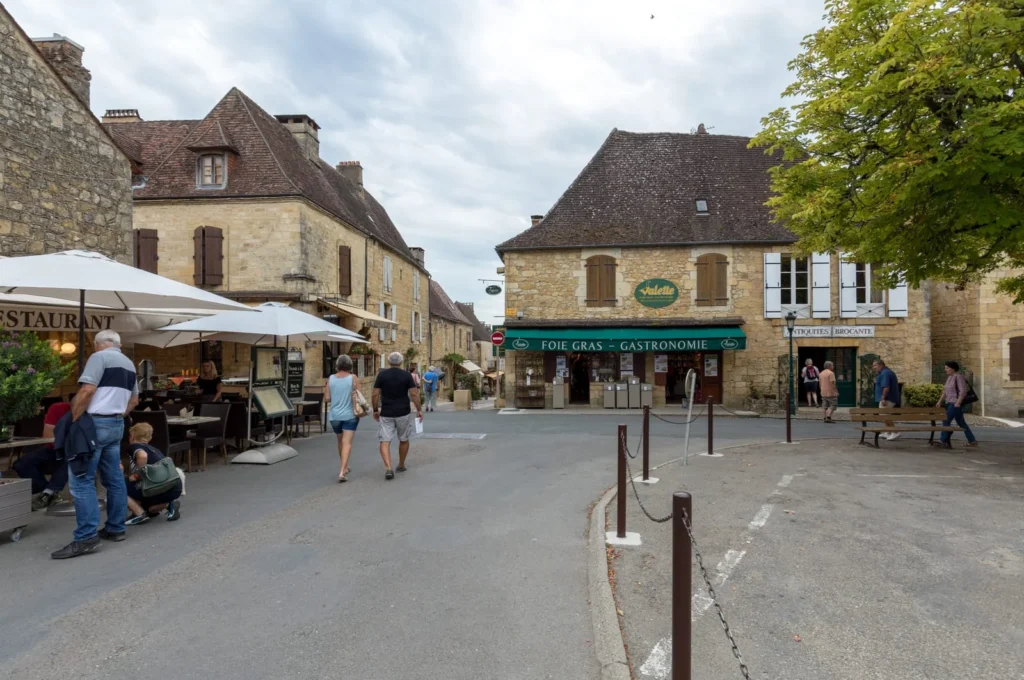
A clear structure helps a Domme visit feel complete rather than compressed. The village rewards steady pacing because its value lies in observation, walking, and well-timed pauses. Choosing a realistic framework prevents rushing and keeps attention on the place rather than the logistics.
A Focused Half-Day Visit
A half day in Domme suits travelers who want depth without extension into nearby villages. Arrival in the morning allows time to walk the ramparts, pass through the Porte des Tours, and explore the central streets at a measured pace.
Lunch follows naturally once the main viewpoints are complete. This structure works well for travelers based nearby, or those combining Domme with another Dordogne stop later in the day.
Full-Day Domme Itinerary
A full-day centerson Domme as the primary experience, rather than one stop among many. Morning walking sets the context and avoids crowd density. Lunch anchors the middle of the day and provides rest without breaking continuity.
The afternoon allows for a second, slower walk, photography as light shifts, or a visit beneath the village for those who choose to extend. This structure suits travelers who value immersion and want Domme to shape the day rather than compete with it.
Structuring the day around realistic movement and timing keeps Domme legible and calm. When the schedule respects the village scale, the experience remains coherent from arrival through departure.
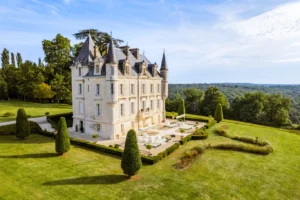
If your Dordogne travel plans include immersive stays and luxury country living, consider a week at Château de Lasfonds in the heart of the Périgord countryside. This elegant 19th-century estate offers spacious gardens, refined interiors, and private accommodations for groups up to twenty guests, perfect for extended exploration of local history, markets, and cuisine.
Practical Travel Tips for Visiting Domme
A smooth visit to Domme depends on understanding a few on-the-ground details that shape comfort and timing. These factors influence how long you stay, how easily you move, and how much energy the visit requires.
Parking Access and Walking Conditions
Parking sits outside the historic core, which preserves the village but adds walking distance. Most visitors park below the plateau or near the main entrance and continue on foot. Streets inside Domme remain narrow and uneven, with stone paving and gradual slopes.
Comfortable walking shoes support longer exploration and reduce fatigue. The village rewards slow movement, since rushing limits observation and increases strain.
Viewpoints Light and Crowd Flow
Viewpoints along the ramparts remain accessible throughout the day, though light quality changes significantly. Morning light provides clarity across the valley and reduces glare. Late afternoon brings warmer tones and deeper contrast, which suits photography and quieter observation.
Crowds tend to cluster near central access points, while rampart paths remain calmer as visitors spread out. Awareness of these patterns helps you choose moments that feel balanced rather than congested.
Attention to these practical details allows Domme to remain focused on experience rather than adjustment. When movement, light, and access align, the village reveals itself with minimal effort.
Best Time to Visit Domme
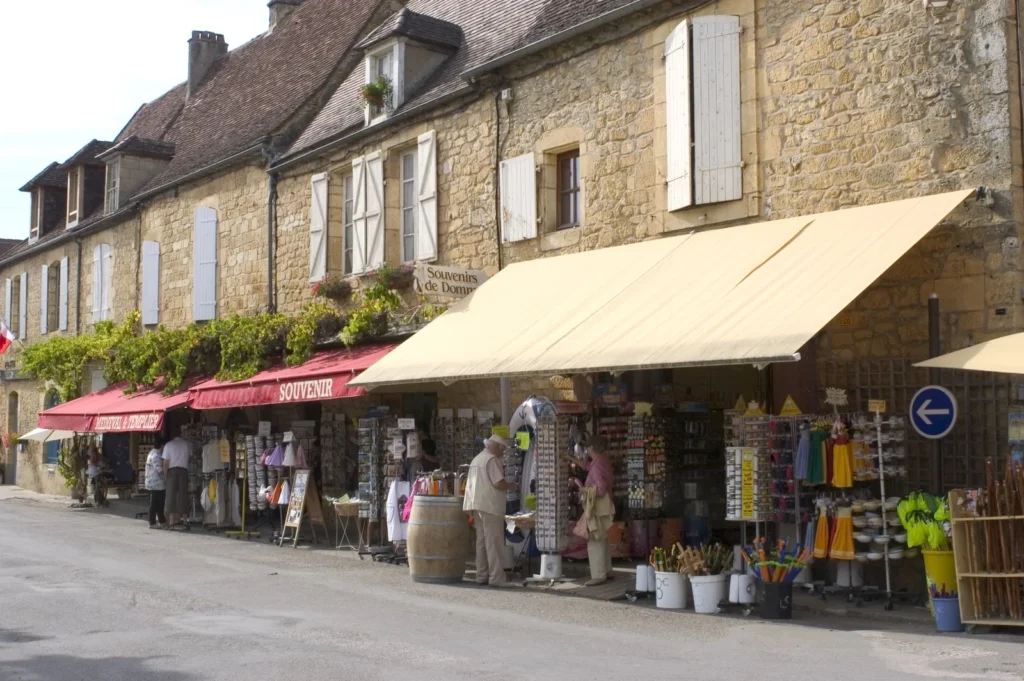
Choosing the right time to visit Domme shapes how the village feels and how much space you have to engage with it. Domme remains accessible year-round, though seasonal shifts affect walking comfort, crowd levels, and dining availability. Understanding these patterns helps align expectations with experience.
Spring and Early Autumn Conditions
Spring and early autumn provide the most balanced visiting conditions. Daytime temperatures support long walks without fatigue, and visibility across the Dordogne Valley remains clear. Restaurants and cafés operate at a steady pace without feeling pressured by peak demand.
These seasons also preserve a sense of local rhythm, since visitor numbers remain present but controlled. Travelers who value quiet observation and photography often find these months the most rewarding.
Summer and Off-Season Considerations
Summer brings extended daylight and a fuller dining scene, which benefits travelers who enjoy evening terraces and social energy. Increased heat and visitor density can limit flexibility during midday hours, especially along the ramparts.
Early starts and later afternoon walks help offset these factors. The off-season reduces crowds significantly and highlights Domme’s residential character, though some restaurants and attractions operate on limited schedules.
Timing a visit with awareness rather than impulse keeps the experience grounded. When conditions align with intention, Domme delivers clarity rather than compromise.
Extend Your Dordogne Trip With a Private Stay at Château de Lasfonds
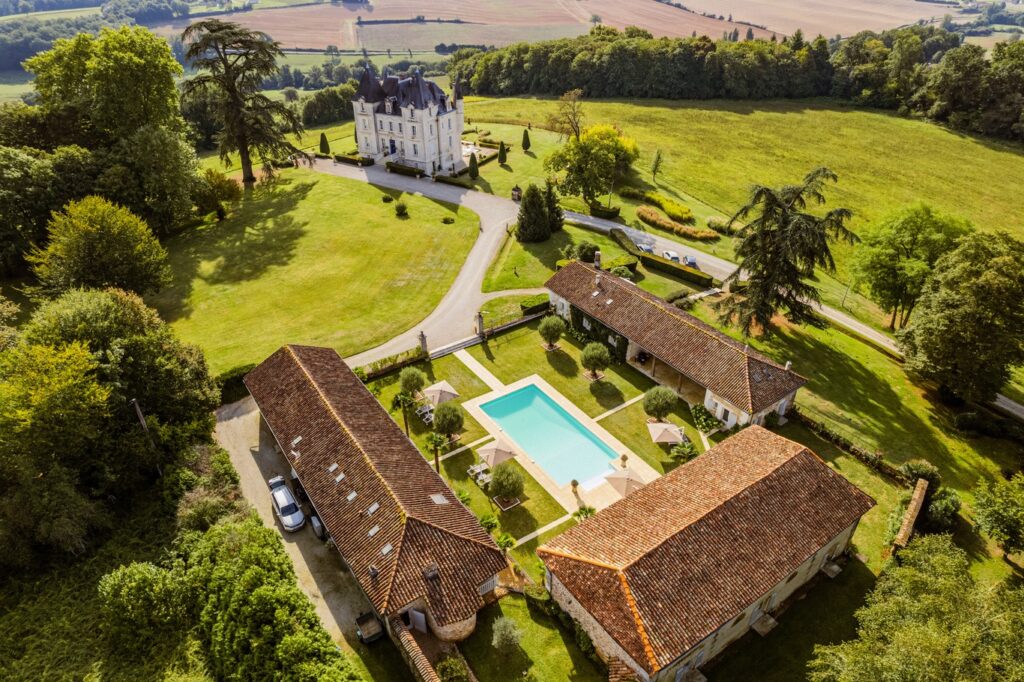
If Domme leaves you wanting more time in the Dordogne countryside, a private stay at Château de Lasfonds gives you that space without changing the pace of your trip. The estate sits on the Charente and Dordogne border and covers about 6.5 hectares, which creates a genuine sense of retreat while keeping you within reach of the region’s best villages and markets.
Château de Lasfonds is designed for exclusive use, with the main château plus outbuildings that expand comfort for larger groups. The property includes a heated pool and dedicated leisure spaces, such as a games room and gym, making it easy to balance sightseeing days with quiet afternoons on site.
This stay works especially well for families and friends who want privacy, shared meals, and flexible planning. The estate also supports practical needs, including high-speed internet and work-friendly spaces, so longer stays feel realistic rather than complicated.
If you want your Domme day trip to become a slower Dordogne week, Château de Lasfonds gives you a base that feels distinctive, quiet, and complete.
Domme France FAQs
Is Domme suitable for travelers visiting the Dordogne without a car?
It is possible to visit Domme without a car, but careful planning is essential. Public transport options remain limited, so travelers often rely on buses, taxis, or private transfers. Staying near Sarlat and arranging transport in advance helps reduce stress.
How much walking is required to explore Domme comfortably in one day?
Exploring Domme on foot involves moderate walking over stone streets and gentle slopes. Most visitors walk steadily for several hours with breaks. Comfortable footwear and pacing allow travelers to enjoy the village without feeling physically overwhelmed.
Is Domme a good destination for older travelers or visitors with limited mobility?
Domme can suit older travelers, though mobility limitations should be considered. The historic layout includes uneven surfaces and inclines that may be challenging to navigate. Visitors often focus on viewpoints and central areas to comfortably enjoy Domme, Dordogne, France.
How does Domme compare to La Roque-Gageac or Beynac for a first Dordogne visit?
Domme offers a broader sense of place than nearby villages. While La Roque-Gageac and Beynac emphasize river views or castles, in Domme France, history unfolds through walking, elevation, and layout. First-time visitors seeking balance often prefer Domme.
Are there guided walking tours available in Domme, or is it best explored independently?
Domme supports both guided and independent exploration. Guided tours add historical context, while self-guided walking allows flexible pacing. Many visitors prefer exploring independently since the things to do in Domme, France, reveal themselves naturally through observation.
What kind of weather should travelers expect in Domme throughout the year?
The weather in Domme follows typical Dordogne patterns with warm summers and mild winters. Spring and early autumn offer comfortable walking conditions and clearer views. Summer heat can affect midday exploration, making morning and evening visits more pleasant.
Is the Domme family friendly for travelers visiting the Dordogne with children?
Domme works well for families who enjoy walking and outdoor exploration. Children often enjoy viewpoints, open spaces, and historical stories. Parents benefit from the compact layout, which keeps things to do in Domme France manageable within a single day.
How busy does Domme get during peak summer months compared to other Dordogne villages?
Domme becomes lively during summer, though it feels less congested than smaller river villages. Visitors spread out along ramparts and streets, which eases crowd pressure. Early arrival helps maintain a calmer experience during peak season.
Can Domme be combined with nearby villages in a single itinerary without feeling rushed?
Domme pairs well with one nearby village if planned carefully. Its compact scale allows meaningful exploration within a few hours. Travelers often combine Domme with La Roque-Gageac while keeping the pace relaxed and intentional.
What makes Domme different from other bastide towns in southwest France?
Domme stands apart through elevation and outlook. Many bastide towns focus inward on central squares, while Domme Dordogne France opens outward toward the valley. This perspective shapes how history, movement, and landscape connect during a visit.