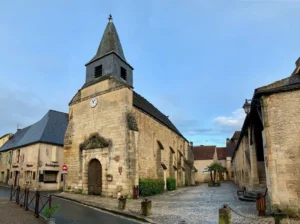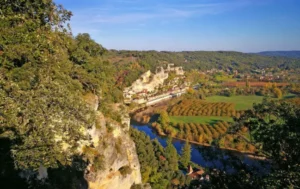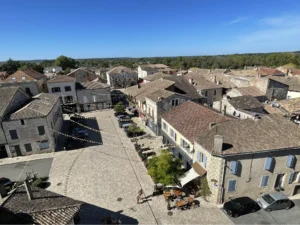
France in September usually offers warm or mild afternoons, cooler evenings, active food and wine regions, and less domestic family-holiday pressure after school resumes. Conditions vary sharply.
Nice may still feel summery while Paris, Alsace, and rural Southwest France call for an extra layer after sunset. Rain remains possible in every region. The month works well for a city-and-countryside trip with a flexible plan.
France in September at a Glance
| Timing | What it usually feels like | Planning implication |
| Early September | Summer conditions can linger, mainly in the south and on the coast | Keep beach plans, but reserve popular restaurants, trains, and coastal stays |
| Mid-September | Warm days can continue while harvest and cultural calendars become busier | Confirm winery access and check event dates before fixing day trips |
| Late September | Cooler mornings and evenings become more noticeable | Add indoor alternatives and check seasonal opening days |
September is a transition month, not a uniform shoulder season. Historical averages help with destination choice. A local forecast becomes more useful for packing seven to ten days before departure.
What Weather Should You Expect?

France has no single useful average temperature in September. France covers Atlantic, continental, mountain, and Mediterranean climates. The official World Weather Information Service, using data supplied by Météo-France, shows the regional spread clearly.
| Representative city | Average September high | Average September low | Best planning use |
| Paris | 20.8°C / 69.4°F | 12.5°C / 54.5°F | City walking, museums, dining |
| Bordeaux | 23.7°C / 74.7°F | 12.5°C / 54.5°F | Southwest France and wine-country planning |
| Nice | 24.3°C / 75.7°F | 17°C / 62.6°F | Riviera and Mediterranean trips |
| Strasbourg | 20.7°C / 69.3°F | 10.3°C / 50.5°F | Alsace, eastern France, and cooler nights |
These figures are monthly averages, not a promise of daily conditions. Rural areas can also cool faster after sunset than nearby cities. Pack for the day-to-night change, then adjust the final list against Météo-France shortly before travel.
Are Crowds Lower in September?
Crowds become more uneven rather than disappearing. The official 2026 to 2027 school calendar sets the return to school for Tuesday, September 1, 2026, with the next national break starting October 17. This supports a reasonable inference that domestic family-holiday pressure should ease after August. Major attractions and famous wine villages can still be busy.
Events can reverse the quieter-month pattern. Angoulême’s 2026 Circuit des Remparts runs from September 18 to 20. Travelers using the station or planning a city day should expect more demand and traffic.
Do not assume September guarantees lower rates. Compare exact dates, cancellation terms, and transport options. A citywide event can matter more than the month.
Best Places to Visit in France in September

The best cities to visit in France in September depend on the trip’s priority rather than a universal ranking.
| Priority | Good fit | Main trade-off |
| First visit with major museums | Paris | Popular sites remain busy, and advance tickets still matter |
| Wine, food, and a city-country pairing | Bordeaux, Cognac, Charente, and Dordogne | Harvest activity requires appointments and rural transport |
| Swimming and coastal dining | Nice, Antibes, or Corsica | Early September has better beach odds than the end of the month |
| Villages, vineyards, and cooler walking weather | Strasbourg and Alsace | Nights are cooler, so summer-only packing is insufficient |
| Families or groups seeking a slower week | South West France | A car or arranged driver is important for daily flexibility |
The South of France is Not one Weather Zone
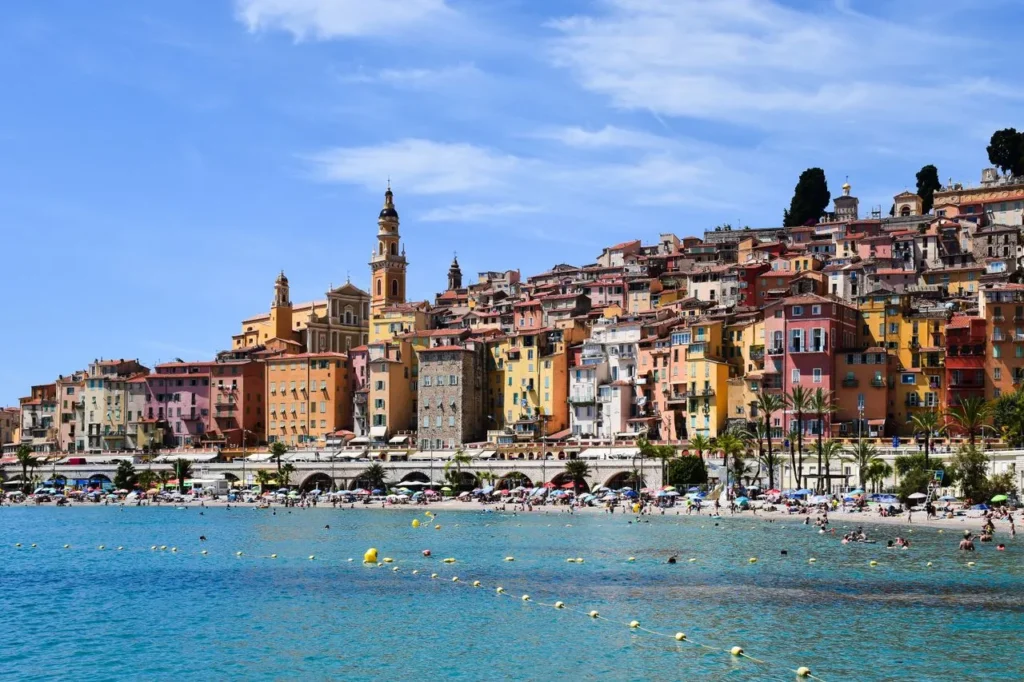
Nice and the Riviera retain warmer nights and stronger swimming potential. Bordeaux, Cognac, Charente, and Dordogne can have warm afternoons but a larger day-to-night temperature change.
For southern France in September, choose the Mediterranean for a sea-led stay. The Southwest fits food, wine, markets, historic towns, and private countryside accommodation. Combining both in one short trip creates long transfers.
Which Beaches Work in September?
For travelers focused on the best beaches in France in September, Corsica and the Riviera usually provide stronger conditions for sea swimming. Corsica’s official tourism board notes that mild autumn weather can extend beach and swimming days. Atlantic conditions are less predictable.
Beach supervision varies by location. France’s official tourism site notes that some monitored seasons extend through late September, while others end earlier. Check local schedules and beach flags.
What to Wear in France in September
The most reliable approach is a compact layered wardrobe. One heavy fall coat is less useful than pieces you can add or remove.
Pack:
- Breathable tops for warm afternoons
- A cardigan, light sweater, or overshirt
- A light waterproof jacket
- Long pants plus one lighter option for the south
- Comfortable closed shoes for cities, gravel, and village streets
- A smarter outfit for dinners or celebrations
- Swimwear, sunglasses, sunscreen, and a hat
- A small umbrella and a day bag that protects electronics
Countryside guests should add shoes with grip for damp grass and an indoor pair.
September Markets, Produce, and Harvest Planning
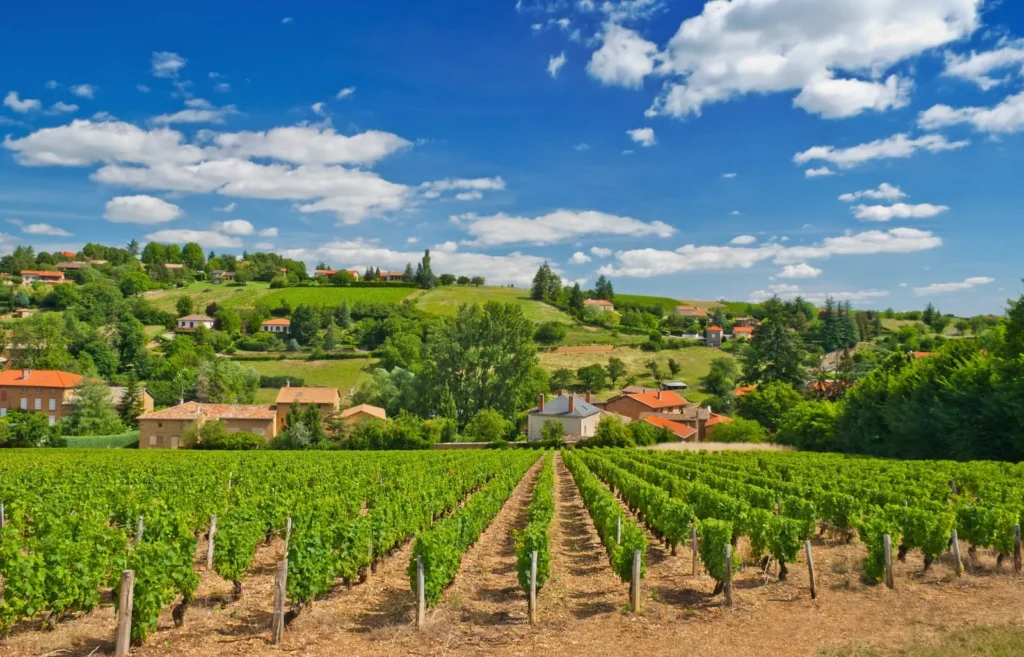
Seasonal fruits and vegetables in France in September reflect the shift from summer to fall: tomatoes, eggplant, peppers, onions, beets, turnips, sweet potatoes, melons, plums, grapes, apples, pears, and hazelnuts. Fresh walnuts reach stalls around mid-September for a short period.
Grape harvest timing varies by region, variety, ripeness, and weather. September may overlap with active work around Bordeaux, but visitors should not assume that estates accept walk-ins or harvest participation. Book a confirmed tour or tasting.
For a self-catering group, plan one market morning early in the stay and leave space for a second shop. This keeps meals flexible.
Planning a Countryside Stay for a Group
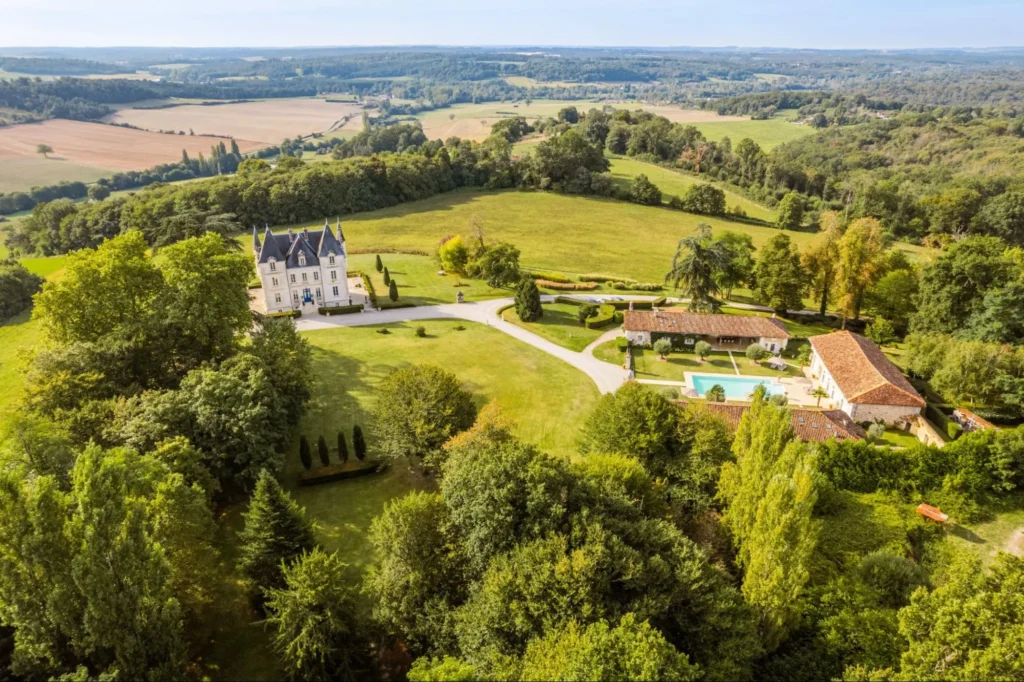
Château de Lasfonds sits near the Charente and Dordogne boundary. The 6.5-hectare property includes the main château and three updated outbuildings. The estate rents to one group at a time, accommodates up to 18 guests, requires a seven-night minimum, and opens its heated outdoor pool from May through October.
Capacity alone doesn’t determine room allocation. The main château has four bedrooms and sleeps eight, while additional bedrooms sit in the outbuildings. List couples, solo adults, children, cot needs, and mobility limits.
The main château has air-conditioned bedrooms and underfloor heating. Some ground-floor outbuilding space may suit guests with limited mobility, but the main building has no lift.
A Realistic Group-Arrival Plan
SNCF currently lists Paris to Angoulême at an average of about 2 hours 35 minutes, with direct services available. Château de Lasfonds advises allowing roughly 35 minutes for the drive from Angoulême, subject to the route and traffic.
Ask rail travelers to choose one or two shared arrival windows. Confirm child seats, luggage volume, and mobility needs before reserving transport. A rental car or pre-arranged driver remains useful because ride-hail coverage is limited in the countryside.
A Seven-Night Slow-Travel Outline
| Day | Plan |
| 1 | Arrive, unpack, and keep dinner simple |
| 2 | Local market, groceries, and an afternoon at the estate |
| 3 | Angoulême for architecture, comics, and lunch |
| 4 | Pool, gardens, work time, or a weather-flex day |
| 5 | Pre-booked Cognac visit with a designated driver or arranged transport |
| 6 | A Dordogne village and relaxed lunch |
| 7 | Group meal at the château and no major driving |
| 8 | Depart through Angoulême or continue to Bordeaux |
This pace gives the group three outing days and three lighter days. Bordeaux can work as a full day trip, but it may make more sense as a stop before or after the château week.
Plan Your Private Château Stay at Château de Lasfonds
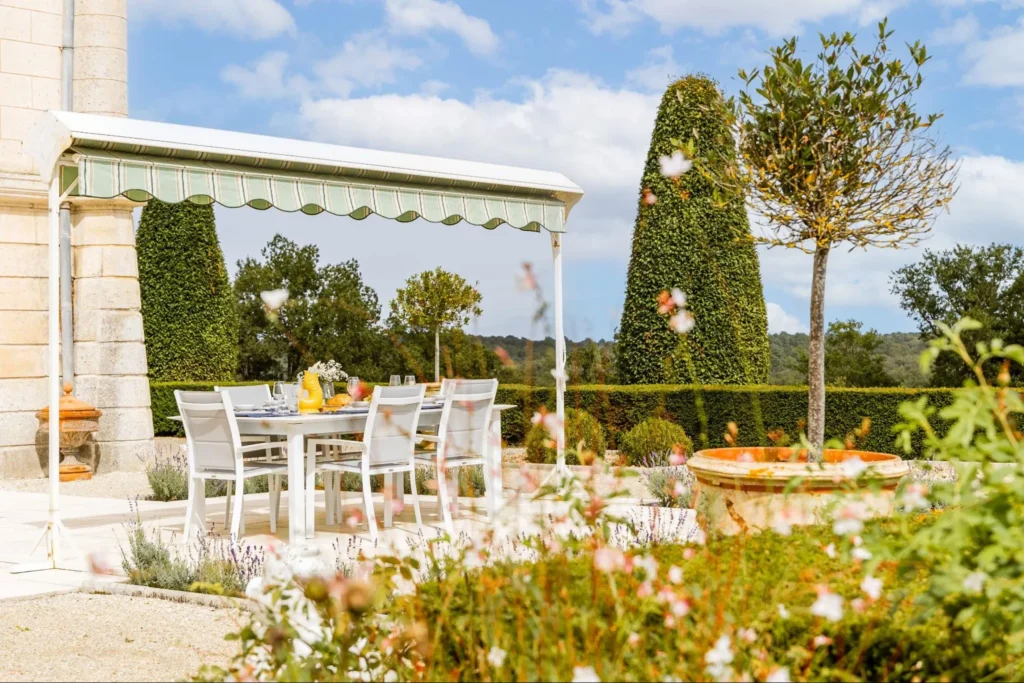
A September week at Château de Lasfonds can suit families, couples traveling together, wedding groups, or small retreats that want private shared space in South West France. The estate is reserved for one group at a time and includes kitchens, outdoor dining areas, workspaces, high-speed Wi-Fi, a games room, a gym, gardens, and a heated seasonal pool.
View the rooms, then send an inquiry with your preferred dates, guest count, and room requirements. External chefs, transport providers, event planners, and concierge support are available on request and are not automatically included.
Frequently asked questions
Is September a good time to visit France?
Yes. September can combine warm afternoons, cooler evenings, active markets, and fewer school-holiday travelers. The right region matters: the Mediterranean stays warmer, while northern, eastern, and rural areas need more layering.
What is the average temp in France in September?
A national average is less useful than city data. Average highs range from about 20.7°C in Strasbourg to 24.3°C in Nice among representative cities, while average lows range from 10.3°C to 17°C.
Is early or late September better?
Early September gives stronger beach and warm-weather odds. Late September favors city walks, food, and a calmer countryside pace, but cooler evenings and reduced seasonal schedules become more likely.
Can you swim in the South of France in September?
Yes, sea swimming can remain comfortable on the Riviera and in Corsica, though conditions vary. Check local weather, beach flags, and lifeguard dates. In the Southwest, a heated pool gives a more dependable option.
Does it rain a lot in France in September?
Rain varies by region and year. Short showers, Atlantic systems, and Mediterranean storms are all possible. Carry a light waterproof layer and pack an indoor option, rather than treating any monthly average as a forecast.
What shoes should I pack for France in September?
Bring comfortable closed walking shoes with reasonable grip. Add smarter shoes for dinner and sandals for warm southern days. Rural stays may also require waterproof footwear for damp lawns, gravel, and country paths.
Can tourists visit vineyards during the grape harvest?
Many vineyards continue scheduled tours and tastings, but harvest work can alter access. Reserve directly with the estate or an official tourism provider. Do not assume walk-ins, cellar access, or harvest participation.
What produce is in season in September?
Look for grapes, plums, apples, pears, tomatoes, eggplant, peppers, onions, beets, turnips, sweet potatoes, and hazelnuts. Fresh walnuts arrive around mid-September and remain available for a limited period.
Do you need a car for rural South West France?
A car or pre-arranged driver is strongly recommended. Rail works well for reaching Angoulême, but village trips, markets, restaurants, wineries, and countryside attractions are much easier with planned road transport.