
For many U.S. travelers, Europe feels easy: book the flight, land in Paris, take the train to another country, come home with a camera roll full of villages, vineyards, and late dinners. The rules behind that ease are changing. That is why the question of whether Americans need a visa for Europe matters more now than it did a few years ago.
The short answer is that American passport holders can still visit France and most Schengen countries without a traditional tourist visa for short stays. France Visas states that American passport holders do not need a visa to visit France for up to 90 days within any 180-day period. The U.S. State Department gives the same general Schengen guidance for U.S. travelers.
The strategic answer is more useful. Travelers now need to understand the Schengen Zone, the 90/180 rule, the Entry/Exit System, ETIAS, and the difference between visa-free travel and permission to enter. This matters even more for premium trips to France, multi-country routes, sabbaticals, executive retreats, and longer stays centred on a French base.
Do Americans Need a Visa for Europe in 2026?

For ordinary tourism or short business visits, the answer is still no in most cases. American citizens do not need a short-stay Schengen visa for France, Italy, Spain, Germany, Portugal, the Netherlands, Greece, and other Schengen countries, as long as the trip stays within 90 days in any 180-day period.
The confusion comes from ETIAS. ETIAS is not a visa. It is a travel authorization for visa-exempt visitors going to 30 European countries. The official EU ETIAS site says ETIAS is scheduled to start operations in the last quarter of 2026, with no action required from travelers at this stage.
So the practical answer to Do I need a visa for Europe from the U.S.? “ is this: not for a short tourist trip under the current U.S. passport rules, but once ETIAS is live, eligible U.S. travelers will need an approved ETIAS travel authorization before departure.
Schengen Basics Every U.S. Traveler Should Understand

The Schengen Zone functions as a single shared travel area for short-stay travel. Once you enter a Schengen country through an external border, you can usually move between Schengen countries without routine passport checks at internal borders. The European Commission says Schengen rules cover external border management, short-stay visas, travel documents, and stays of up to 90 days within an 180-day period.
This is why a European visa for US citizens can feel misleading. There is no single “Europe visa” for all of Europe. The Schengen Area is one system. The United Kingdom, Ireland, and several non-Schengen destinations follow their own rules.
A trip to France can include Paris, Dordogne, Bordeaux, Provence, Barcelona, Milan, Amsterdam, and Vienna, all within the same Schengen clock. Each country does not reset your allowance. A traveler who spends 30 days in France, 20 in Italy, and 20 in Spain has used 70 Schengen days.
That is the key point behind European visas for US citizens: the question depends on the country, trip length, travel purpose, and passport status.
ETIAS and EES: What Changes for U.S. Travelers
ETIAS is the change most Americans have heard about, but EES is already part of the border picture. The European Commission says the Entry/Exit System has been fully operational across all Schengen countries since April 10, 2026. It records passport data, facial images, fingerprints, entry dates, exit dates, and locations for non-EU travelers on short stays.
That means entry/exit stamps are no longer the only practical record of your Schengen stay. The system is designed to digitally track entries, exits, and overstays.
ETIAS comes next. Once it starts, visa-free nationals, including U.S. citizens, will need to apply online before travel. The EU says most applications are approved within minutes. Once approved, ETIAS is linked to the passport and remains valid for 3 years or until the passport expires, whichever comes first.
That is why saying US citizens need a visa for Europe is not the cleanest way to frame the rule. U.S. citizens will need ETIAS after launch, but ETIAS does not turn a short French holiday into a visa application.
France as a Smart Base for Multi-Country Routes

France works beautifully as a base because it offers strong international air links, high-speed rail, regional airports, and easy access to Spain, Switzerland, Belgium, Luxembourg, Germany, Italy, and the Netherlands. For commercial leaders, it also supports a better pace: one strong base, fewer hotel changes, less wasted travel time, and more room for meaningful meetings or downtime.
A France-based company helps travelers better manage their Schengen days. Instead of racing through six countries in 14 days, a traveler can stay in one region, take selective trips, and return to a familiar home base. This is especially valuable for family offices, executives, advisors, and entrepreneurs who want a trip that blends privacy, cultural depth, and productivity.
For a France-first itinerary, the visa question should come before the route design. Europe’s visa requirements for US citizens are manageable for short stays, but the real risks lie in pacing, documentation, and the assumption that every European country follows the same rules.
Documents, Insurance, and Border Readiness
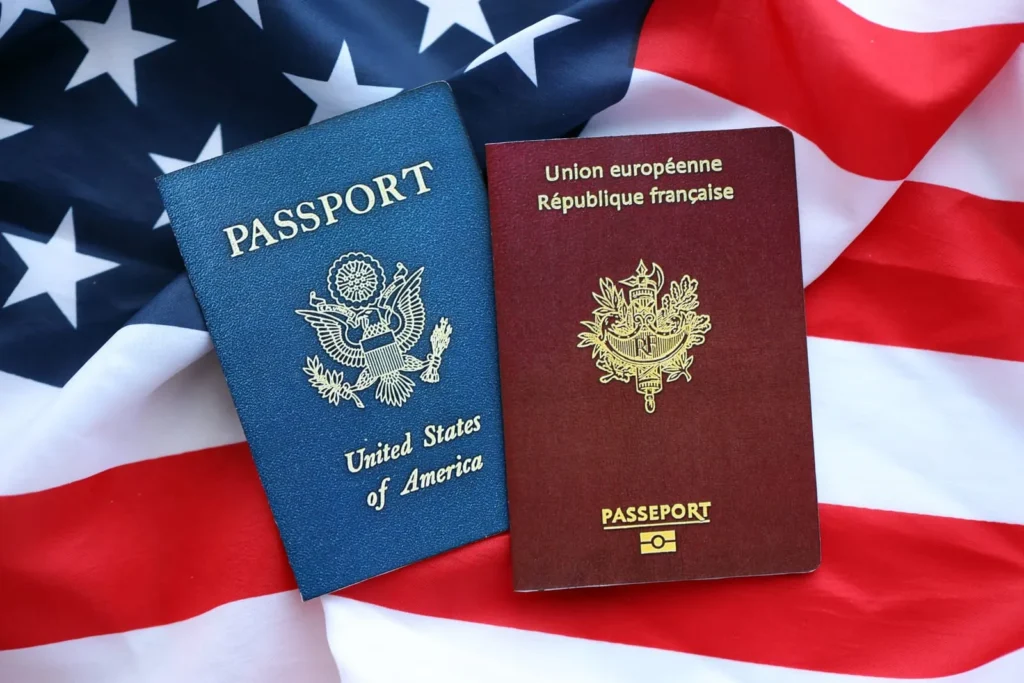
Visa-free entry is not automatic entry. Border officers can still ask about your return ticket, accommodation, funds, travel purpose, and medical coverage. France Visas notes that travelers may need proof of accommodation, return travel, financial means, professional trip details, and an insurance certificate covering medical and hospital expenses, repatriation costs, and death-related expenses.
For short stays, Americans should travel with a passport valid for at least three months beyond the planned Schengen departure date, and the U.S. State Department recommends reviewing entry requirements before travel.
Insurance is commercially sensible even when a traveler is visa-exempt. Premium trips often involve nonrefundable villas, private drivers, guides, rail tickets, and international flights. Strong coverage protects both the traveler and the itinerary.
When a European Visa Application Becomes Relevant
A European visa application becomes relevant when the stay exceeds the short-stay allowance, the activity requires permission, or the traveler is not using a U.S. passport. It can also matter for mixed-nationality families, employees traveling under non-U.S. passports, or guests joining a retreat from countries that do require a Schengen visa.
This is also where a visa to Europe from the USA needs context. Applying from the United States does not mean the traveler is applying as a U.S. citizen. Nationality, residence status, destination, purpose, and length of stay guide the process.
For Canadians, the picture is similar for short Schengen visits. The Government of Canada says Canadians can visit Schengen countries without a visa for up to 90 days in any 180-day period, and previous stays count if they leave and return within the same 180-day period. That makes visa requirements for Canadian citizens traveling to Europe a useful benchmark for North American travel groups.

What This Means for a France Trip
The strongest France trips start with immigration math before selecting a hotel. A luxury château stay, a Bordeaux wine route, a Dordogne retreat, or a Paris-to-Provence plan all work better when the traveler knows the Schengen clock, ETIAS timing, and document requirements in advance.
France is one of the best bases for that because it combines access, credibility, hospitality, and depth.
Plan Your France Stay With Chateau de Lasfonds

If Americans need a visa for Europe is the question that brought you here, the next step is choosing a French base that makes the trip feel calm, private, and well-paced.
Château de Lasfonds offers a refined countryside setting in the Dordogne, designed for families, friends, private gatherings, and leaders who want space to think, reconnect, and enjoy France without changing hotels every few days.
With historic architecture, generous grounds, modern comforts, work-friendly spaces, and easy access to regional food, wine, nature, Bordeaux, Cognac, and the French Atlantic coast, it gives your Schengen trip a smarter rhythm.
Use Château de Lasfonds as your home base for a slower, more meaningful stay in France. Plan your dates, bring your group together, and let the château become the part of the trip everyone remembers.
FAQs about Do Americans Need a Visa for Europe?
1. Do U.S. citizens need a visa for Europe for a two-week vacation?
No. U.S. citizens usually do not need a traditional visa for a two-week Schengen vacation. They still need a valid passport, must respect the 90/180 rule, and may need ETIAS after it launches.
2. Can Americans stay in France for 90 days, then visit Italy?
Yes, but Italy also counts as Schengen time. A full 90 days in France use up the whole short-stay allowance, so moving straight to Italy for extra Schengen days would usually exceed the limit.
3. Does ETIAS replace a Schengen visa?
No. ETIAS is for visa-exempt travelers, including Americans, after launch. A Schengen visa is for travelers whose nationality or purpose requires one. ETIAS supports short stays and does not allow long-term residence.
4. Do children from the U.S. need an ETIAS for Europe?
Once ETIAS launches, eligible U.S. minors will also need ETIAS travel authorization to visit covered European countries. Parents should apply with the child’s passport details and keep travel documents consistent across bookings.
5. Can I work remotely from France as an American tourist?
Short business meetings and tourism are different from working locally in France. Remote work rules can be complex, especially for longer stays, tax exposure, client activity, and employment. Check French visa guidance before planning.
6. What happens if I overstay the Schengen 90-day limit?
Overstaying can lead to fines, removal, future entry problems, or refusal at the border. EES records entries and exits digitally, so travelers should track days carefully before booking a return trip to Europe.
7. Is the United Kingdom part of the Schengen Zone?
No. The United Kingdom is outside the Schengen Zone and has separate entry rules. Time in London does not count as time in the Schengen area, but UK entry requirements must be checked before travel.
8. Can I reset my Schengen days by leaving for one weekend?
No. A weekend outside Schengen pauses the count, but it does not reset the 180-day lookback window. Your previous Schengen days still matter when calculating remaining time.
9. Do Americans need travel insurance for France?
Travel insurance is strongly recommended. Border officers may ask for proof of coverage, and premium France trips often include prepaid lodging, transport, and private experiences that can be expensive to change.