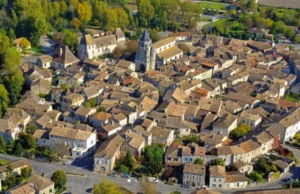
Monpazier Dordogne rewards travelers who like to understand a place rather than simply photograph it. Founded in 1284, this compact bastide still reveals the logic of a planned medieval town through straight streets, narrow carreyrous, an arcaded central square, and a Thursday market that keeps its commercial purpose alive.
It is small enough to explore comfortably on foot yet detailed enough for a thoughtful half-day. For couples, families, and groups touring southwest France, the pleasure comes from seeing how medieval urban design still shapes everyday village life.
Why Monpazier’s Bastide Design Still Matters
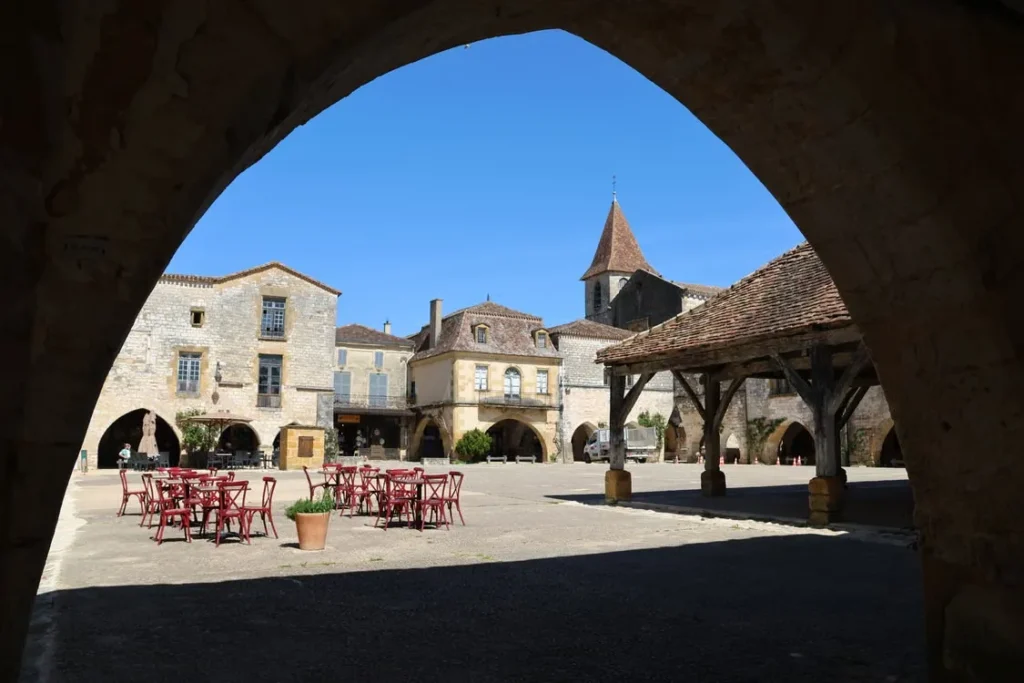
A bastide was a planned medieval town. Across southwest France, many were established during the 13th and 14th centuries using an ordered street plan rather than developing gradually around a single castle or religious center. France’s official tourism site describes the region’s bastides as medieval “new towns” organized around orthogonal plans.
Monpazier is one of the clearest places to see that idea on the ground.
The commune dates its foundation to 1284, under Edward I of England, on land belonging to the lord of Biron. Its historic plan remains remarkably legible, a quality reinforced by long-running heritage protections. The municipality notes that the preservation of its buildings still allows visitors to read the medieval urban structure today.
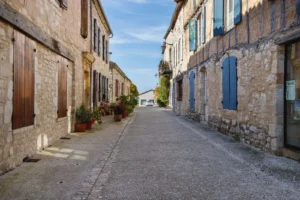
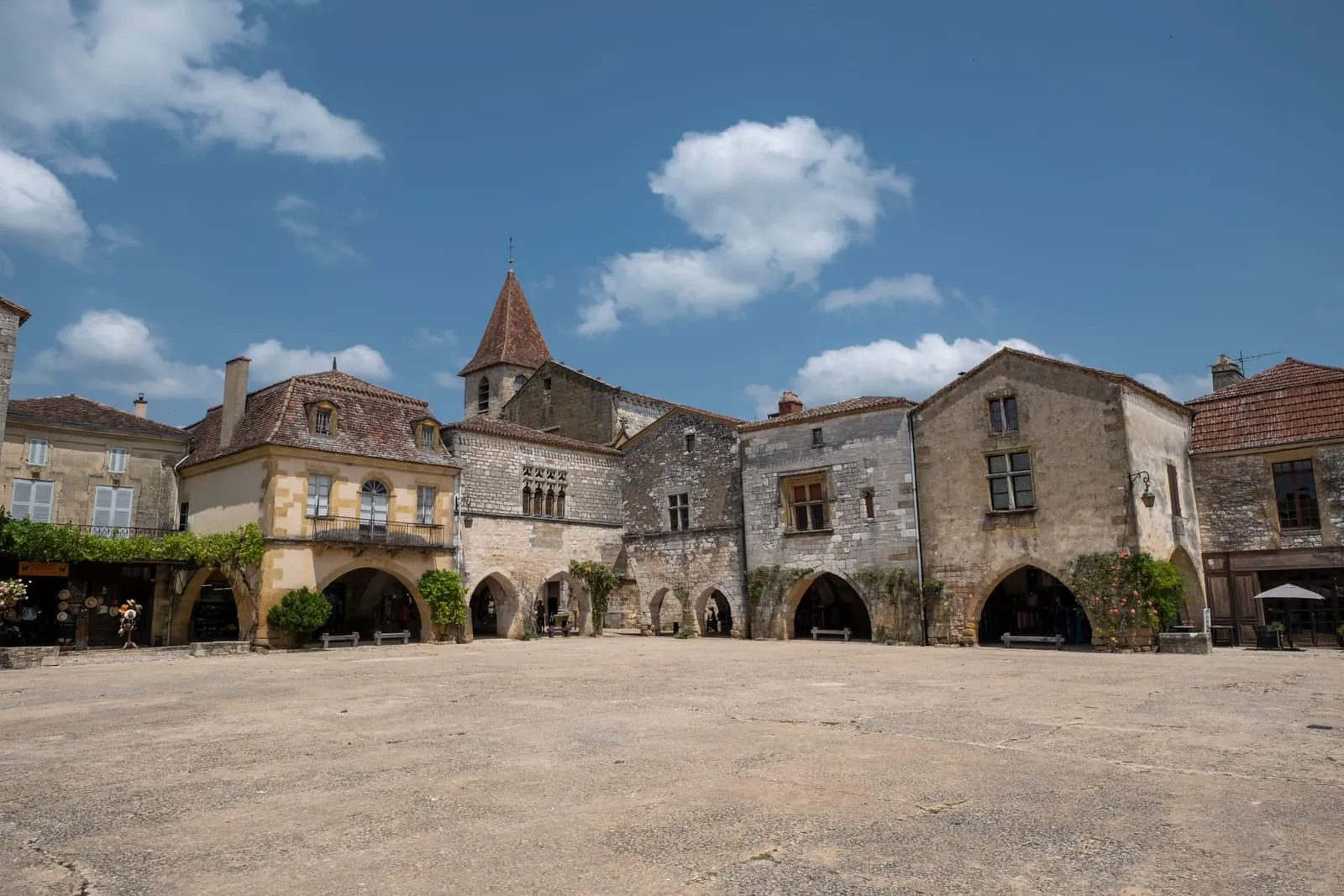
Walk a few streets and the logic becomes clear. Main routes run straight through the settlement, while much narrower carreyrous cut between residential blocks. At the center sits Place des Cornières, the town’s historic space for commerce, exchange, and justice. The municipality’s walking guide identifies 23 houses with open porticoes around the historic center, dating from the 13th through the 17th centuries.
That architectural symmetry gives Monpazier much of its character. It feels orderly without feeling staged. Small variations in stonework, façades, doorways, workshops, and café terraces sit within a street plan that remains easy to understand centuries after it was laid out.
Place des Cornières: The Center of the Plan
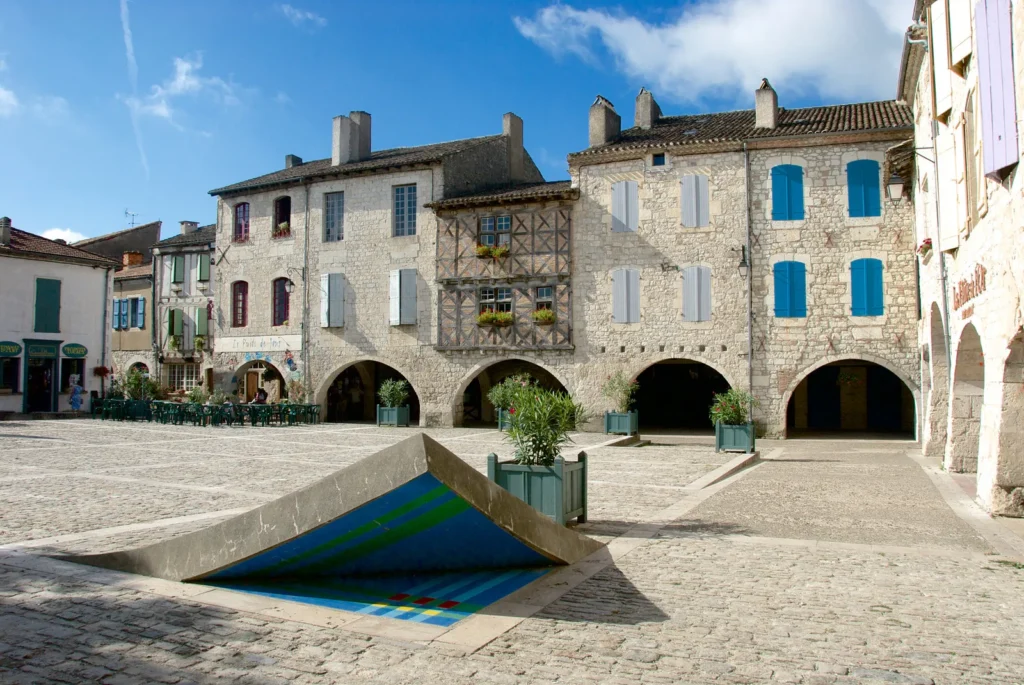
Place des Cornières is the natural place to pause rather than rush through.
Arcades frame the square, creating sheltered passages between buildings and the open central space. The historic market hall reinforces the square’s original commercial purpose, while cafés and artisan premises keep it connected to present-day village life. Les Plus Beaux Villages de France identifies the square as the heart of the bastide and highlights its arcades, artisans, and continuing Thursday market.
Architecture-minded visitors should resist looking only at individual façades. Stand near the center and look outward instead. The relationship between the hall, arcades, street entrances, and regular blocks explains far more about the bastide than any single medieval doorway.
Then walk beneath the covered edges of the square. The shift between open civic space and narrow adjoining streets is one of Monpazier’s most useful lessons in medieval town planning.
Thursday Market: When the Historic Plan Comes Back to Life

Thursday morning changes the experience of Monpazier.
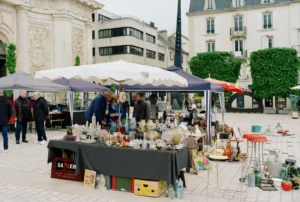
The commune’s 2026 guide confirms that the traditional market takes place every Thursday morning on Place des Cornières. Its footprint extends beyond the square into surrounding streets from May, with regional food, crafts, textiles, and other stalls represented. Exact operating hours can vary by date and season, so check the current official listing shortly before visiting.
A market-day visit is the better choice if your priority is village rhythm. The square becomes a working commercial space rather than simply an architectural composition.
A non-market day offers a different advantage. With fewer stalls occupying the central space, it becomes easier to study the geometry of the square, its arcades, and the streets feeding into it.
For a slow-travel itinerary, there is a good case for choosing rather than trying to have both experiences at once. Pick Thursday for produce, conversation, and commerce. Pick another day if architecture, photography, and an unhurried café stop matter more.
Practical Monpazier Dordogne Visit Planning
Monpazier’s small scale makes it straightforward, but knowing the parking rules removes unnecessary friction.
| Planning point | What to know |
| Parking | The municipality lists parking beside the church, at Place du Foirail Nord near the bastide entrance, opposite the school on Route de Beaumont, and on the grassed Place du Foirail Sud. |
| Driving inside the bastide | Cars are permitted, but Rue Saint-Jacques and Rue Notre-Dame Nord include 20 km/h shared zones where pedestrians and cyclists have priority. |
| Blue-zone parking | Parking on those two streets is limited to one hour from 9 a.m. to 7 p.m., with a parking disc required. |
| Walking route | Monpazier’s official circuit is about 3 km and is estimated at roughly one hour without lengthy stops. |
| Bastideum | The interpretation center adds roughly 45 to 60 minutes. Its published 2026 opening calendar is seasonal, so confirm dates before traveling. |
For a relaxed visit, allow around two to three hours rather than treating the official one-hour walk as a target. A café stop, the market, an artisan workshop, or Bastideum can easily turn Monpazier into a half-day outing.
A Walking Route That Explains the Village
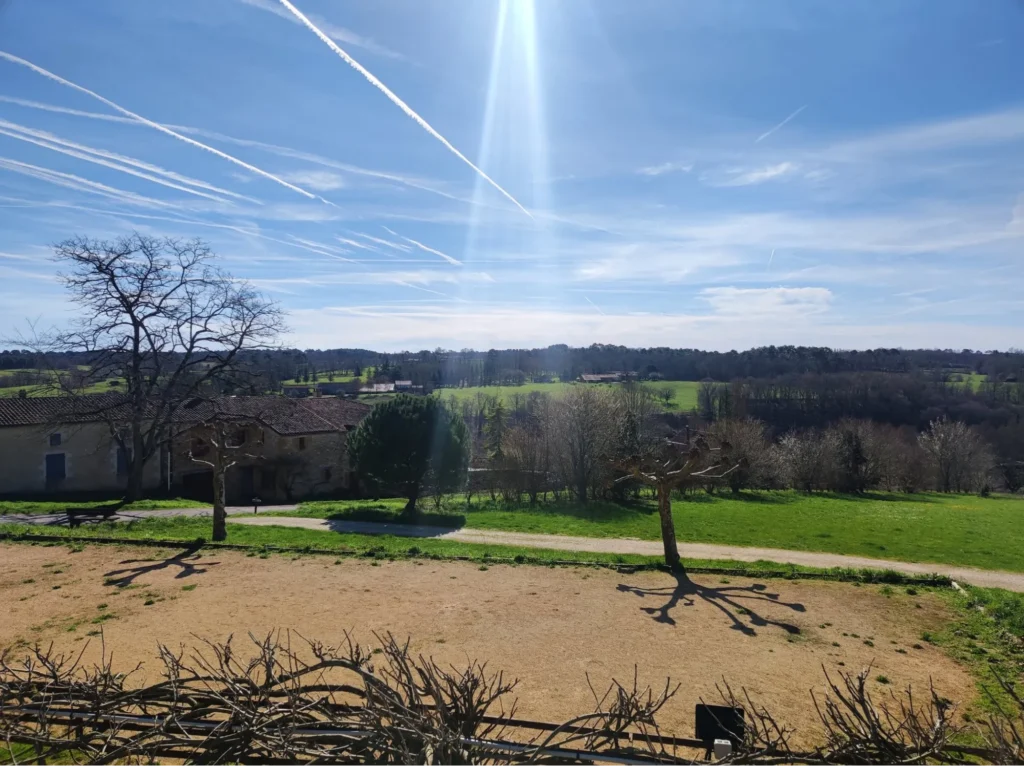
A useful route should reveal the plan rather than collect landmarks.
Start at Place du Foirail Nord or another peripheral parking area, then enter the historic core and head toward Place des Cornières. Spend time in the square before following one of the main streets away from it. Cut through the narrower carreyrous to see how the smaller lanes divide the larger housing blocks.
Continue toward Église Saint-Dominique, which has held protected historic-monument status since the 19th century. Then work toward Porte du Paradis and the former rampart route before continuing toward the lavoir and Fontaine des Amours. These points form part of the municipality’s own walking circuit.
Finish back at the square rather than ending at the edge of the village. Returning to the center after understanding the street system makes its planning feel much clearer.
A Better Plan for Families and Mixed-Generation Groups
Groups do not need to walk Monpazier at one speed.
Travelers who enjoy longer walks can follow the full 3 km municipal circuit. Guests who prefer less walking can concentrate on Place des Cornières, the arcades, Saint-Dominique, and a café, then meet the rest of the group back in the square.
Families can add Bastideum when its seasonal schedule works. The interpretation center focuses on bastide history through interactive exhibits, games, children’s activities, and a medieval garden, which gives younger visitors some context before or after walking the streets.
This two-speed approach works well for extended family trips because nobody has to choose between sitting out entirely and completing every stop.
Cafés, Crafts, and the Character Beyond the Architecture
Monpazier’s value is not limited to preserved stone.
The village has held the Ville et Métiers d’Art label since 2019, and its current municipal guide continues to identify art and craft activity as part of local commercial life. Les Plus Beaux Villages de France also highlights artisan workshops alongside the market and historic architecture.
That makes browsing part of the visit rather than an added shopping stop. Ceramics, jewelry, woodwork, glass, leather, and other crafts have all been represented locally, though individual studios and opening hours change over time.
The arcades also make a café stop feel connected to the architecture. A seat overlooking the square gives you time to watch the relationship between residents, visitors, shops, and the central space that has organized the settlement for centuries.
Where Monpazier Fits Into a Slower Dordogne Stay
Monpazier works best as one focused outing rather than one item in a long day of village hopping.
Spend a morning understanding the bastide, stay for lunch, then leave the rest of the day lightly planned. Groups staying for a week can place Monpazier between fuller driving days and time at their accommodation. That rhythm leaves room for people with different interests to separate for a few hours without turning the trip into constant logistics.
Plan Your Private Château Stay at Château de Lasfonds
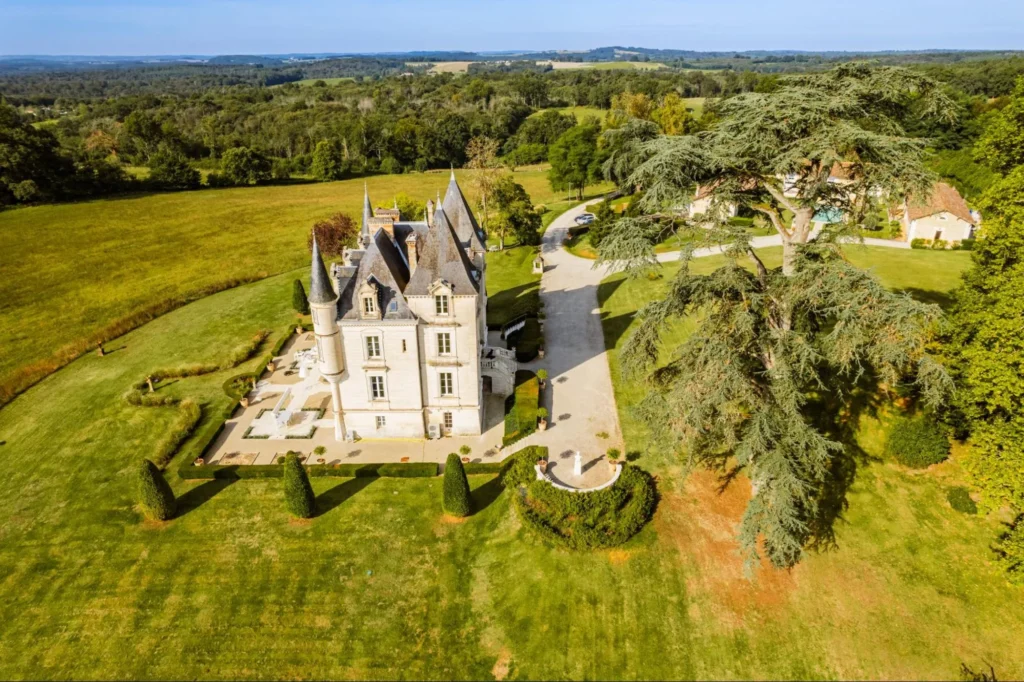
If Monpazier is part of a longer Dordogne and Charente itinerary, Château de Lasfonds gives one group a private base for a full week. The 6.5-hectare estate includes the main château and three restored outbuildings, with accommodation for up to 18 guests.
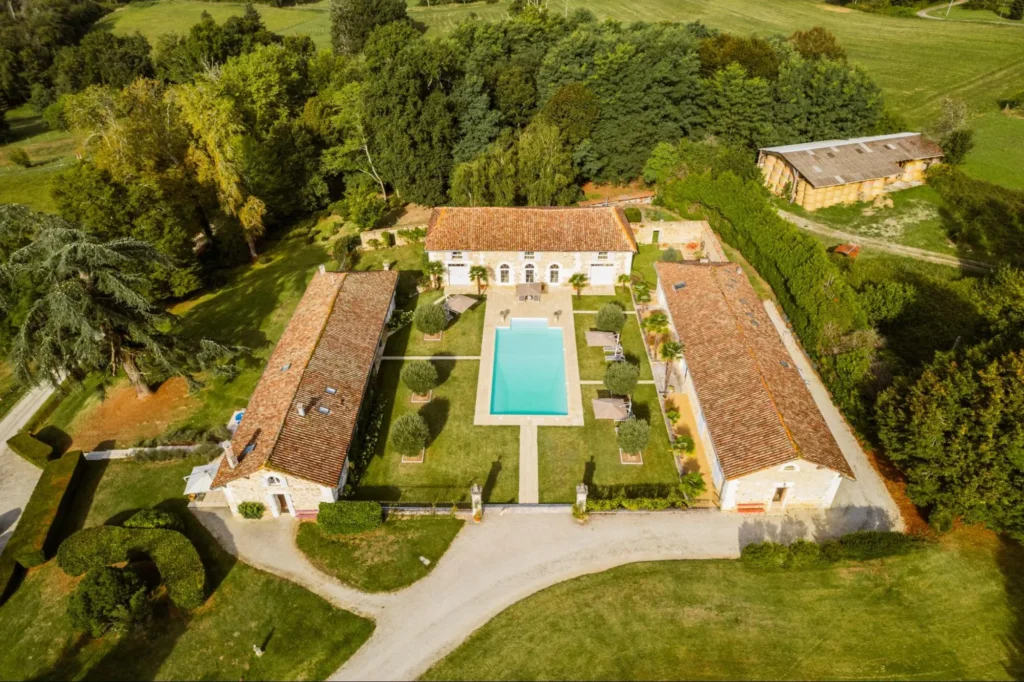
Review the room arrangements before assigning couples, children, or colleagues to different buildings, then check available dates, download the brochure, or send an inquiry with your group requirements.
Frequently Asked Questions
Is Monpazier worth visiting?
Yes, particularly if you are interested in medieval architecture, bastide towns, markets, or small French villages that still retain a clear historic plan. Its compact scale makes it practical for a half-day visit.
What is a bastide town?
A bastide is a planned medieval “new town,” commonly associated with southwest France in the 13th and 14th centuries. Regular street grids and a central commercial square are typical features.
When was Monpazier founded?
The commune dates the foundation of Monpazier to 1284 under Edward I of England, on land belonging to the lord of Biron.
What day is the Monpazier market?
The traditional market takes place on Thursday morning. Check the official tourism or municipal event page before traveling for current seasonal hours.
How long should you spend in Monpazier?
Two to three hours works well for the square, streets, architecture, and a café stop. Allow a half day if you add the market, lunch, shopping, or Bastideum.
Where can visitors park in Monpazier?
Official parking options include Place du Foirail Nord, Place du Foirail Sud, the area beside the church, and parking opposite the school on Route de Beaumont.
Can you drive inside Monpazier?
Yes. Traffic is permitted inside the bastide, though some central streets operate as 20 km/h shared zones and certain spaces have one-hour blue-zone limits.
Is there an official Monpazier walking route?
Yes. The municipality describes an easy 3 km circuit taking about one hour and passing the square, church, carreyrous, Porte du Paradis, former rampart route, lavoir, and Fontaine des Amours.
Is Monpazier suitable for families?
The compact center makes flexible visits possible, and Bastideum provides interactive interpretation, games, and activities aimed at younger visitors when open.
What should architecture lovers look for in Monpazier?
Start with the relationship between Place des Cornières and the surrounding grid. Then compare the broad main streets with the narrow carreyrous and look at the arcaded houses around the historic center.