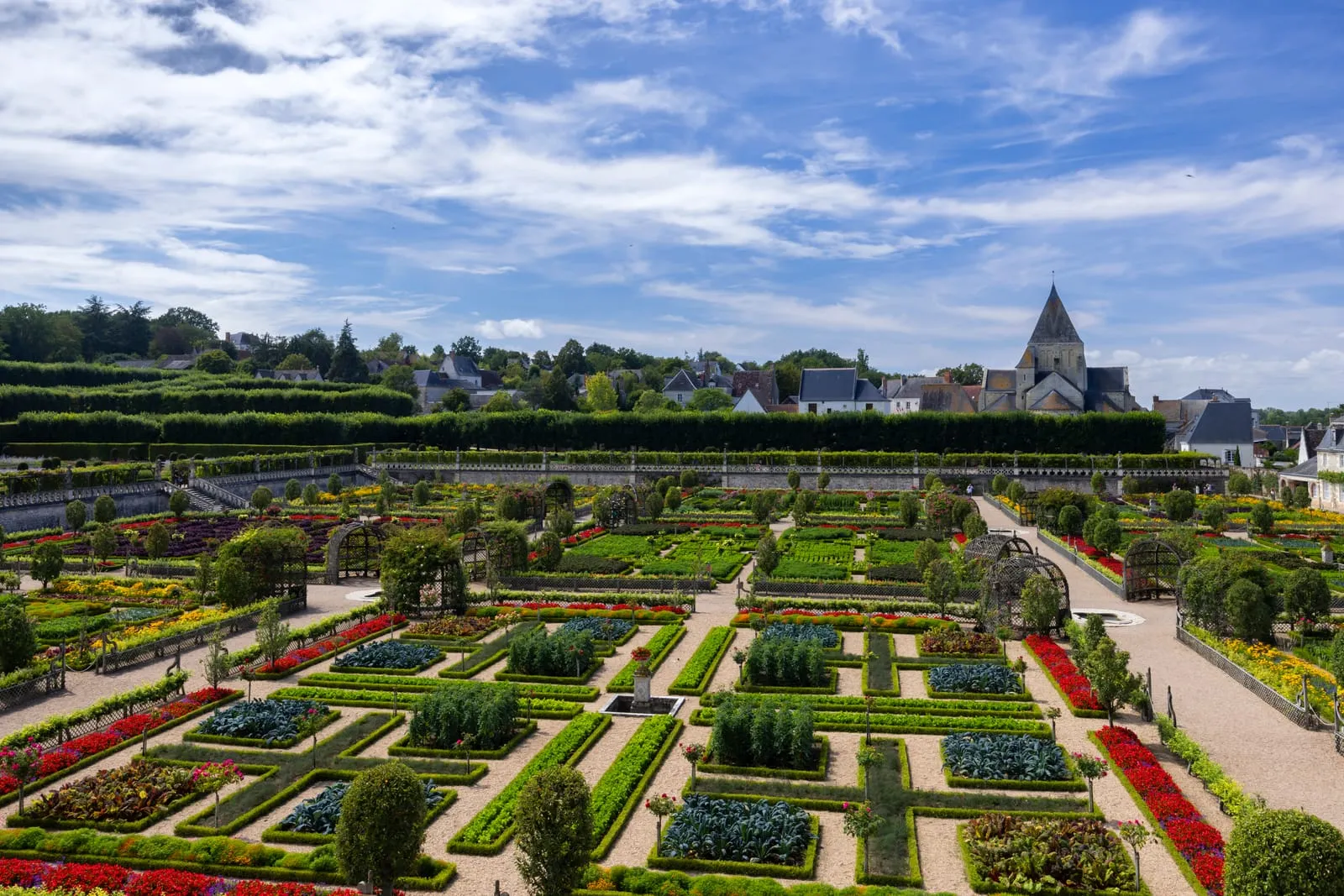
Choosing where to stay in the Loire Valley changes the whole trip. The region looks simple on a map, but the distances between châteaux, wine villages, train stations, river towns, and market squares can quickly shape your days.
The best base is not always the prettiest town. It is the place that reduces wasted driving, gives you access to the right castle clusters, and still feels good after dinner when the tour buses have gone.
For travelers comparing Loire, France itineraries, the smartest choice comes down to one question: do you want rail convenience, château density, market life, wine country, or a calmer countryside stay?
How To Choose Where To Stay in the Loire Valley
The Loire Valley of France rewards travelers who plan around bases rather than hotel names alone. A good base should solve three practical problems: how to get there, how far you drive each day, and what you can enjoy on foot after sightseeing.
Use Three Filters Before Booking
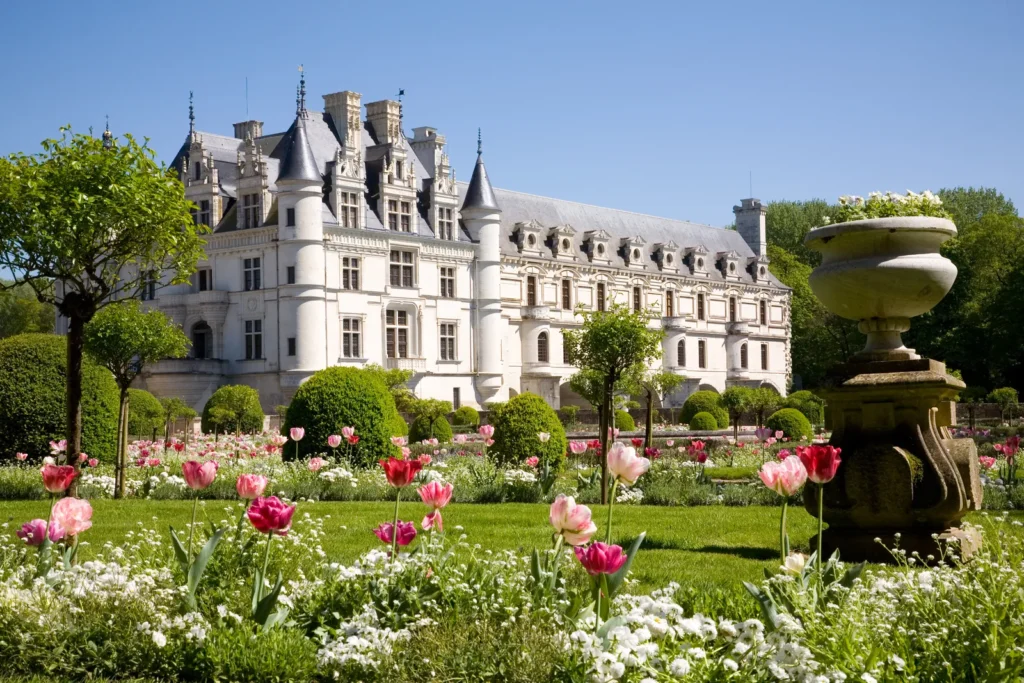
Alt text: Château de Chenonceau from the gardens in Loire Valley
Start with train access if you are arriving from Paris. Tours, Blois, Amboise, Saumur, and Angers work better than small villages for rail-led trips. If you plan to rent a car, choose a town with clear parking options near your accommodation rather than a romantic address inside a tight medieval lane.
Next, look at castle clusters. Chambord and Cheverny sit closer to Blois. Chenonceau, Amboise, Clos Lucé, and Chaumont suit an Amboise stay. Villandry, Azay-le-Rideau, Langeais, and Chinon pair well with Tours or with each other.
Last, judge the evening experience. Walkable towns matter because Loire days can be full. A base with restaurants, river walks, markets, and easy parking lets the trip feel polished rather than rushed.
Tours: Best Base For Train Access And Urban Comfort

Alt text: Electric tram rolling in a pedestrian street in Tours
Tours is the most practical base for travelers who want structure, choice, and strong transport links. Searches for tours in the Loire Valley usually come from travelers who want a city base without losing access to châteaux.
The advantage is flexibility. You can arrive by train, stay near the center, pick up a rental car for selected days, and still enjoy a proper city in the evening. Tours has restaurants, wine bars, covered market culture, and enough depth for a rest day.
Tours work best for first-time visitors who want to visit Villandry, Azay-le-Rideau, Chenonceau, and Amboise without changing hotels. It is less atmospheric than smaller towns, but it is more forgiving. For business leaders, families, or anyone planning around meetings, flights, and short windows, Tours reduces logistical friction.
Choose Tours if train access is your first priority. Choose somewhere smaller if you want the whole trip to feel like a château country escape.
Amboise: Best Base For Château Clusters And Market Days
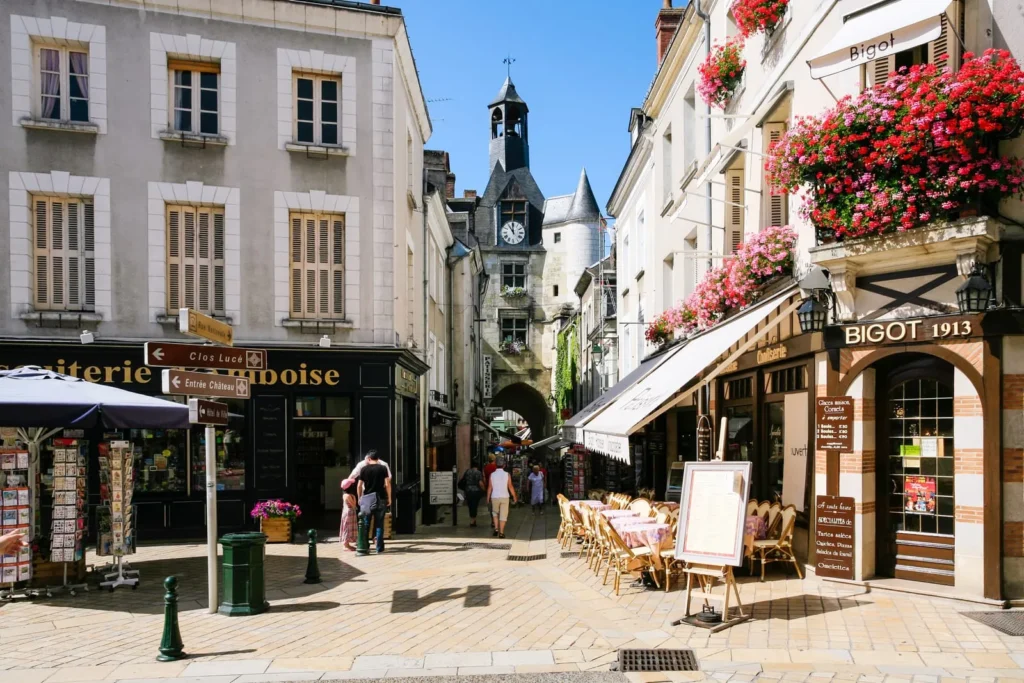
Alt text: city gate on street Rue Nationale in Amboise
Amboise is the strongest answer for travelers who want beauty, walkability, and castle access in one place. The royal château rises above the town, Clos Lucé sits nearby, and Chenonceau is an easy day trip. Chaumont-sur-Loire also fits naturally into an Amboise-based plan.
The town has a lively riverfront market scene and a compact center with restaurants, wine shops, and hotels within walking distance. This makes Amboise a smart choice for travelers who want the charm of the Loire Valley of France without feeling isolated at night.
Parking can be easier outside the tightest central streets, so check your hotel details carefully. Amboise suits couples, design-focused travelers, and anyone planning a short Loire Valley castles tour with limited time.
The tradeoff is popularity. In high season, Amboise can feel busy by day. Even so, it remains one of the most balanced bases in the region because it combines château access with a real town rhythm.
Blois: Best Base For Chambord, Cheverny, And Easy Driving
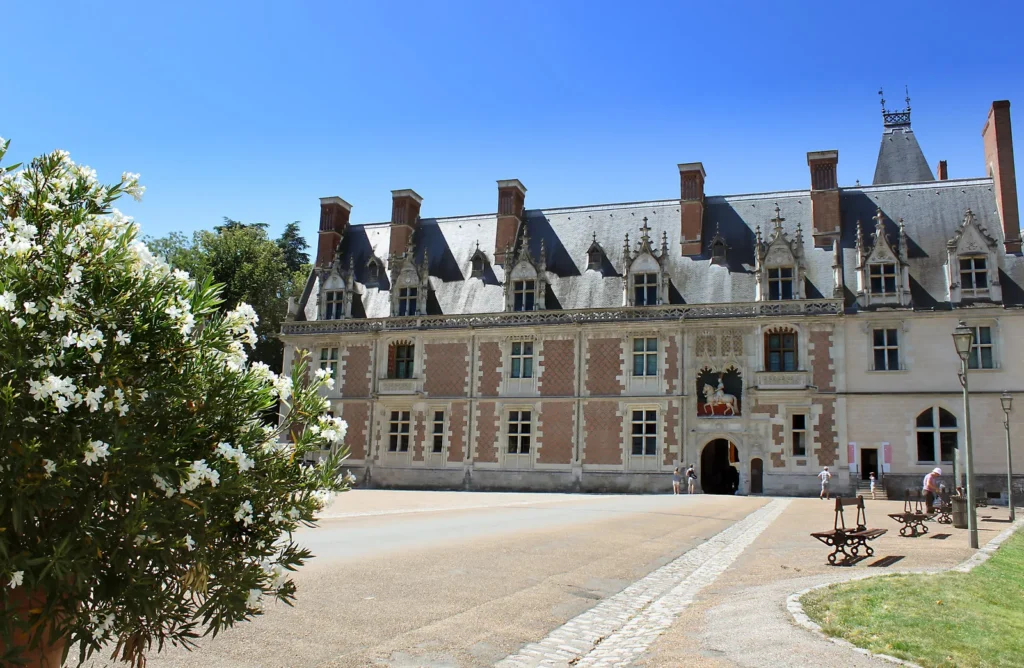
Alt text: Blois Castle, Loire Valley, France
Blois is the best base for travelers who want to prioritize Chambord and the eastern castle cluster. It has a dramatic old town, a royal château in the center, and better road access to Chambord than to Tours or Saumur.
This is where a Loire Valley castles map comes in handy. On paper, Chambord looks close to many towns. In practice, Blois cuts the approach time and keeps the day simple. Cheverny and Chaumont also pair well with this base.
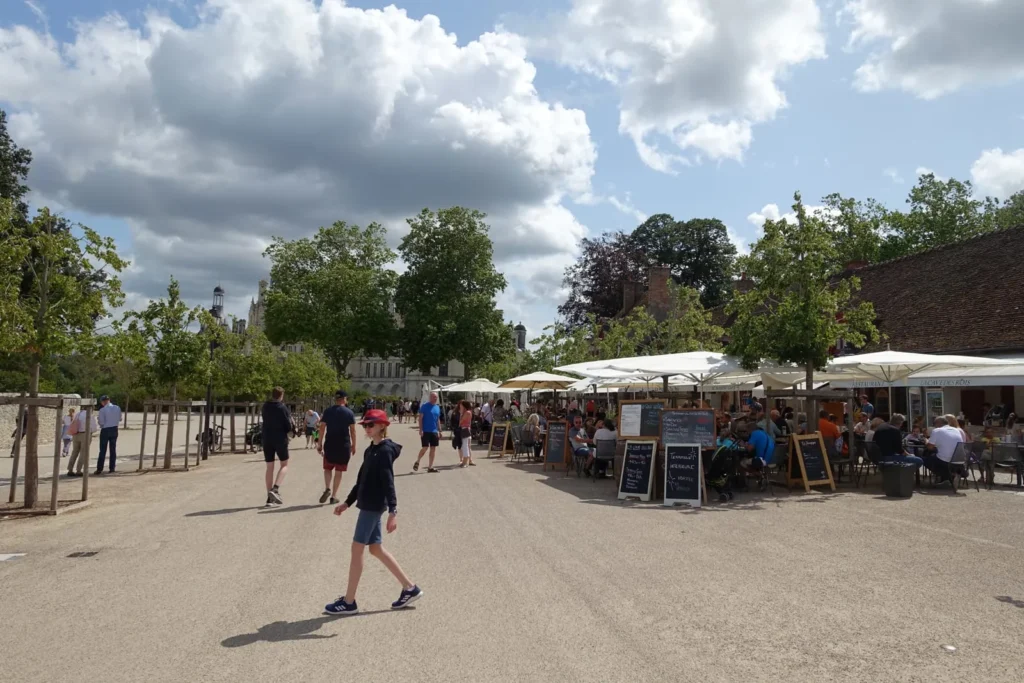
Alt text: Restaurants and tourists in the grounds of Chateau de Chambord
Blois is a good fit for travelers with a car who still want a town setting. It has enough restaurants and culture for evenings, but it feels smaller and calmer than Tours. It also works well for a two-base itinerary: start in Blois for Chambord, then move west toward Amboise, Tours, or Saumur.
Choose Blois if Chambord is a major reason for the trip. It gives that visit the space it deserves.
Saumur: Best Base For Wine, River Views, And A Slower Pace
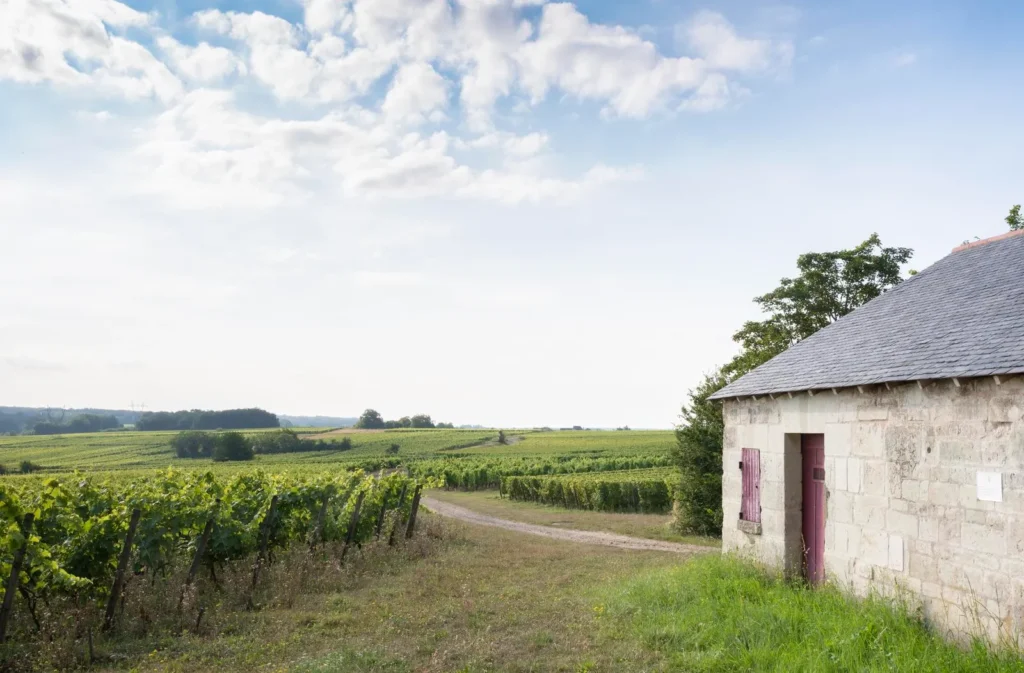
Alt text: vineyards and old stone walls
Saumur works best for travelers who want more than the headline châteaux. The town sits along the Loire with a striking château above it, tuffeau stone architecture, sparkling wine caves, and strong access to the western side of the region.
It is a strong base for Fontevraud, Montsoreau, Chinon, Brézé, and wine-focused days. The mood is calmer than in Amboise or Tours, and the drives feel more open. Saumur also suits travelers who value parking and space around the town center.
Use Saumur if your trip includes wine tastings, river views, and market mornings. It is less efficient for Chambord and Chenonceau, so it should not be the only base for a château-heavy first visit.
For a longer trip through the Loire Valley, France, Saumur adds depth. It shows the Loire as a living wine-and-river region rather than a checklist of famous sites.
Chinon: Best Base For Medieval Character And Cabernet Franc Country
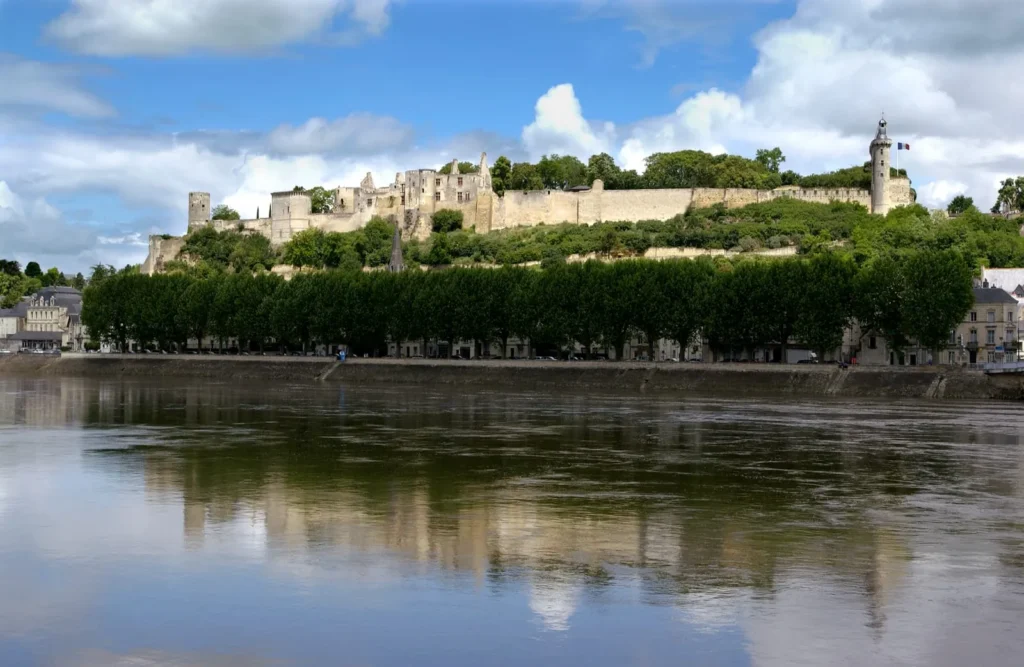
Alt text: Château de Chinon in the Loire Valley
Chinon is ideal for travelers who want atmosphere over convenience. It sits on the Vienne River, framed by a fortress, vineyards, and medieval streets. It feels intimate, local, and slower than the central Loire bases.
This is a strong choice for wine travelers and repeat visitors. Chinon pairs well with Fontevraud, Saumur, Azay-le-Rideau, Ussé, and the quieter west. It is less practical for first-time visitors who plan to cover Chambord, Chenonceau, and Amboise in a short stay.
Parking requires a little planning, but once settled, Chinon is one of the better walkable towns for slow evenings. Stay here if the trip is about food, wine, old streets, and a less packaged version of the Loire.
How To Use A Loire Valley Chateaux Map For Smarter Planning
A Loire Valley chateaux map should be used for clustering, not for counting how many castles you can fit into a day. The region is easy to underestimate because the dots look close together. Real travel time depends on river crossings, village roads, parking, ticket times, and lunch stops.
Group your route like this. For the central cluster, pair Amboise, Clos Lucé, Chenonceau, and Chaumont. For the eastern cluster, pair Blois, Chambord, Cheverny, and Beauregard. For the western cluster, pair Villandry, Azay-le-Rideau, Chinon, Fontevraud, and Saumur.
A Loire Valley castles map also helps you avoid backtracking. If you stay in Tours and visit Chambord one day, then Saumur the next, you spend too much time crossing the same middle ground. A cleaner plan either keeps one central base or splits the trip between Blois/Amboise and Saumur/Chinon.
One Base Or Two Bases: What Works Better?
For two or three nights, choose one base. Tours suits the most practical trip, Amboise suits the most balanced trip, and Blois suits a Chambord-focused trip.
For four to six nights, two bases usually work better. A strong pairing is Amboise plus Saumur, or Blois plus Chinon. This gives you access to different castle clusters, different market days, and a more varied sense of place.
For a compact Loire Valley castles tour, avoid moving every night. The region is made for slow mornings, long lunches, and late afternoon château visits. Too many hotel changes turn the trip into a transport management exercise.
The best approach is simple: one base for efficiency, two bases for range, and no more than two major château visits in one day.
Best Loire Valley Base By Traveler Type
- Choose Tours if you want the best train access, restaurant choice, and car rental flexibility.
- Choose Amboise if you want the most balanced mix of walkable charm, château access, and market days.
- Choose Blois if Chambord is central to your plan and you want easy driving from a historic town.
- Choose Saumur if wine, river views, and calmer pacing matter more than ticking off the most famous castles.
- Choose Chinon if you want character, Cabernet Franc country, and a quieter medieval base.
The best answer to the question of where to stay in the Loire Valley depends less on star ratings than on route design. Pick the base that matches the trip you actually want, then let the châteaux, markets, and roads fall into a rhythm that feels easy.
Plan A Château Stay With Château De Lasfonds
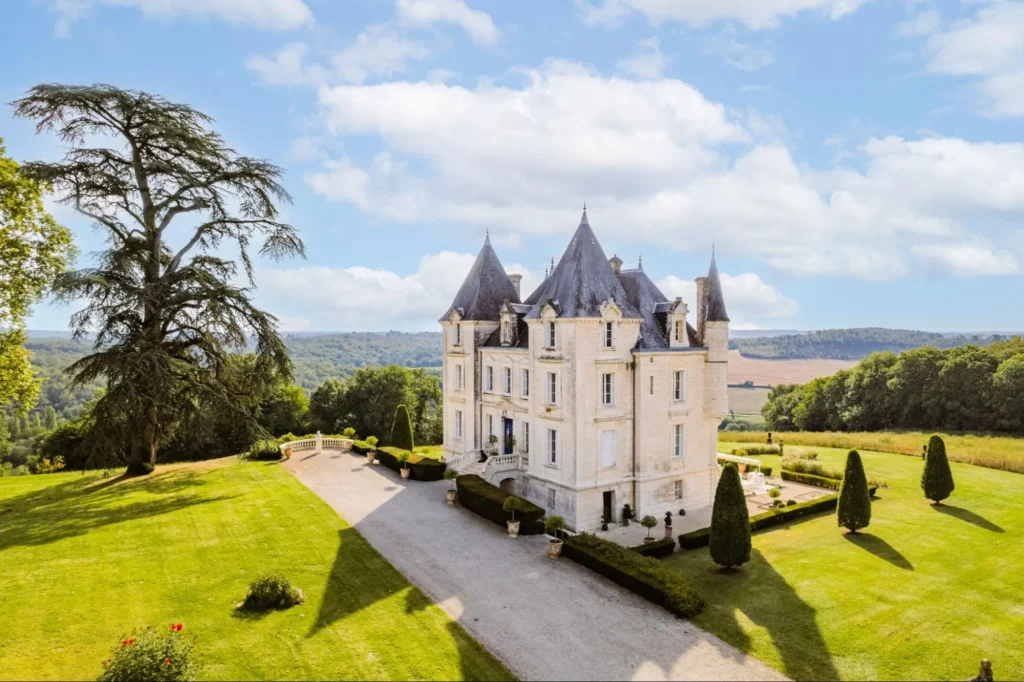
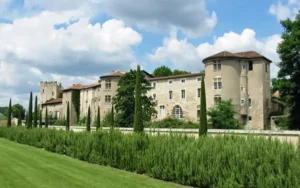
If this guide helped you choose where to stay in the Loire Valley, you may also be drawn to a deeper French château experience beyond the Loire. Château de Lasfonds offers that kind of stay in the Dordogne countryside, with space, privacy, historic character, and modern comfort for groups looking to slow down in style.
It is not a Loire Valley base, so it should be planned as a separate French countryside escape. For travelers who love château architecture, private grounds, local markets, and scenic driving, Château de Lasfonds gives the French castle stay its own dedicated chapter.
Book your stay at Chateau de Lasfonds and make your next trip to France more personal, spacious, and memorable.
FAQs about Where To Stay in the Loire Valley
1. Is the Loire Valley worth visiting without renting a car?
Yes, the Loire Valley is possible without a car, although your options become more limited. Towns like Tours, Amboise, and Blois have rail connections, while guided tours, regional buses, taxis, and bike rentals help reach nearby châteaux and vineyards.
2. What is the best month to visit the Loire Valley castles with fewer crowds?
May, early June, September, and early October usually offer the best balance of pleasant weather and lighter crowds. School holidays and long weekends attract more visitors, so weekday visits generally provide a quieter château experience.
3. Can you cycle between Loire Valley castles instead of driving?
Yes, many visitors explore by bicycle using the Loire à Vélo network. Dedicated cycling routes connect several towns, vineyards, and castles, making it an excellent choice for travelers who prefer slower sightseeing over long daily drives.
4. How many days do you need to see the Loire Valley properly?
Four to five days is ideal for most first-time visitors. This allows time to explore major castles, local markets, wine villages, gardens, and riverside towns without rushing between attractions or spending excessive time on the road.
5. Are Loire Valley château hotels worth booking instead of staying in town?
Yes, château hotels offer a memorable historic experience, but they suit different travel styles. Town accommodations offer easier access to restaurants and evening activities, while château stays provide greater privacy, scenic grounds, and a quieter countryside atmosphere.
6. Which Loire Valley castles are best for families with children?
Families usually enjoy castles with interactive gardens, outdoor spaces, and engaging activities. Properties featuring hedge mazes, boat rentals, children’s trails, or seasonal events tend to keep younger visitors interested throughout longer sightseeing days.
7. When should you book accommodation in the Loire Valley for the best choice?
Book three to six months ahead for spring, summer, and holiday periods. Smaller boutique hotels, château accommodations, and highly rated guesthouses frequently reach capacity well before peak travel dates, limiting availability and room selection.
8. Is the Loire Valley accessible for travelers using trains from Paris?
Yes, the Loire Valley is one of France’s easiest countryside destinations from Paris. High-speed and regional trains reach several gateway towns quickly, making short breaks possible without domestic flights or complicated travel arrangements.
9. Are many Loire Valley castles closed during winter?
Yes, some castles reduce opening days, tours, or garden access during winter months. Major attractions generally remain open, but checking seasonal schedules before booking helps avoid unexpected closures or limited visitor services.
10. What travel trends are shaping Loire Valley tourism in the coming years?
Travelers are increasingly choosing longer countryside stays, boutique château accommodation, cycling holidays, wine experiences, and off-season travel. Sustainable tourism and slower itineraries continue growing as visitors prioritize authentic regional experiences over packed sightseeing schedules.